Asep Darmawan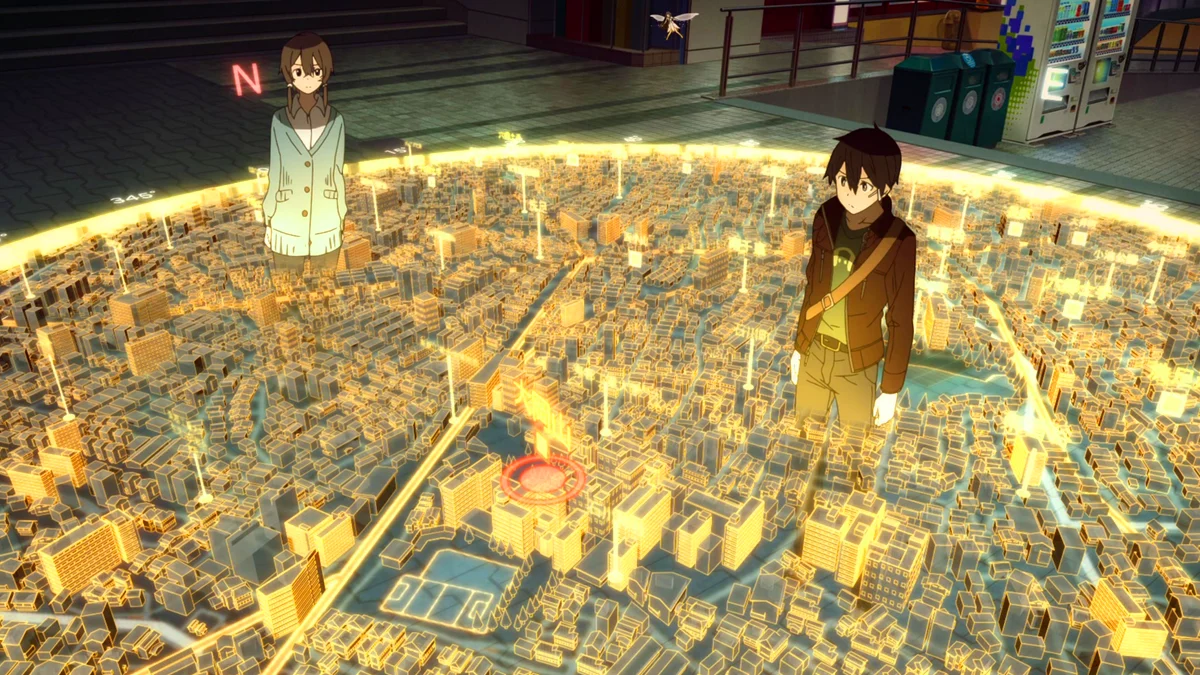
In the rapidly evolving landscape of global entertainment, Japanese animation—once a niche subculture—has ascended to a position of cultural and economic hegemony. However, as the medium’s footprint expands, a critical debate has emerged within the industry: should anime creators adapt their content to suit Western sensibilities, or should they remain tethered to the unique aesthetic and narrative traditions of Japan?
Tomohiko Itō, the acclaimed director behind the global phenomenon Sword Art Online (SAO) and the psychological thriller ERASED, has stepped into this fray with a clear and provocative stance. In a recent interview with the Japanese news outlet Daily Shincho, Itō argued that the growing pressure to pander to international audiences is not only unnecessary but potentially detrimental to the medium’s creative health. According to Itō, the pursuit of a "globalized" creative intent often acts as a precursor to artistic and commercial failure.
Main Facts: The Rejection of "International Pandering"
The core of Tomohiko Itō’s argument rests on the paradox of anime’s success. He acknowledges that the medium has reached an unprecedented level of global visibility, fueled by massive corporate acquisitions and a vacuum in Western content production. Yet, he warns that attempting to "solve" for a global audience is a fool’s errand.

The Failure of Conscious Globalization
Itō contends that when Japanese creators attempt to guess what will appeal to overseas markets—particularly the North American market—the result is often a diluted product that satisfies no one. "On the contrary, focusing too much on ‘the world’ often leads to failure," Itō stated. He suggests that the very elements that make anime distinct are often the ones that "globalized" creative standards seek to sanitize or remove.
The Conflict with Western "Political Correctness"
One of the most friction-heavy points in the globalization debate is the divergence in cultural standards regarding character design and themes. Itō highlighted the strict "political correctness" prevalent in American media criticism. He noted that Japanese creators often face a dilemma: should they continue to produce content that reflects Japanese artistic freedom—such as "girls fighting with lots of skin"—or should they self-censor to avoid "suspicion" or backlash in North America? Itō’s comments suggest that compromising these stylistic choices to appease foreign critics risks losing the "soul" of the medium.
Filling the Hollywood Vacuum
Itō provided a strategic context for anime’s recent boom. He pointed out that Hollywood’s recent struggles—stemming from the COVID-19 pandemic and the 2023 writers’ and actors’ strikes—created a content gap. Japanese anime, with its consistent output and diverse storytelling, effectively filled that void, proving that the medium’s inherent "Japaneseness" was its greatest strength, not a hurdle to be overcome.

Chronology: The Road to Global Dominance
To understand Itō’s concerns, one must look at the timeline of anime’s transition from a domestic Japanese industry to a global powerhouse.
2012–2017: The ‘Sword Art Online’ Explosion
Under Itō’s direction, Sword Art Online became a cornerstone of the modern "Isekai" (another world) genre. The series’ massive success on platforms like Crunchyroll and Netflix proved that stories rooted deeply in Japanese light novel culture could find a massive, dedicated audience in the West without needing to alter their DNA.
2020: The Consolidation of Power
The landscape shifted significantly in 2020 when Sony’s Aniplex acquired Crunchyroll. This merger consolidated distribution and marketing power, creating a direct pipeline from Japanese studios to Western living rooms. Itō noted this as a turning point, remarking that since this acquisition, "Japanese anime has exploded globally."

2023–2024: Corporate Expansion
The trend has only accelerated. Toho, the legendary Japanese film production and distribution company, recently acquired the British anime distributor Anime Limited. This move signals a shift in strategy: Japanese companies are no longer content to simply license their content; they want to own the global infrastructure of the medium.
Supporting Data: The Economic and Cultural Weight of Anime
The statistics surrounding the anime industry provide the "why" behind the pressure to globalize. According to the Association of Japanese Animations (AJA), the global anime market value exceeded $28 billion in recent years, with overseas revenue often rivaling or exceeding domestic Japanese revenue.
The Rise of the International Fanbase
Data from streaming giants indicates that over 100 million households worldwide watch anime regularly. In markets like the United States, anime has moved from "alternative" media to the mainstream, with films like Demon Slayer: Mugen Train and Jujutsu Kaisen 0 topping box office charts.
The "Disney-Style" Fatigue
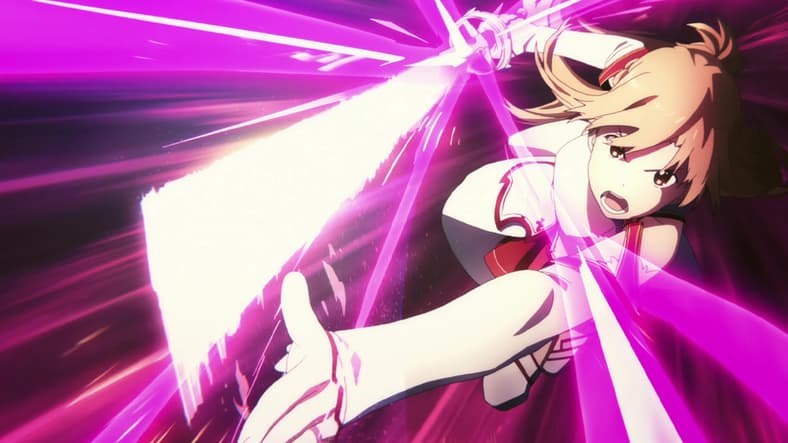
Itō’s sentiments echo those of other industry veterans. For instance, the director of One Piece and Dragon Ball, Mamoru Hosoda, and others have noted that Western audiences are increasingly "tired of Disney-style predictable harmony." This data point suggests that the "edge" and unpredictability of Japanese storytelling are exactly what international consumers are buying. Pandering to Western standards would, therefore, be removing the very "Unique Selling Proposition" (USP) that drives the market.
Official Responses and the Defense of Creative Freedom
Itō’s remarks do not exist in a vacuum; they reflect a broader movement within Japan to protect the nation’s "soft power" from external ideological pressures.
The Japanese Government’s Stance
In early 2024, a new Japanese policy proposal surfaced seeking to defend "Creative Freedom" for anime, manga, and video games. This proposal was a direct response to concerns that international platforms and "sensitivity readers" were forcing Japanese creators to sanitize their work to meet Western ESG (Environmental, Social, and Governance) and DEI (Diversity, Equity, and Inclusion) standards.
Industry Solidarity
Other directors have voiced similar concerns. The consensus among top-tier creators is that "localization" should be limited to language and cultural context, not the fundamental themes or character designs of the work. The sentiment is clear: Japan produces anime for Japan, and the world watches because it is authentically Japanese.
Implications: The Future of the Medium and Staff Recognition
Beyond the debate over content, Tomohiko Itō’s interview touched on a critical but often overlooked aspect of the industry: the recognition of the people behind the scenes.
A Call for "Staff-Centric" Marketing
Itō expressed a desire to see the "overseas model" of staff recognition adopted more widely. In the West, directors and cinematographers often have "star power" similar to actors. Itō pointed out that while voice actors are celebrities in Japan, the technical staff—the people who actually craft the visual language of the show—remain in the shadows.

He specifically cited Haruo Sotozaki (Director of Demon Slayer) and Yuichi Terao (Cinematographer). "Director Sotozaki rarely gets introduced domestically, yet he’s recognized abroad," Itō observed. He argued that for the sake of future animators, the industry must preserve the history of "who did what" and elevate the status of the production staff to match their global impact.
The "Galapagos" Risk vs. Global Authenticity
The term "Galapagos Syndrome" was originally used to describe Japanese technology that evolved in isolation, making it incompatible with the rest of the world. For years, critics feared anime would suffer this fate. However, Itō’s perspective suggests a "Reverse Galapagos" effect: the isolation of Japanese creativity is what allowed it to evolve into something so unique that the rest of the world couldn’t help but crave it.
If the industry moves toward a "globalized" standard, it risks becoming a generic commodity. Itō’s warning serves as a reminder that in the world of art, universal appeal is often found in the most specific, local expressions.
Looking Ahead: ‘Kusunoki no Bannin’
Itō is practicing what he preaches. His next project, an anime film adaptation of Keigo Higashino’s Kusunoki no Bannin (The Guardian of the Camphor Tree), focuses on a deeply Japanese story about family, memory, and spiritual tradition. Set to hit Japanese theaters at the end of the month, the film will serve as a litmus test for Itō’s philosophy: that a story told with a singular, uncompromised vision will always find its way to a global audience, regardless of whether it "panders" to them or not.
In conclusion, Tomohiko Itō’s stance is a defense of cultural identity in an era of digital homogenization. By rejecting the urge to pander, he and his contemporaries are ensuring that anime remains a vibrant, diverse, and—most importantly—authentic medium for decades to come. The message to the West is clear: watch and enjoy, but do not expect the creators to change the very things that made you watch in the first place.

 Rifan Muazin
 Ammar Sabilarrohman