Dwi Wanna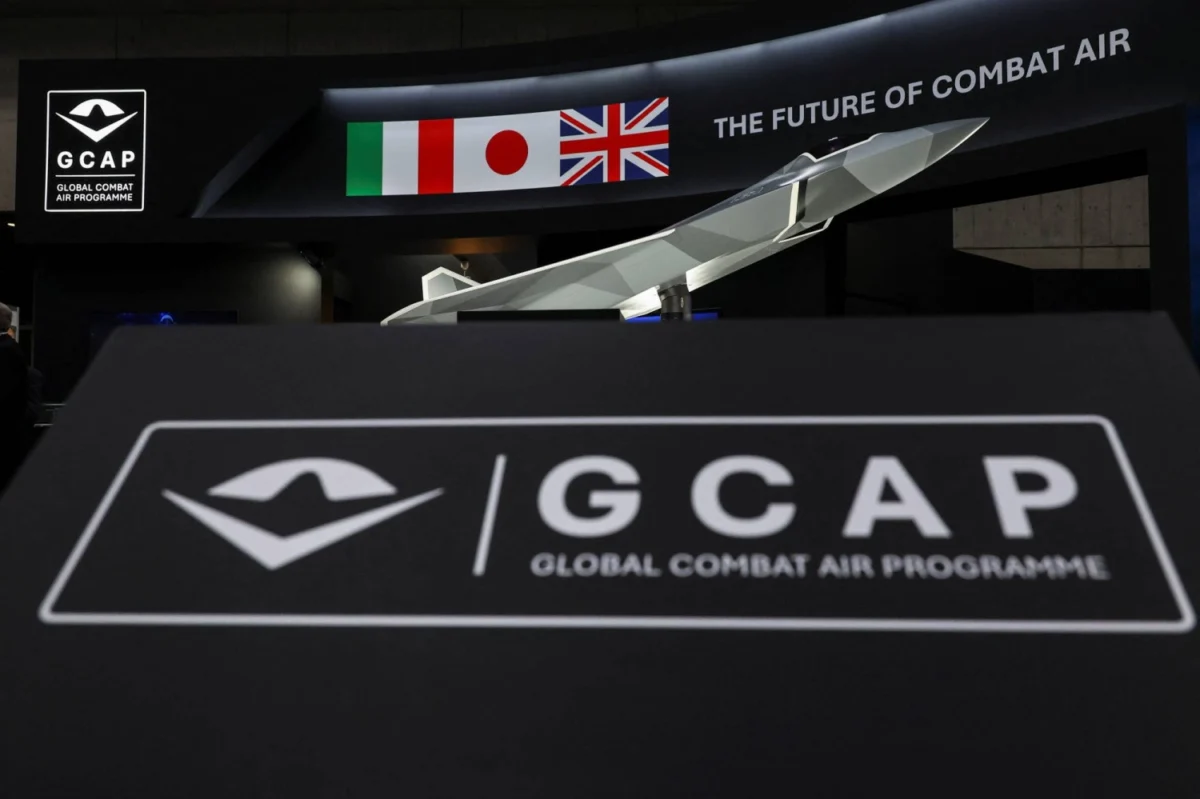
By International Defense Desk
The Global Combat Air Program (GCAP)—the ambitious trilateral initiative between Japan, the United Kingdom, and Italy to field a sixth-generation stealth fighter—has cleared a critical hurdle. Following months of internal debate regarding budget allocation and timeline feasibility, the United Kingdom has formally committed £8.6 billion ($11.7 billion) to the project. This significant financial injection, outlined in London’s newly released Defense Investment Plan (DIP), signals a robust commitment to the development of a cutting-edge combat aircraft designed to achieve air superiority in an increasingly contested geopolitical landscape.
This infusion of capital is expected to stabilize the program as it transitions into its next development phase. With the U.K. government signaling that an imminent contract signing will extend the existing development agreement through the end of 2027, the GCAP consortium can now focus on the complex engineering and integration challenges required to bring a sixth-generation jet to the skies by the mid-2030s.
The Strategic Imperative: Why GCAP Matters
The Global Combat Air Program represents more than just the development of a single aircraft; it is the cornerstone of future aerospace capability for three major powers. Unlike the fifth-generation F-35 Lightning II, which is primarily a multi-role platform, the GCAP platform is envisioned as a "system of systems." It will incorporate advanced artificial intelligence, optionally manned flight capabilities, and the ability to control swarms of "loyal wingman" drones.
For Japan, GCAP is a departure from its historical reliance on U.S. aerospace technology, marking a pivot toward a more autonomous defense posture. For the United Kingdom, it ensures the retention of a sovereign combat air design and manufacturing base—a critical component of national security. Italy, meanwhile, leverages the program to integrate its high-tech aerospace sector into a global-scale project, ensuring long-term industrial relevance.
Chronology of Development
The path to this multi-billion-pound commitment has been marked by both rapid diplomatic breakthroughs and technical deliberation:
- December 2022: The United Kingdom, Japan, and Italy officially launch GCAP, merging the British-led Tempest project with Japan’s F-X program.
- December 2023: The three nations sign a treaty to establish the GCAP International Government Organization (GIGO) in London, creating the administrative framework to oversee the program.
- May 2024: A concept model of the GCAP fighter is displayed at the Defense Security Equipment International (DSEI) Japan exhibition in Chiba, offering the public its first tangible look at the design’s evolving aesthetic.
- Late 2024–Early 2026: A period of uncertainty ensues as all three nations grapple with inflationary pressures and the logistical complexities of merging disparate supply chains and military requirements.
- July 2026: The U.K. government publishes its long-awaited Defense Investment Plan (DIP), formally earmarking £8.6 billion for the program’s development through 2030.
Supporting Data: The Economics of Sixth-Generation Air Power
The £8.6 billion commitment represents a massive, multi-year investment aimed at de-risking the program. Industry analysts suggest that the total cost of the GCAP program, from inception to initial operating capability (IOC), could exceed $50 billion when factoring in shared research and development (R&D) costs.
Budgetary Breakdown (Estimated)
- Research & Development: 45% (Focused on AI, stealth materials, and propulsion).
- Industrial Infrastructure: 25% (Manufacturing site upgrades in BAE Systems, Mitsubishi Heavy Industries, and Leonardo).
- Software and Systems Integration: 20% (The "brain" of the aircraft, including data fusion).
- Testing and Evaluation: 10% (Wind tunnel testing, digital twin simulations).
The commitment also underscores the importance of the "digital twin" approach. By utilizing advanced simulation, the consortium aims to reduce the time spent on physical prototyping, allowing for rapid iterations of the design. This methodology is expected to reduce long-term operational costs, which is a major concern for the participating ministries of defense.
Official Responses and Stakeholder Views
The announcement has been met with relief and optimism within the global defense community.
"We will invest £8.6 billion in the program with Japan and Italy to develop the next, sixth-generation combat aircraft," the British government stated in the DIP. This official communication serves as a firm rebuttal to critics who previously suggested that the U.K. might scale back its involvement due to broader fiscal pressures.

Military leaders from all three nations have emphasized that the GCAP is not merely an optional upgrade, but a necessity. A spokesperson for the Japanese Ministry of Defense noted that the collaboration allows for "the sharing of the burden of the enormous costs associated with developing cutting-edge aviation technology," while simultaneously strengthening the security architecture of the Indo-Pacific and European theaters.
Industry partners—namely BAE Systems (U.K.), Mitsubishi Heavy Industries (Japan), and Leonardo (Italy)—have expressed readiness to accelerate the next phase. These companies have already begun the process of integrating their respective engineering teams into the GIGO framework, fostering a level of trilateral cooperation rarely seen in the history of aerospace engineering.
Implications for Global Security and Industry
The success of GCAP has profound implications for the global defense market.
1. The End of Reliance on Singular Platforms
GCAP is designed to be interoperable with NATO assets and the U.S. F-35 fleet, yet it provides an alternative for nations that may not have access to U.S. export-controlled technology. By creating a viable, non-U.S. sixth-generation platform, Japan, the U.K., and Italy are effectively diversifying the global supply of high-end combat capabilities.
2. Technological Leapfrogging
The aircraft is expected to feature a "core platform" that is highly upgradeable. Rather than designing a plane and keeping it static for 30 years, GCAP will be built with an open-architecture system. This means hardware and software can be swapped out as new threats emerge—a critical requirement in an era where electronic warfare and cyber-capabilities evolve in months rather than years.
3. Strengthening the Trilateral Alliance
Beyond the technical, GCAP acts as a diplomatic glue. By tethering the defense industries of London, Tokyo, and Rome together, the program ensures that these nations remain politically and strategically aligned for decades. The project serves as a deterrent to adversaries who might otherwise assume that the fiscal burdens of modern warfare would drive these nations toward isolationism.
4. The Challenges Ahead
Despite the funding news, challenges remain. The integration of different national work cultures, security clearance protocols, and export control regimes remains a significant hurdle. Furthermore, the program must navigate the "valley of death"—the period between successful laboratory testing and full-scale production where many defense programs suffer from scope creep or technical failure.
Conclusion: A New Era for Combat Aviation
As the GCAP program moves into its next phase, the £8.6 billion injection provides the necessary runway for engineers and designers to move from conceptual designs to the construction of flying demonstrators. While the road ahead is fraught with technical complexity, the formal commitment from the United Kingdom—coupled with the existing resolve of Japan and Italy—marks a defining moment in 21st-century defense.
The world will be watching closely as the three nations move toward the next contract signing. For the aerospace sector, this is the most significant project since the development of the F-35. For the citizens of the participating nations, it is a statement that their security is being prioritized through investment in the most sophisticated technology the human mind can conceive. The "Global Combat Air Program" is no longer a set of drawings; it is now a fully funded, industrial reality that will define the skies for the second half of the century.


 Neng Nana
 Asro
Asro