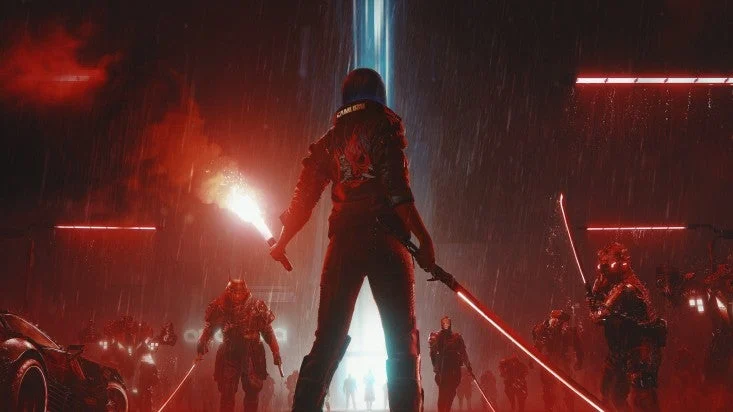
The landscape of the modern gaming industry is littered with cautionary tales, but few are as poignant or as high-profile as the trajectory of CD Projekt Red (CDPR). Once the industry’s golden child—beloved for its consumer-friendly policies and the critical acclaim of The Witcher 3: Wild Hunt—the Polish developer found itself at the center of a firestorm in late 2020. Now, years removed from the disastrous launch of Cyberpunk 2077, the studio is entering a phase of reflection and structural transformation.
In a recent candid appearance at DevGAMM Gdańsk, CD Projekt Joint-CEO Michał Nowakowski acknowledged that while the studio has made significant strides in fixing its reputation, the work is far from finished. For a company that once held the absolute trust of its player base, the path forward is defined by a singular, ambitious goal: proving that the lessons learned from their darkest hour have fundamentally changed how they create games.
The Chronology of a Crisis: From Hype to Infamy
To understand the weight of Nowakowski’s comments, one must revisit the timeline of the Cyberpunk 2077 saga.
The Peak of Anticipation
In the years leading up to 2020, Cyberpunk 2077 was arguably the most anticipated game in history. Following the immense success of The Witcher 3, expectations for CDPR’s foray into futuristic, open-world RPGs were astronomical. The marketing campaign, featuring Hollywood star Keanu Reeves, generated a level of cultural penetration rarely seen in gaming.
The December 2020 Catastrophe
When the game finally launched in December 2020, the reality failed to meet the marketing promise. While PC players encountered a functional, albeit buggy, experience, console players—particularly those on base PlayStation 4 and Xbox One hardware—faced a product that was largely unplayable. Performance was abysmal, crashes were frequent, and the game was riddled with immersion-breaking glitches.
The Fallout
The backlash was instantaneous and historic. CD Projekt Red saw its stock price plummet, faced multiple class-action lawsuits, and suffered the ignominy of having Cyberpunk 2077 removed from the PlayStation Store—an unprecedented move for a AAA title. The company’s reputation as an uncompromising, player-first studio was shattered overnight.
The Long Road to Recovery
The subsequent years were defined by a relentless, high-effort redemption arc. Through a series of major patches (most notably version 1.5 and 1.6) and the well-received Phantom Liberty expansion, the studio slowly rehabilitated the game. By 2023, the consensus had shifted; Cyberpunk 2077 was widely viewed as a masterpiece of the genre, proving that the foundation was sound even if the launch was a failure.
Supporting Data: By the Numbers
Despite the disastrous start, the commercial resilience of Cyberpunk 2077 serves as a testament to the power of the brand and the quality of the eventual product.
- Sales Milestones: As of the most recent reports, Cyberpunk 2077 has surpassed 35 million units sold. This figure confirms that even with the initial friction, the appetite for CDPR’s storytelling remained robust.
- The Cost of Development: The financial resources poured into the post-launch support and the Phantom Liberty expansion were substantial, representing a "re-investment" in the product that few companies would have the capital or the stomach to undertake.
- The "Red Engine" Overhead: Nowakowski’s comments regarding the shift away from their proprietary Red Engine highlight a technical bottleneck that likely contributed to the development woes. He noted that onboarding new developers to the complex, proprietary tech took between six to nine months—a timeframe he described as "crazy."
Official Responses: The Philosophy of Accountability
During his discussion with Jörg Tittel at DevGAMM Gdańsk, Nowakowski provided the most honest assessment of the company’s internal morale to date. He characterized the post-launch period as "heartbreaking," a term that underscores the emotional toll the controversy took on the studio’s staff.
The "Redemption Arc" Reality Check
Perhaps the most notable takeaway from the discussion was Nowakowski’s refusal to declare the mission accomplished. "I’m not 100% convinced we went through the full redemption arc," he admitted. "I’m convinced that we lost the faith of some people indefinitely, and that’s a fair thing."
This level of executive transparency is rare in the gaming industry. By acknowledging that some players may never return, Nowakowski signals a shift toward a more mature, realistic relationship with their audience. He frames the future of the studio—specifically the upcoming The Witcher 4—not as an immediate panacea for past sins, but as a commitment to long-term quality. "I do hope we will be able to make it back—if not with The Witcher 4, then with whatever comes next," he added.
A Stronger Foundation
Nowakowski argues that the trauma of the Cyberpunk launch forged a more resilient organization. "We were left with seasoned, battle-hardened veterans," he said, noting that the leaders who remained are now equipped to handle challenges that would have crippled the studio in previous years.
The Technical Pivot: Embracing Unreal Engine 5
One of the most significant strategic changes at CD Projekt Red is the abandonment of the Red Engine in favor of Epic Games’ Unreal Engine 5 (UE5) for future titles. This is a massive departure for a company that took great pride in building its own internal technology.
The Rationale for Change
The shift is fundamentally about sustainability and creative freedom. Nowakowski explained that the goal is to allow developers to focus on narrative and gameplay rather than fighting against the constraints of a proprietary, difficult-to-manage engine.
The Epic Partnership
In a unique arrangement, CDPR has gained access to the "black box" of Unreal Engine, allowing them to collaborate with Epic Games on the engine’s development. Nowakowski noted that they are currently the only studio outside of Epic to possess such deep-level access. This allows CDPR to customize the tech to meet their specific needs for massive, story-driven RPGs, ensuring that they can maintain their unique "CDPR DNA" while utilizing a industry-standard, well-documented backbone.
Implications for the Future: What Lies Ahead
As CD Projekt Red pivots toward its next generation of projects, the implications of their recent history are clear.
- Iterative Quality Over Marketing Hype: The studio is unlikely to return to the aggressive, long-lead marketing campaigns of the past. The focus has shifted toward building trust through tangible, demonstrable quality.
- Technological Efficiency: The move to UE5 should drastically reduce the time and energy spent on technical maintenance, theoretically allowing for more stable launches and more efficient content production cycles.
- Human-Centric Leadership: The emphasis on "battle-hardened" veterans suggests that the studio is prioritizing internal culture and talent retention. They recognize that their most valuable asset is the people who survived the "crunch" and the crisis, and who now lead the next wave of development.
The Road Ahead
The gaming world is watching closely. While the commercial success of Cyberpunk 2077’s post-launch life cycle proved that redemption is possible, the upcoming The Witcher 4 will be the ultimate test. It will be the first major title to launch under this new philosophy, utilizing new technology and built by a leadership team shaped by the scars of the past.
CD Projekt Red is currently in a state of quiet, intense labor. They have stopped promising the world and started focusing on the craftsmanship of their next chapter. Whether they can fully reclaim their position as the industry’s gold standard remains to be seen, but as Nowakowski’s comments suggest, they are no longer looking for a quick fix. They are playing the long game—one defined by humility, technical evolution, and the hope that, eventually, actions will speak louder than the memories of 2020.