Pevita Pearce
Updated: July 3, 2026
This week, Japan finds itself at a crossroads, grappling with a convergence of cultural scandals, economic instability, and the poignant end of a legendary artistic era. From the halls of the Imperial Palace to the high-stakes drama of the World Cup in Houston, the nation is witnessing significant shifts that are testing the resilience of its institutions and the morale of its public.
1. Industry Scandal: Harassment Allegations Shake Japanese Television
The entertainment industry is reeling following a explosive report in the Shukan Bunshun tabloid regarding the production of the Fuji TV drama Fufu Bessei Deka.
The Allegations
The report details serious accusations against 57-year-old veteran actor Jiro Sato. His co-star, 30-year-old actress Ai Hashimoto, alleges a pattern of "problematic behavior" and "serious harassment" during the filming of the series. According to the article, Hashimoto’s management had previously alerted production staff to her history of trauma, explicitly requesting that unscripted physical contact be avoided. The report claims that these boundaries were ignored by Sato on multiple occasions, culminating in invasive physical contact and disparaging comments regarding the actress’s career prospects.

Official Responses and Defense
The response from the accused has been swift and defensive. Sato’s agency, From First Production, issued a statement denying the allegations of malicious intent, characterizing the incidents as a misunderstanding. They maintained that Sato was never formally briefed on the specific restrictions regarding physical contact, describing the incident in question as an "accidental touch" to the chin during a scene.
Sato himself took to social media platform X to express his frustration, signaling a deep rift within the production team. "I cannot hold it in any longer," Sato wrote. "I repeatedly pleaded with them during filming, saying, ‘I’ve reached my limit, please let me step down from this drama.’ All the facts should be made public." Sato’s defense suggests a chaotic behind-the-scenes environment, raising questions about the management of the drama by Fuji TV and the adequacy of on-set safety protocols.
2. Economic Volatility: The Yen’s Historic Decline
Japan’s economic landscape is under intense scrutiny after the yen weakened to ¥162.83 against the US dollar on Tuesday—a level not seen in nearly 40 years.
The Macroeconomic Factors
The primary driver behind this depreciation is the widening interest rate differential between the Bank of Japan (BOJ) and the US Federal Reserve. Despite the BOJ raising its benchmark interest rate to 1.0% in June, the rate remains drastically lower than the US Fed’s 3.75%. This gap continues to incentivize investors to favor dollar-denominated assets, effectively draining the yen of its value. Geopolitical instability in the Middle East has served as a catalyst, further driving investors toward the safety of the dollar.

Government Intervention
Finance Minister Satsuki Katayama addressed the volatility with a familiar, cautious tone. Speaking to reporters on Tuesday, she emphasized the government’s readiness to "respond appropriately to currency moves at any time." The efficacy of such promises is being debated, especially considering that between April 28 and May 27, the government and the BOJ spent a record ¥11.73 trillion in currency intervention. While these efforts provided temporary support for the yen, the market remains largely unmoved by long-term government assurances, highlighting the limits of intervention in a globalized financial system.
3. Political Reform: The Future of the Imperial House
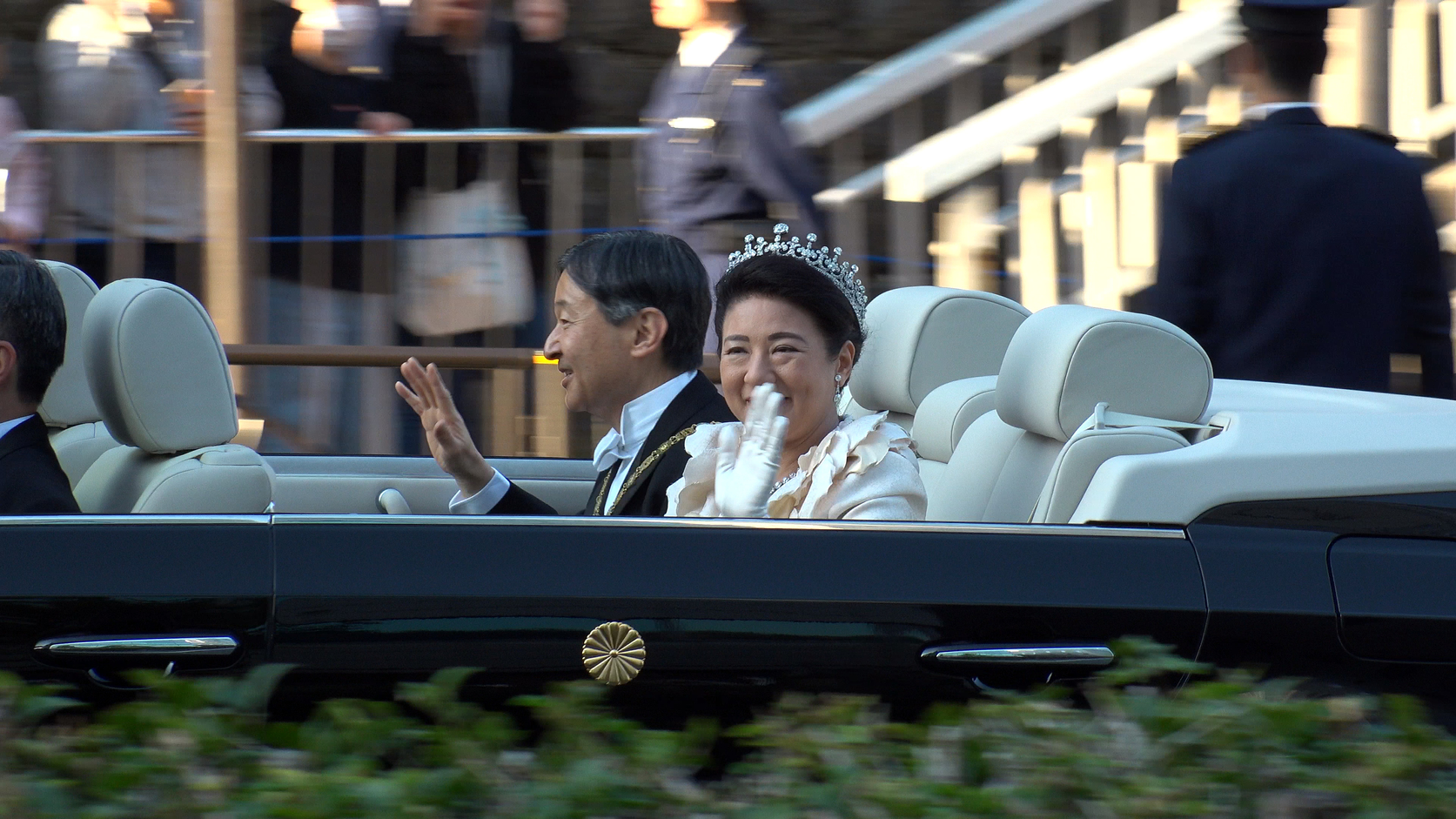
The Japanese government has officially adopted a bill to revise the Imperial House Law, a legislative attempt to solve the existential crisis of the shrinking royal family.
Legislative Details
The bill aims to modernize the institution while maintaining traditional constraints. Key provisions include allowing female imperial members to retain their royal status after marriage to commoners—a rule that previously stripped them of their titles. Furthermore, the bill introduces a framework to adopt male descendants from former imperial branches that were dissolved following World War II.
Public Sentiment vs. Policy
Crucially, the legislation avoids the most debated topic: allowing women to succeed to the Chrysanthemum Throne. Recent polling by The Asahi Shimbun and The Mainichi indicates a significant disconnect between the government and the citizenry. Over 70% of the public supports female succession, whereas the government’s proposal to re-integrate former imperial branches through adoption received a meager 28% approval rating. This suggests that the government’s efforts to stabilize the monarchy may be out of step with the modern expectations of the Japanese people.
4. Cultural Mourning: The Passing of Akihiro Miwa
Japan has lost a titan of the arts. Akihiro Miwa, the legendary chanson icon, stage actor, and voice talent, passed away on Sunday at the age of 91.
A Life of Defiance and Artistry
Born Akihiro Maruyama in 1935 in Nagasaki, Miwa’s life was defined by both trauma and transcendence. As a survivor of the atomic bombing of Nagasaki, he carried the scars of radiation and the memories of the catastrophe throughout his life. These experiences cemented his lifelong commitment to pacifism, which became a cornerstone of his songwriting, most notably in his signature ballad, "Yoitomake no Uta."
Miwa was a pioneer, famously challenging gender norms long before it was socially acceptable in Japan. His performances in Studio Ghibli masterpieces like Princess Mononoke and Howl’s Moving Castle introduced his distinct, haunting voice to a global generation. His portrayal of the femme fatale in The Black Lizard remains a masterclass in stage presence. His death marks the end of an era for Japanese counter-culture and artistic expression.
5. Consumer News: Mister Donut’s "Mocchurin" Phenomenon
In a bizarre turn of market success, Mister Donut has announced the early discontinuation of its "Mocchurin" doughnut line—not due to failure, but due to overwhelming, unmanageable demand.

The "Too Popular to Last" Crisis
The second wave of the Mocchurin release was intended to run through mid-August. However, the popularity of the kinako and mitarashi flavors caused such extreme congestion at retail outlets that the company deemed it a safety and operational liability.
"We have decided to cancel the release of the second series of products to avoid inconveniencing customers," the company stated. Mister Donut has effectively sacrificed its own product sales to maintain store order, a rare move that highlights the intensity of Japan’s seasonal limited-edition marketing culture.
6. Sporting Heartbreak: The Samurai Blue Exit the World Cup
The sporting world turned its eyes to Houston this week as Japan faced Brazil in the Round of 32. It was a match that began with promise and ended in heartbreak.
The Match Chronology
Japan took an early lead in the 27th minute through Kaishu Sano, sparking hope of an upset. Brazil equalized through Casemiro, keeping the match locked in a tense stalemate for much of the second half. Just as the game appeared destined for the unpredictability of extra time, tragedy struck in the final minutes of stoppage time.

Ao Tanaka lost possession on the edge of the penalty area, allowing Bruno Guimarães to thread a precise pass to Arsenal’s Gabriel Martinelli. Martinelli’s clinical finish put Brazil ahead 2-1, ending Japan’s World Cup journey in the final seconds of play.
Implications and Reflections
The defeat was reminiscent of Japan’s 2018 World Cup exit against Belgium, leaving the national team and its supporters to reflect on the fine margins of elite football. Brazil’s manager, Carlo Ancelotti, offered a moment of grace post-match, declining to celebrate in deference to the immense effort shown by the Japanese squad. "I looked across and saw a Japanese team that had given absolutely everything," Ancelotti noted. For Japan, the result is a bitter pill, but one that underscores their emergence as a formidable, if currently unlucky, global footballing force.


 Neng Nana
 Asro
Asro