

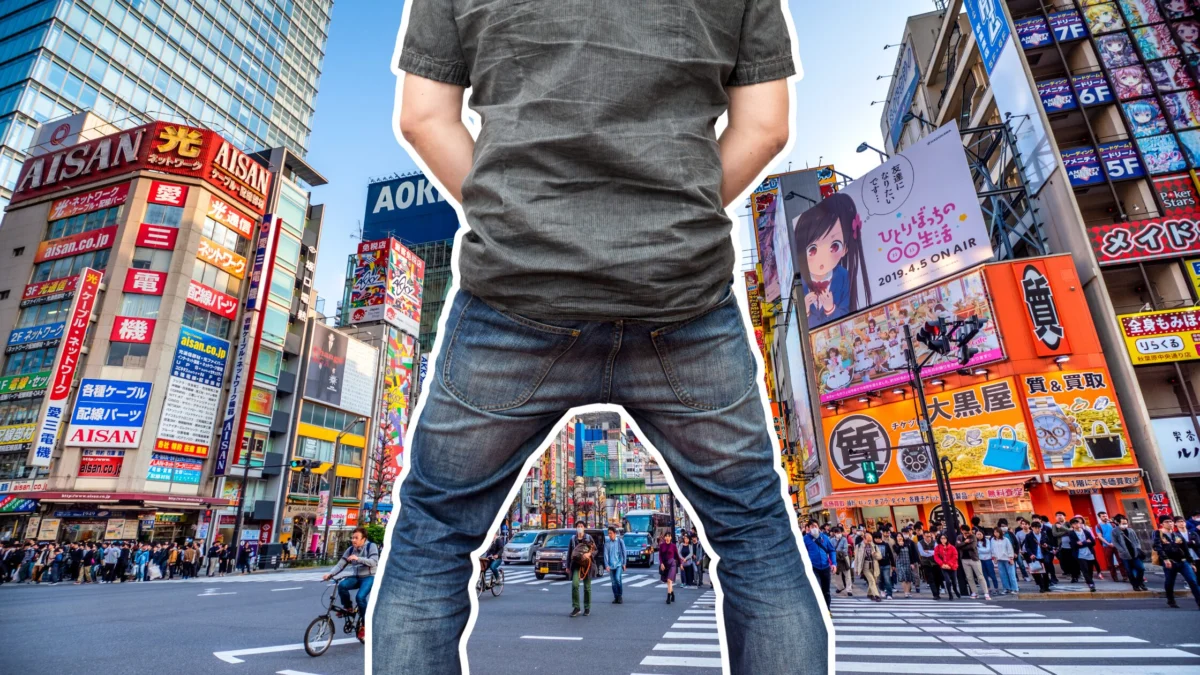
The prevailing narrative surrounding Japanese society often emphasizes a rigid adherence to social norms, a collective commitment to wa (harmony), and an almost mythical level of public cleanliness. To the uninitiated visitor, the pristine streets of Tokyo or the orderly queues at train stations suggest a populace that has long since transcended the "uncivilized" impulses of the West. Yet, a closer inspection of urban infrastructure reveals a peculiar contradiction: the ubiquitous, blunt signage—tachi-shōben (public urination) prohibited—that remains a fixture in many Japanese underpasses and alleyways.
If Japan is truly a nation defined by self-regulation and polite adherence to the rules, why does it require aggressive, laminated warnings to prevent adults from relieving themselves in public? The answer is not found in a sudden lapse of modern etiquette, but in a fascinating, centuries-old evolution of urban planning, agricultural necessity, and the clash between tradition and modernization.
The Edo Era: When Night Soil Was Gold
To understand the current tension between public behavior and social prohibition, one must look back to the Edo period (1603–1868). During these 265 years of relative isolation, Japan was forced to develop a highly efficient, closed-loop economy. With limited access to international trade, the nation could not rely on synthetic fertilizers or imported agricultural resources.
In this context, human waste—referred to as shimogoe, or "night soil"—became a precious commodity. It was not viewed with the disgust typical of Western sensibilities; rather, it was the lifeblood of the agrarian economy. Landlords in the burgeoning urban centers of Edo (modern-day Tokyo) famously generated a significant secondary income by selling the excrement of their tenants to farmers, who would travel into the city to collect it. Historical records indicate that a landlord could earn between 1 and 2 ryō annually—a sum that, adjusted for inflation, could equate to several thousand dollars in today’s purchasing power.
![[Insider] Urine Nation: Japan’s 150-Years-Long War Against Peeing in Public](https://media.unseen-japan.com/wp-content/uploads/2026/06/Urine-Nation-Peeing-in-Public.jpg)
Because human waste was a valuable asset, the city of Edo actually encouraged the collection of urine. Farmers installed shōben-oke (urinal buckets) throughout the city, particularly in densely populated districts like Nihonbashi and Asakusa. By the late 18th century, the system was so integrated into the city’s logistics that over 1,500 river boats were dedicated exclusively to the transport of fertilizer. In the Edo mindset, urinating in a designated bucket wasn’t a "dirty" act—it was a civic contribution to the national food supply.
The Meiji Transformation: The Collision of Modernity and Habit
The Meiji Restoration (1868) brought with it the rapid importation of Western ideals. As Japan sought to modernize and gain parity with European powers, it began to view the casual habits of the Edo period as embarrassing obstacles to international prestige.
The government’s shift toward sanitation was not initially driven by a sudden moral epiphany regarding public decency, but by a desire to project a "civilized" image to the West. The 1878 Ishiki Kaii Ordinances (Police Regulations) marked a turning point. These decrees formally banned a host of behaviors deemed "backward," including public nudity, mixed-gender bathing, and, crucially, public urination.
The authorities utilized woodblock prints—the mass media of the day—to educate a largely illiterate populace on these new, stringent laws. These prints depicted, in explicit detail, the types of behaviors that were now subject to fines, such as allowing a child to relieve themselves at a storefront or simply choosing a wall in the city over a lavatory. However, the transition was far from seamless. Public urination was a deeply ingrained habit, reinforced by centuries of economic utility. The law, therefore, met with significant resistance, as the infrastructure for public toilets remained woefully inadequate for a rapidly industrializing population.
![[Insider] Urine Nation: Japan’s 150-Years-Long War Against Peeing in Public](https://media.unseen-japan.com/wp-content/uploads/2026/06/image-13-7.jpg)
The Shōwa Era: Urbanization and the Torii Gate Defense
As Japan accelerated through the Shōwa era (1926–1989), the country experienced an unprecedented urban explosion. The rapid growth of the "bubble economy" saw concrete jungles rise, creating dark, secluded nooks in underpasses and behind buildings—the perfect environments for those ignoring the now-prohibited tachi-shōben.
Facing the persistent issue of "pissing in the streets," local neighborhood associations adopted a uniquely Japanese strategy: the strategic placement of religious iconography. In many urban centers, residents began attaching small Shinto torii (gate) markers or placing small stone figures of Jizō (a Buddhist guardian deity) on walls that were frequently targeted by public urinators.
The logic was profound in its psychological simplicity. By imbuing a wall with religious significance, the act of urination shifted from a mere nuisance to a profound act of sacrilege. For a citizen who might ignore a government sign, the fear of divine retribution or the social shame of desecrating a sacred space proved far more effective. Even today, if one looks closely at the base of certain walls in old Tokyo neighborhoods, these small, weather-beaten signs and shrines remain—silent sentinels against a centuries-old habit.
Official Responses and Modern Implications
In the contemporary era, the issue has largely subsided due to the construction of a world-class network of public toilets—found in every convenience store, train station, and park. Yet, the persistent need for "No Public Urination" signs in specific "red-light" or nightlife districts, such as Shinjuku’s Kabukicho, reveals that the struggle is less about a lack of facilities and more about the intersection of alcohol and nocturnal culture.
![[Insider] Urine Nation: Japan’s 150-Years-Long War Against Peeing in Public](https://media.unseen-japan.com/wp-content/uploads/2026/06/uj-pee-2-hiroshige-naito-shinjuku-1857.jpg)
Modern municipalities treat public urination as a minor offense, typically handled under local ordinances related to public nuisance (meiwaku-bōshi). Penalties vary, but the primary deterrent remains the shame of public exposure and the threat of a police record.
However, the continued presence of these signs serves as a vital reminder that Japan’s "orderly" reputation is a carefully maintained construct. It is not an innate, immutable trait of the Japanese people, but rather the result of a rigorous, centuries-long effort by authorities to shape public conduct.
Conclusion: The Persistence of History
The story of public urination in Japan is not merely a humorous footnote in history; it is a lens through which we can observe the modernization of a nation. It illustrates the shift from a society where the body’s functions were part of a circular, productive economy to one where those same functions were privatized and policed in the name of civic decorum.
When a visitor sees those blunt, laminated signs in a Tokyo alleyway, they are witnessing the echoes of a battle that has been fought since the Meiji era. They are seeing the friction between a history where the streets were an open, functional space and a modern reality where every inch of urban land is strictly regulated. Japan remains one of the safest and cleanest countries in the world, but as the persistence of tachi-shōben signs demonstrates, even the most disciplined societies are constantly negotiating the boundary between their primal habits and the demands of modern civilization.











