Nana Wu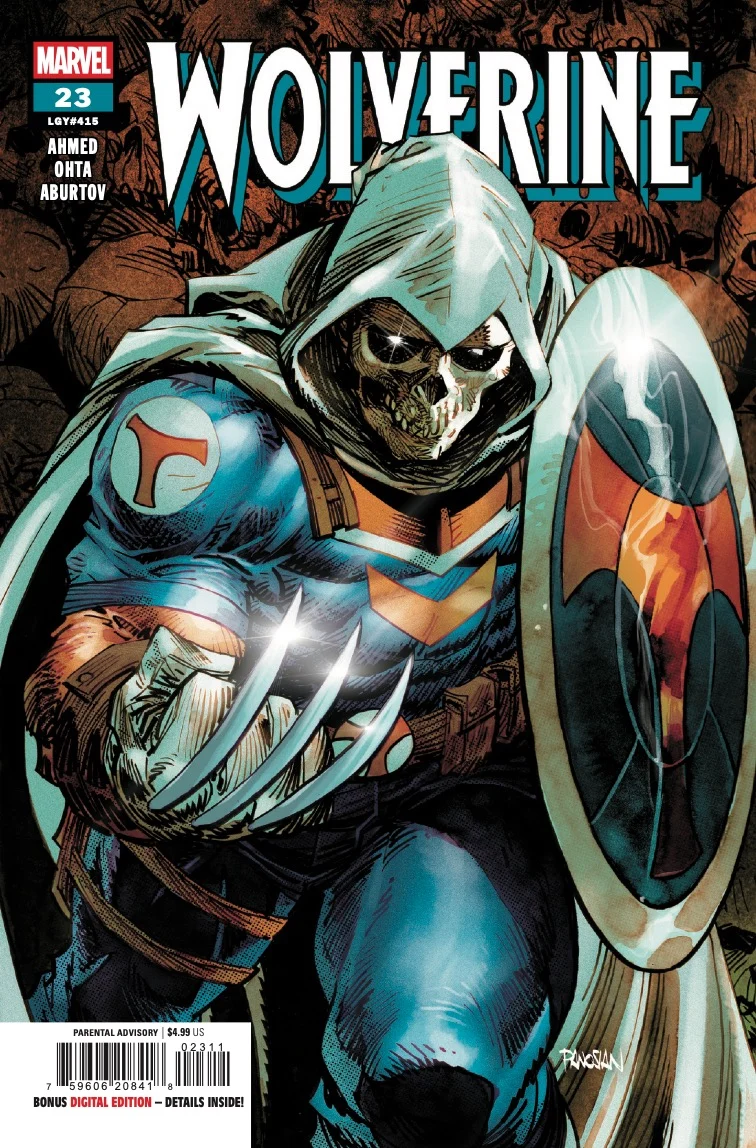
As the Marvel Universe continues to evolve, few characters remain as consistently compelling—or as frequently imperiled—as Logan, the man known as Wolverine. In the upcoming release of Wolverine #23, set to hit shelves on July 8, 2026, writer Saladin Ahmed, alongside artists Julius Ohta and colorist Jesus Aburtov, is poised to push the legendary mutant to his absolute breaking point. This latest installment, carrying the historical weight of Legacy #415, promises a harrowing exploration of vulnerability, identity, and the brutal reality of what happens when a hero’s greatest assets are turned against him.
Main Facts: A Hero Stripped Bare
The premise of Wolverine #23 is built upon a terrifying narrative pivot: the intersection of Logan’s physical degradation and the opportunistic malice of his deadliest foes. For decades, the primary threat posed by Wolverine has been the combination of his indomitable will, his accelerated healing factor, and his razor-sharp adamantium claws. In this current arc, however, the playing field has been violently leveled.
Logan is currently grappling with shattered claws and significantly diminished mutant abilities. This state of relative helplessness is not merely a plot device; it serves as a thematic crucible, forcing the character to rely on his wits, his tactical experience, and his survival instincts in ways he hasn’t been forced to in years. The central conflict of this issue is a "Power Grab" of the highest stakes: Logan’s enemies are not just attempting to kill him—they are attempting to possess and weaponize the very attributes that define him. By stripping away his physical superiority, the creative team is highlighting the fragility of a hero who has spent his entire existence functioning as an invincible weapon.

Chronology: The Road to #23
To understand the gravity of the situation in Wolverine #23, one must look back at the trajectory of the current run. Under Saladin Ahmed’s stewardship, the series has moved away from the bombastic, high-concept superheroics often associated with the X-Men, favoring instead a gritty, street-level noir aesthetic that emphasizes the "man" over the "mutant."
Throughout the preceding issues, Logan has been systematically isolated. His traditional support networks within the mutant community have been strained by broader geopolitical shifts in the Marvel Universe, and his personal physical condition has been deteriorating due to a series of calculated attacks and systemic stressors.
- The Early Issues: The initial chapters established the "de-powered" status quo, with readers witnessing the toll of constant conflict on Logan’s physiology.
- The Mid-Arc Escalation: As the threat level rose, Logan found himself targeted by various mercenaries and underworld syndicates who sensed blood in the water.
- The Current Threshold: Wolverine #23 serves as the climax of this "Power Grab" arc, where Taskmaster—an antagonist uniquely suited to capitalize on Logan’s current state—makes his move. The chronology of this story is essential because it illustrates that Logan’s current vulnerability is not a sudden accident, but the culmination of a long-term, multi-pronged effort to dismantle his legend.
Supporting Data: The Taskmaster Factor
The inclusion of Taskmaster (Anthony "Tony" Masters) as the primary antagonist for this issue is a stroke of narrative brilliance. Taskmaster’s ability to replicate the physical movements and combat styles of any hero he observes makes him the perfect mirror to a weakened Wolverine.
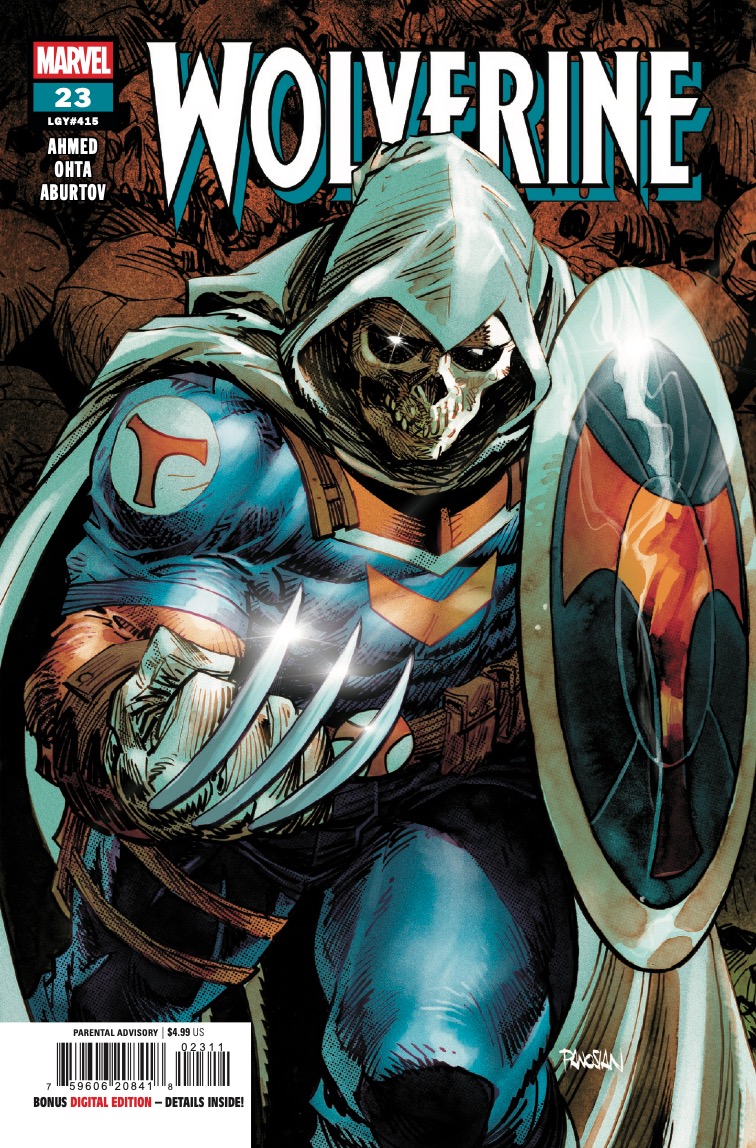
When fighting a full-strength Wolverine, Taskmaster faces an uphill battle against raw power and a healing factor that renders most conventional attacks moot. However, with Logan’s powers diminished and his claws fractured, Taskmaster is effectively fighting an aging, injured combatant—a scenario where his photographic reflexes are significantly more lethal.
The preview art by Julius Ohta showcases this dynamic with visceral intensity. Ohta’s panels focus on the physicality of the fight: the grit on Logan’s face, the awkwardness of his movements without his full healing factor, and the clinical precision of Taskmaster’s strikes. Jesus Aburtov’s color palette, which leans into deep shadows and muted, bruised tones, emphasizes that this is not a glorious battle for the fate of the world, but a desperate, dirty fight for survival. The juxtaposition of a hero trying to preserve his legacy against a villain who literally "steals" the legacies of others provides a thematic depth that transcends the typical action-comic format.
Official Responses and Creative Vision
While Marvel Comics has remained tight-lipped regarding the long-term resolution of this arc, writer Saladin Ahmed has hinted in previous interviews that the intention is not to kill Wolverine, but to redefine his necessity in the modern Marvel landscape.

"When you take away the invincibility of a character like Logan," Ahmed noted in a recent industry press briefing, "you aren’t just taking away his powers—you are forcing the reader to look at the man who has lived for over a century. What does he have left when the claws don’t work? That is the heart of this story."
The creative team has been lauded for their commitment to this "grounded" approach. By focusing on the 32-page count with tight, character-driven scripting, Ahmed and Ohta are creating a narrative that feels intimate and claustrophobic. The editorial stance from Marvel is that this arc is a "necessary evolution," suggesting that the current status quo—regardless of how it ends—will have lasting consequences for the X-Men’s most famous member.
Implications: A New Era for Logan?
The implications of Wolverine #23 extend far beyond the single issue. If Logan survives this encounter with Taskmaster, he will emerge as a fundamentally changed character. The "Power Grab" suggests a shift in the hierarchy of the Marvel underworld. If a villain can successfully mimic or outright steal the powers of an A-list hero, the danger to the wider Marvel Universe increases exponentially.

Furthermore, the persistent nature of Logan’s injury—the shattered claws—suggests a permanent change in his aesthetic and tactical approach. In an industry where "status quo" resets are common, the decision to maintain these injuries across multiple issues signals that Marvel is committed to a longer-term narrative arc.
Broader Considerations:
- The Vulnerability Trend: This issue is part of a larger trend in modern comics to explore the vulnerability of "legacy" characters. By aging them or stripping them of their powers, creators are testing the durability of these icons.
- Villain Evolution: The success of characters like Taskmaster in the current landscape of the Marvel Universe suggests that tactical, intelligent villains are becoming more popular than the traditional "world-conquering" threats.
- The Reader Experience: For long-term fans, seeing Wolverine in a weakened state is uncomfortable, but it invites a re-evaluation of the character. It shifts the reader’s focus from "how will he win?" to "how will he survive?"
As the release date of July 8, 2026, approaches, anticipation is building. Wolverine #23 stands as a testament to the fact that, even after decades of publication, there is still room for fresh, compelling, and deeply human stories within the Marvel Universe. Whether or not Logan can reclaim his power or if he will be forced to adapt to a new, more fragile reality remains to be seen. One thing is certain: when the dust settles, the legacy of the Wolverine will be irrevocably altered.
Wolverine #23, written by Saladin Ahmed with art by Julius Ohta and Jesus Aburtov, will be available in comic book stores and via digital platforms on July 8, 2026. The issue features a striking cover by Dan Panosian.

 Sagoh
Sagoh
 Ammar Sabilarrohman