Suro Senen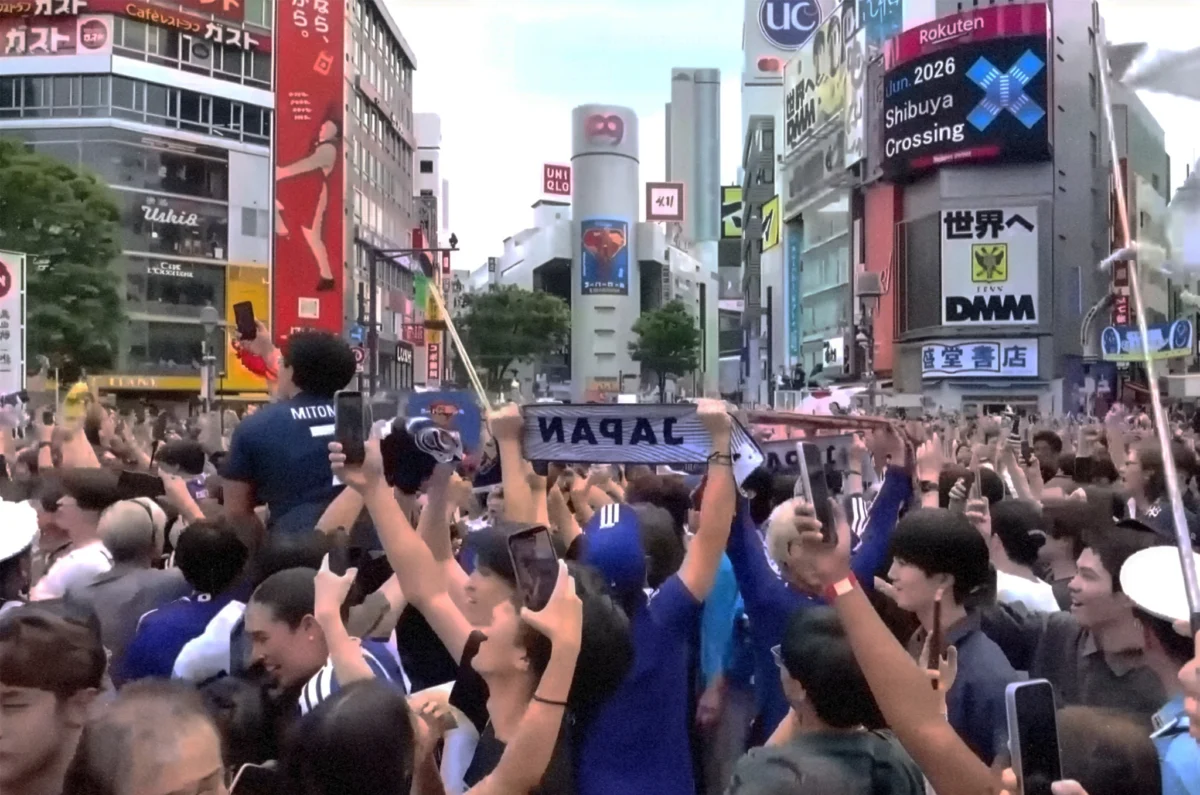
MONTERREY, MEXICO – In a milestone evening that marked the 1,000th match in the history of the men’s FIFA World Cup, the Japanese national team delivered a masterclass in efficiency and tactical discipline. Crushing Tunisia 4-0 at the Estadio Monterrey on Sunday, the "Samurai Blue" did more than secure three vital points; they signaled to the global footballing community that they are a legitimate force to be reckoned with in the 2026 tournament.
The victory was spearheaded by Ayase Ueda, who bagged a clinical brace, while Daichi Kamada and Junya Ito rounded out the scoring in a match that saw Japan control the tempo from the opening whistle to the final blow.
A Chronology of Dominance
The match began with a statement of intent. Just four minutes into the contest, Daichi Kamada found the back of the net, silencing the Tunisian contingent and setting the tone for a lopsided affair. The early goal forced Tunisia to abandon their defensive structure, opening gaps that Japan’s fluid attacking transition exploited with surgical precision.
By the time the halftime whistle blew, Japan had effectively neutralized Tunisia’s midfield, with Junya Ito providing the width and creativity necessary to dismantle the African side’s backline. Ayase Ueda’s two goals in the second half were the crowning achievements of a cohesive team performance. For a nation that has often been categorized as a disciplined but ultimately limited squad, this match represented a shift in perception: Japan is no longer just a defensive side; they are clinical finishers.
The statistics tell a compelling story. This was the first time in Japan’s World Cup history that the squad has managed to net four goals in a single fixture. The victory leaves Japan deadlocked with the Netherlands in their group—both teams sharing identical points and goal differences—setting the stage for a dramatic final round of group-stage matches.
Shibuya: The Heartbeat of a Nation
While the action unfolded thousands of miles away in the heat of Mexico, the soul of the celebration was rooted in the iconic Shibuya Crossing in Tokyo. As the final whistle echoed through the Monterrey stadium, the streets of Tokyo became a sea of blue jerseys.
The scene at Shibuya has become a secular pilgrimage for Japanese football fans. It is a spectacle defined by a unique paradox: a "controlled chaos" that mirrors the Japanese approach to life. Thousands of fans gathered, waiting for the pedestrian crossing lights to signal their turn. Once the lights changed, the intersection became a stage for jubilation—fans chanted, waved flags, and shared a collective sense of national pride. Then, as quickly as they surged, they retreated to the sidewalks to allow traffic to resume.
Local authorities were out in force, deploying significant police resources to manage the swelling crowds. Despite the massive numbers, the festivities remained largely peaceful, a testament to the societal discipline that characterizes Japan’s public life.
Beyond the Pitch: The "Gomi Hiroi" Phenomenon
While the four-goal haul captured the headlines, the behavior of Japanese supporters in the stands of the Estadio Monterrey sparked a different kind of global conversation. Following the match, fans were filmed once again engaging in gomi hiroi—the act of cleaning the stadium after the game.
Equipped with their signature blue trash bags, the supporters methodically cleared the stands of debris. This ritual, which first gained international prominence during the 2018 World Cup in Russia, has become a hallmark of the Japanese fanbase. However, the discourse surrounding this behavior has evolved. While some critics argue that the practice is performative—a display designed more for cameras than for genuine altruism—the overwhelming consensus among stadium staff and international observers is one of profound admiration.
"It is a reflection of a deep-seated cultural value system," says Dr. Kenji Sato, a sociologist specializing in Japanese sports culture. "It is not meant to be a performance; it is a manifestation of the idea that one should leave a space better than they found it. To these fans, the stadium is a shared space, and their conduct is an extension of their national identity."
Implications for the World Cup Campaign
The mathematical implications of Sunday’s result are significant. With a final group match against Sweden looming, Japan sits in a position of strength. A draw will be sufficient to secure their passage into the knockout stages. Even in the event of a narrow loss, their current goal difference makes them a prime candidate to progress as one of the best third-placed teams.
However, the team’s aspirations appear to have shifted. Under the leadership of manager Hajime Moriyasu, the Samurai Blue have displayed a level of tactical maturity that was noticeably absent in previous campaigns. Following a gritty, hard-fought draw against the Netherlands earlier in the week, the dominant win over Tunisia suggests that Japan has successfully balanced defensive solidity with a lethal attacking edge.
Tactical Shifts Under Moriyasu
Moriyasu’s tenure has been defined by a focus on "transition football." By utilizing high-pressing tactics and rapid counter-attacks, he has optimized the strengths of players like Ito and Ueda. The team no longer relies on slow build-up play; they are now capable of turning defense into a goal-scoring opportunity in a matter of seconds.
The Road Ahead: The Sweden Challenge
The upcoming match against Sweden will be the true litmus test for this squad. Sweden, known for their physical and aerial prowess, will offer a drastically different challenge than the technical, possession-oriented style of Tunisia.
"We are not looking at the math," a spokesperson for the Japan Football Association (JFA) noted in a post-match briefing. "We are looking at our own performance. We believe that if we play our style, we can compete with any team in this tournament."
The pressure on the players is immense, but they have shown an uncanny ability to compartmentalize the weight of expectation. Whether it is the fans cleaning the stadium or the players maintaining their focus in the final third, the Samurai Blue are operating with a level of synchronicity that suggests they are capable of doing more than just advancing—they are capable of a deep run in the 2026 World Cup.
Conclusion: A Nation United
The images from Monterrey and Shibuya tell the same story: a nation fully invested in its footballing future. For the average Japanese citizen, this World Cup has become a catalyst for national unity. The team’s success has provided a rare moment of collective joy, and the supporters’ conduct has provided a blueprint for how sports can act as a bridge between cultures.
As the tournament moves into its next phase, the eyes of the world will remain fixed on the Samurai Blue. Whether they find themselves lifting the trophy in the final or bowing out in the knockout stages, one thing is certain: they have already won the respect of the global footballing community. Through discipline, tactical evolution, and an unwavering commitment to the collective, Japan has proven that they are no longer just participating in the World Cup—they are shaping it.
As the fans in Shibuya prepare for the final group match, the atmosphere is electric. The lights will turn green, the crowd will spill into the intersection, and for a few brief moments, the entire nation will be united in the dream that this year, the Samurai Blue might just go all the way.


 Neng Nana
 Asro
Asro