

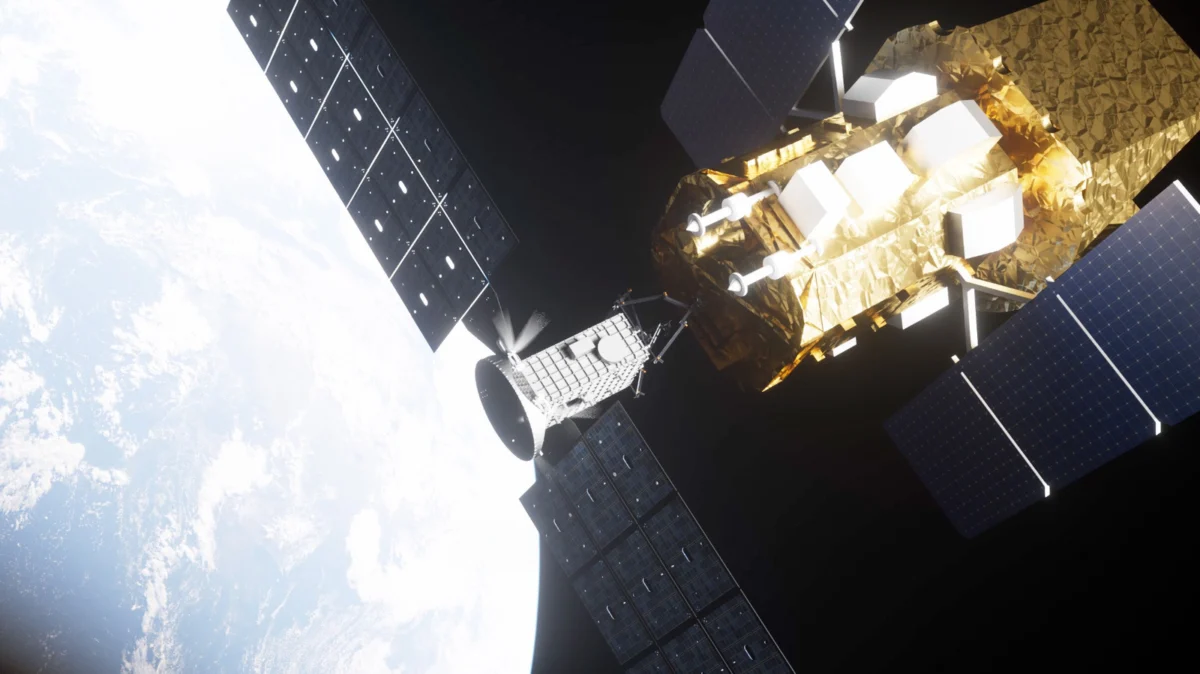
In a landmark achievement for orbital maintenance and space sustainability, NASA has successfully initiated the "Swift Boost" mission. Launched on July 3, 2026, from the remote Kwajalein Atoll in the Marshall Islands, this ambitious project aims to save the aging Neil Gehrels Swift Observatory from an untimely atmospheric re-entry. By deploying a specialized robotic spacecraft known as LINK, NASA and its commercial partner, Arizona-based Katalyst Space, are attempting to perform a complex, autonomous docking maneuver in low-Earth orbit to extend the life of a scientific asset that has fundamentally changed our understanding of the high-energy universe.
The Mission: A Unique Launch for a Unique Problem
The launch on July 3 was far from conventional. Unlike the massive vertical liftoffs associated with heavy-lift vehicles at Cape Canaveral, the Swift Boost mission utilized a "drop-launch" architecture. The LINK spacecraft was secured to a Northrop Grumman Pegasus XL rocket, which was nestled beneath the belly of the Stargazer carrier aircraft.
As the Stargazer reached an altitude of approximately 40,000 feet, it released the Pegasus XL rocket. Following a brief period of freefall to ensure safety and trajectory, the rocket’s engines ignited, propelling the LINK spacecraft into orbit. This air-launch method provides a cost-effective, flexible, and responsive capability, allowing the mission to bypass traditional scheduling constraints and launch from precise locations over the ocean.
Following the successful delivery to orbit, NASA’s mission control confirmed the most critical first milestone: establishing stable communication with the LINK vehicle. The spacecraft is now operational, and engineers from Katalyst Space have begun a rigorous, multi-week health check to verify the integrity of its propulsion, sensor arrays, and sophisticated navigation systems.
Chronology of a Crisis: Why Swift Needed Saving
The Neil Gehrels Swift Observatory has been a cornerstone of gamma-ray astronomy for over two decades. However, even the most robust spacecraft are subject to the inexorable pull of Earth’s atmosphere. The primary culprit behind Swift’s rapid orbital decay has been the recent, intense cycle of solar activity.
As the Sun enters its peak activity phase, the increased energy output heats the Earth’s upper atmosphere, causing it to expand. This expansion increases atmospheric drag on satellites in low-Earth orbit, significantly accelerating their rate of descent. NASA engineers noted that the Swift observatory was losing altitude at a rate that would have resulted in an uncontrolled re-entry and subsequent destruction by the end of 2026.
The Timeline of the Rescue:
- Early 2026: NASA identifies that the Swift observatory’s orbital decay has accelerated beyond original safety margins due to solar-driven atmospheric drag.
- May 2026: Mission planning for "Swift Boost" is finalized, identifying the LINK robotic tug as the optimal solution for re-orbiting.
- July 3, 2026 (4:36 AM ET): The Stargazer aircraft releases the Pegasus XL rocket from the Marshall Islands, successfully delivering the LINK spacecraft to orbit.
- July 2026 (Ongoing): LINK undergoes comprehensive systems diagnostics and navigation calibration.
- August – September 2026: LINK will approach the Swift observatory for a delicate survey and subsequent docking procedure.
- October 2026 (Projected): The docking and re-boost maneuver will be finalized, pushing Swift to a safer altitude of approximately 370 miles, extending its operational lifespan by an estimated decade.
Engineering the Rescue: The Role of the LINK Spacecraft
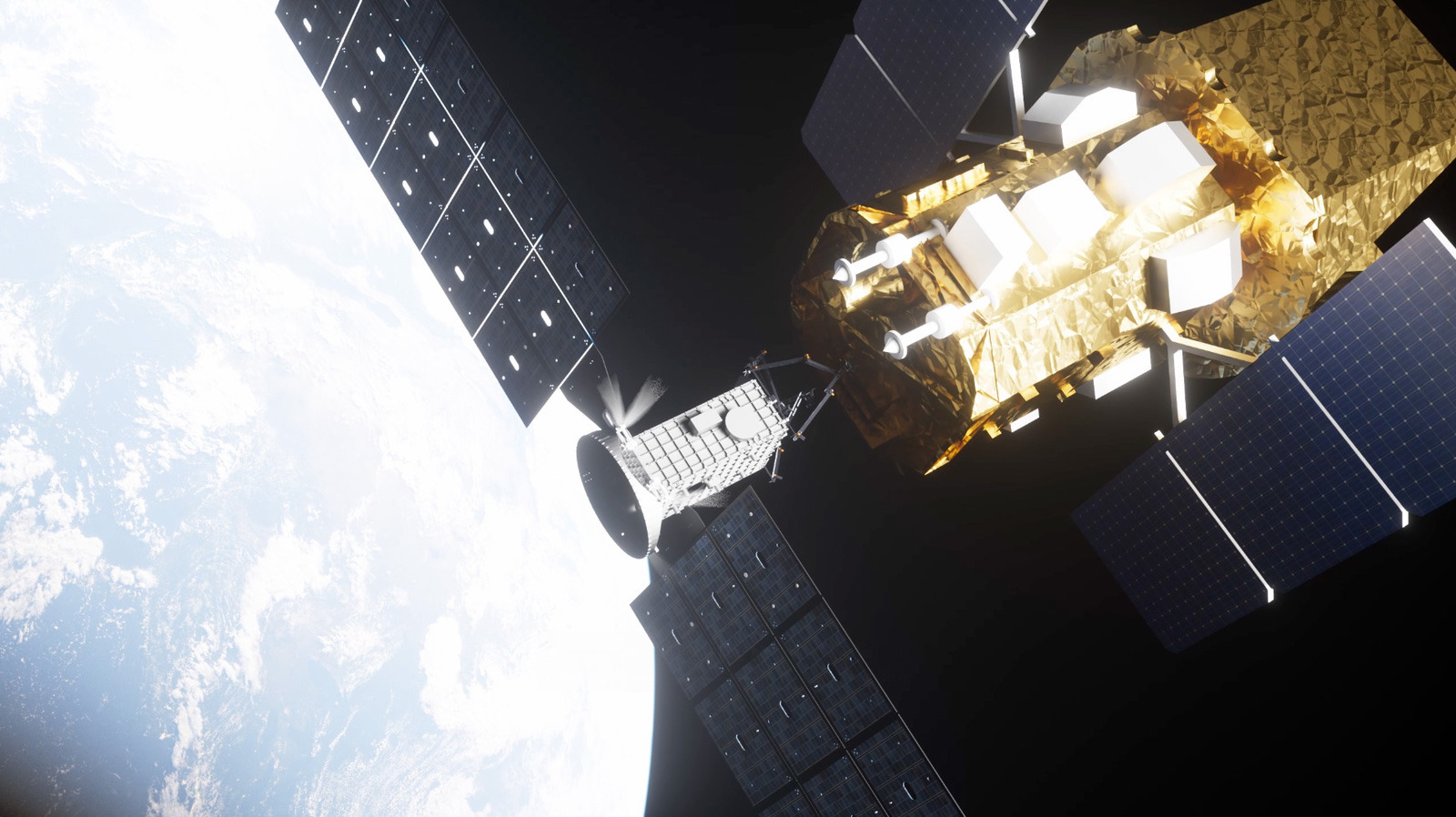
The LINK spacecraft, designed by Katalyst Space, represents the cutting edge of robotic orbital servicing. The challenge of docking with a non-cooperative or aging satellite is immense. The Swift observatory was not designed for mid-life refueling or orbital adjustments, meaning LINK must act with extreme precision.
The spacecraft is equipped with three advanced robotic arms designed to interface with the structural frame of the Swift observatory. The docking process requires perfect synchronization; any error in velocity or approach angle could result in a collision that would end the mission prematurely. Once secured, LINK will act as a "tugboat," using its own propulsion system to nudge the combined stack of spacecraft into a higher, more stable orbit.
The entire re-boosting phase is expected to span 10 to 12 weeks. This slow-and-steady approach is necessary to ensure that the structural integrity of both the aging observatory and the docking arms is maintained throughout the acceleration process.
Supporting Data: The Science at Stake
The Neil Gehrels Swift Observatory is far more than just a piece of hardware; it is a vital cosmic "first responder." Its primary mission is the study of gamma-ray bursts (GRBs)—the most powerful explosions in the universe.
Brad Cenko, Swift’s principal investigator, highlights the observatory’s unique value: "Gamma-ray bursts are short-lived flashes of high-energy light that release more energy in just a few seconds than the sun will in its entire lifetime." These phenomena are generally believed to be the signatures of cataclysmic events, such as the collapse of massive stars or the violent collision of binary neutron stars.
Beyond merely observing these events, Swift has provided empirical evidence for some of the most significant discoveries in modern astrophysics. Data retrieved from the observatory confirmed that the heaviest elements in the periodic table—including gold and platinum—are forged within the extreme environments created by these stellar collisions. By acting as a "dispatcher" for the global astronomical community, Swift provides the necessary coordinates for ground-based and space-based telescopes to pivot and observe transient cosmic events in real-time, effectively creating a multi-messenger network of discovery.
Official Responses and Strategic Implications
The success of the Swift Boost mission marks a pivot point in how NASA manages its long-term assets. As space becomes increasingly crowded and the cost of replacing scientific observatories continues to climb, life-extension missions are transitioning from experimental concepts to strategic necessities.
"The ability to reach out and maintain our existing assets is a game-changer," stated a spokesperson for the NASA Science Mission Directorate. "By extending the life of the Swift observatory, we are essentially gaining ten years of world-class science for the cost of a servicing mission, rather than the significantly higher cost of building, launching, and calibrating a replacement from scratch."
Furthermore, the collaboration with a commercial entity like Katalyst Space underscores NASA’s ongoing commitment to the "New Space" economy. By contracting private firms to develop specialized tugs and servicing hardware, NASA is stimulating innovation while maintaining its focus on the primary scientific goals.
The Future of Orbital Maintenance
The implications of this mission extend far beyond the rescue of one telescope. If the LINK spacecraft successfully docks and boosts the Swift observatory, it will validate the feasibility of a "circular economy" in space. This model moves away from the "launch and abandon" philosophy that has dominated the space industry since the dawn of the Space Age.
In the future, we may see dedicated fleets of robotic tugs positioned in orbit, ready to provide station-keeping, debris removal, or even repair services for critical infrastructure. The Swift Boost mission is the proof-of-concept for this new era. As we look toward the next decade, the success of this rescue could very well define the parameters for how humanity maintains its foothold in space, ensuring that our most valuable scientific instruments remain operational for as long as they can provide data.
As the LINK spacecraft continues its journey toward its rendezvous with Swift, the global scientific community remains in a state of cautious optimism. If successful, the mission will not only save a legendary telescope but will also secure a precedent for a more sustainable, resilient, and enduring human presence in the orbital environment. The Swift observatory has spent twenty years looking into the past to understand the origins of the elements; now, it is the focus of a mission that looks toward the future of how we inhabit the stars.











