

By Chase DiBenedetto | June 9, 2026
Introduction: A City Caught in Fever
New York City has spent the better part of the last two weeks bathed in an electric, orange-and-blue glow. For the first time in 27 years, the New York Knicks have fought their way to the NBA Finals, transforming the five boroughs into a sprawling, frenetic celebration. From the Bronx to the Battery, residents have been donning custom-airbrushed jerseys, flooding the streets, and turning the subway system into a subterranean dance floor. The atmosphere was one of collective euphoria—a city united by the singular pursuit of a championship title.
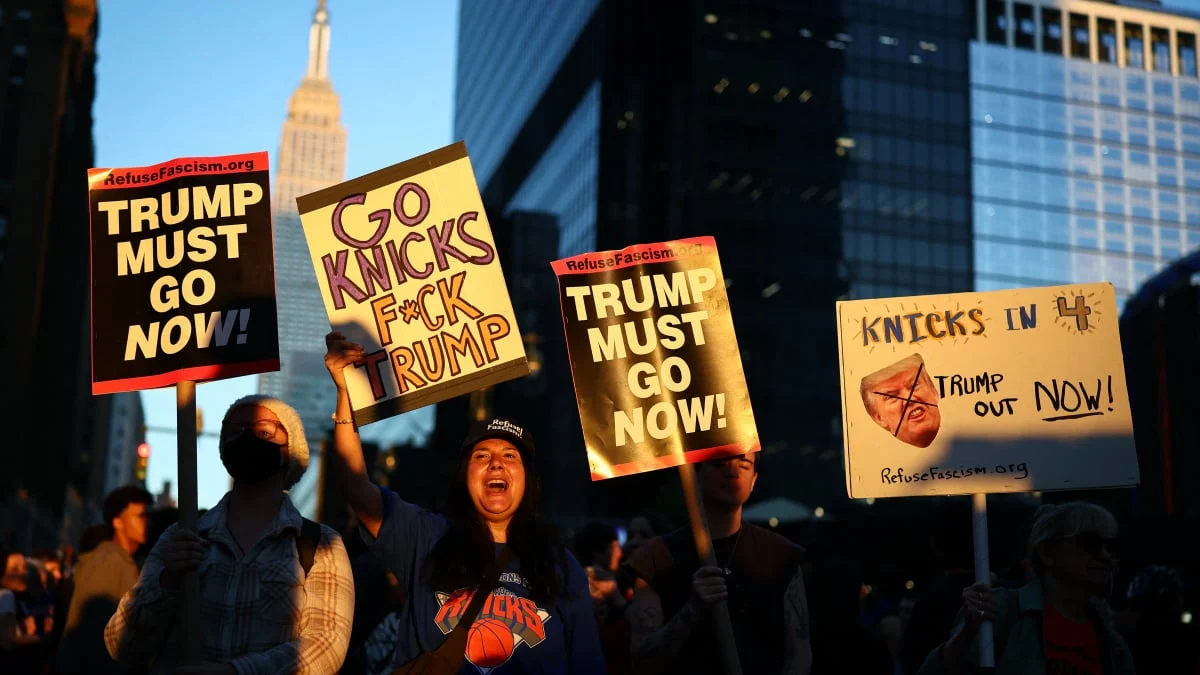
However, the "Knicks Fever" that had gripped the city was met with a jarring, unexpected temperature drop on the evening of Game 3. The arrival of President Donald Trump at Madison Square Garden (MSG) served as a lightning rod, igniting a firestorm of political friction that threatened to overshadow the sporting spectacle. As the President became the first sitting commander-in-chief to attend an NBA Finals game, the resulting collision of politics and professional sports provided a stark reminder of the deep-seated divisions currently defining the American landscape.
Chronology: The Calm Before the Storm
The tension began building shortly after the Knicks secured a pivotal Game 2 victory. When news broke that President Trump would attend Game 3 at MSG, the response from New Yorkers was instantaneous and visceral. The announcement was met with a chorus of online derision and palpable city-wide anxiety. For many fans, the concern was not just political—it was superstitious. A narrative quickly took hold across social media: the President’s presence was a "curse" that would inevitably doom the hometown team.
The logistics of the presidential visit only fueled the growing resentment. To accommodate the President’s security detail, the U.S. Secret Service effectively cordoned off the area surrounding Madison Square Garden. Crucially, this security perimeter forced the cancellation of a massive public watch party that had been scheduled to take place outside the arena.
The move backfired. In an act of civic defiance, Mayor Zohran Mamdani—who was present at the game—publicly criticized the disruption to the fan experience and immediately coordinated an alternative viewing event at Bryant Park. By the time the sun set on game night, the digital sphere was ablaze with "how-to" tutorials on effectively heckling the President, with viral TikTok videos framing the boos as a defensive ward against the impending "Trump Curse."
The Atmosphere Inside the Garden
As the national anthem concluded and the arena cameras panned toward the President’s private box, the reaction was instantaneous. A thunderous, unified wave of boos cascaded from the rafters, drowning out any potential cheers. The spectacle was not confined to the arena; attendees at the Bryant Park watch party, watching on massive screens, joined in the cacophony, creating a city-wide chorus of disapproval that resonated through the streets of Manhattan.
The energy within the Garden was electric, though for reasons beyond the hardwood. While the crowd poured their passion into the anti-presidential sentiment, the game itself unfolded as a grueling, back-and-forth affair. Despite the vocal opposition to his presence, the President remained in his box throughout the contest. Ultimately, the Knicks fell to the San Antonio Spurs in a heart-wrenching, narrow defeat, a result that many superstitious fans immediately attributed to the "MSG Curse" brought on by the presidential visit.
Supporting Data and Context
The intersection of politics and the NBA is not new, but it has historically been characterized by an adversarial relationship between the league’s players and the current administration. President Trump has frequently targeted the NBA, criticizing the league’s vocal stance on social justice issues, which he has characterized as "too left-wing."

These comments have deepened the rift between the White House and the professional basketball community. According to polling data from the Nate Silver Bulletin, the President’s approval ratings in major metropolitan areas—New York City in particular—remain significantly below the national average. This deep-seated disapproval is reflected in the cultural output of the city, where the Knicks serve as a symbol of local identity. When an administration that is viewed as antagonistic to the city’s values enters its most sacred sporting space, the collision is inevitable.
The cancellation of the public watch party also serves as a case study in the tension between national security and local civic life. By prioritizing the President’s safety over the collective public experience of 20,000 fans, the administration inadvertently galvanized the opposition, turning a sports event into a political protest.
Official Responses: The View from Air Force One
The President’s reaction to the evening’s events stood in stark contrast to the reality captured by cameras and microphones inside the arena. Speaking to reporters on the tarmac outside of Air Force One the following morning, President Trump offered a revisionist account of his reception at MSG.
"I mean, I thought it was amazing, actually," Trump claimed. "You mean when they had the camera on me? I thought it was very good. Yeah. It was certainly amazing. It was, I think, mostly cheers. It was loud and it was very enthusiastic."
When pressed on the political nature of the venue and his ongoing critiques of the league, the President doubled down on his assessment of the NBA as an institution. "It tends to be a little left wing," he told reporters, "but it’s great entertainment. It’s great."
His remarks were widely interpreted as an attempt to reframe a hostile reception as an endorsement—a common rhetorical strategy in the President’s political arsenal. However, the disconnect between his public statement and the audio evidence provided by the thousands of fans in attendance further fueled the discourse on social media, where clips of the booing continued to circulate at high volume.
Implications: Sports as a Political Battleground
The events of Game 3 raise significant questions about the future of presidential appearances at major cultural and sporting events. In an increasingly polarized society, the "neutral ground" of sports is rapidly disappearing.
- The Erosion of Neutrality: Historically, the presence of a President at a sporting event was viewed as a unifying, non-partisan gesture. The events at MSG demonstrate that this expectation is largely a relic of the past. The President is now viewed by many not as a representative of the state, but as a political partisan, and his presence is treated as an active disruption.
- The Power of Viral Activism: The success of the "how-to-boo" tutorials and the organized response from Mayor Mamdani underscore the power of decentralized, digital activism. New Yorkers utilized social media not just to vent, but to organize a coherent, unified response in real-time, effectively reclaiming the narrative from the moment the President’s motorcade arrived.
- Institutional Friction: The NBA’s struggle to balance its commitment to social justice with its desire to remain a "great entertainment" product will only intensify. As the President continues to label the league as "left-wing," the players, the fans, and the league’s ownership will face mounting pressure to navigate the political storm.
Conclusion: A Legacy of Disruption
The 2026 NBA Finals will likely be remembered by New Yorkers for two things: the valiant, if ultimately cursed, championship run of the Knicks, and the night the President brought a political whirlwind to the Garden. The "MSG Curse" may be a product of superstition, but the anger directed at the President was very real.
As the Knicks look toward the remainder of the series, the city remains divided—not on the talent of their team, but on the intrusion of national politics into their local joy. Whether the President’s appearance was truly "enthusiastic" as he claimed, or a display of the deep-seated political animosity currently gripping the nation, one thing is certain: the Garden has rarely felt as cold as it did on the night of Game 3.











