

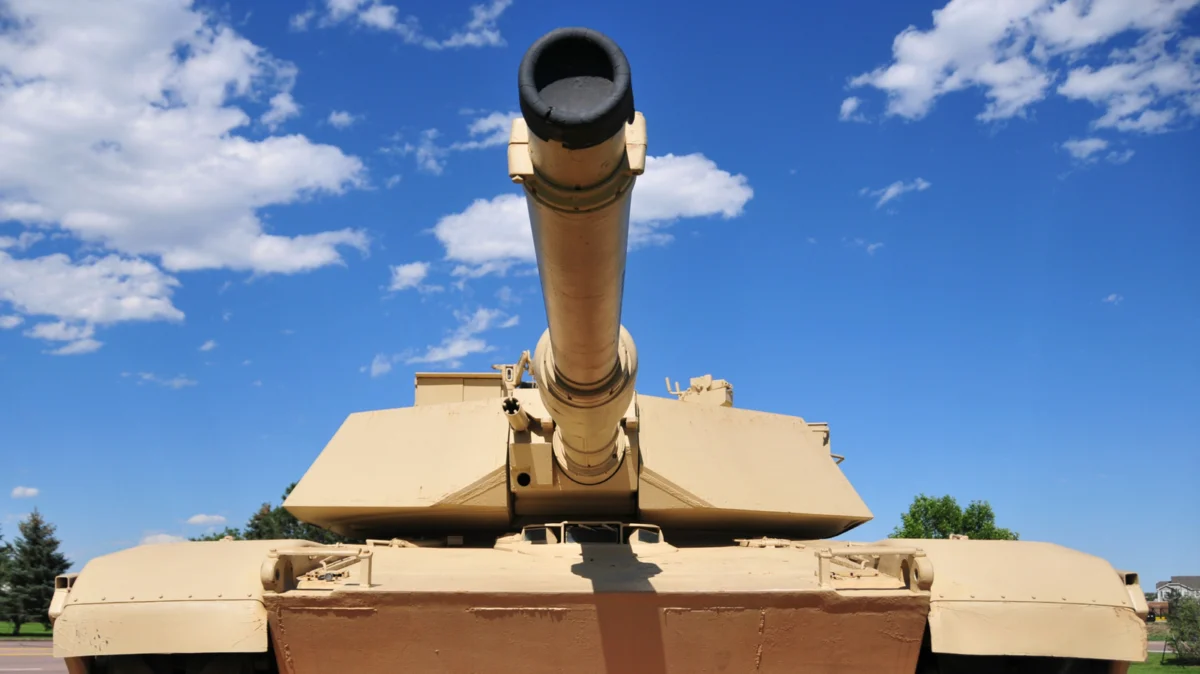
In the high-tech theater of 21st-century warfare, modern Main Battle Tanks (MBTs) are marvels of engineering. Outfitted with sophisticated fire-control computers, multi-spectral thermal imaging, laser rangefinders, and reactive composite armor, these vehicles are capable of precision strikes at ranges exceeding several miles. Given the level of automation permeating every other aspect of the tank’s operation—from digitized battlefield management systems to stabilization gyroscopes—it is a common misconception that the loading of the main gun is also a fully automated process.
While nations such as Russia, China, and Japan have pivoted toward mechanical autoloaders to streamline their armored operations, Western powerhouses, most notably the United States with its iconic M1 Abrams, have steadfastly maintained a four-person crew, including a dedicated human loader. This preference for "human-in-the-loop" systems is not a refusal to modernize, but rather a calculated strategic choice that highlights a fundamental divergence in military philosophy regarding survivability, versatility, and battlefield efficiency.
The Evolution of Tank Loading: A Chronological Perspective
To understand the current debate, one must look back at the post-World War II era, which served as the incubator for modern tank design.
The Cold War and the Push for Automation
During the Cold War, the Soviet Union faced a strategic imperative to produce tanks in massive quantities that were lighter, faster, and possessed smaller silhouettes than their NATO counterparts. The introduction of the T-64, and subsequently the T-72 and T-80, marked a radical departure from traditional design. By replacing the human loader with a mechanical autoloader, Soviet engineers were able to shrink the turret diameter significantly. A smaller turret meant a smaller target profile, which reduced the likelihood of being hit by enemy fire. Furthermore, it allowed the army to reduce the crew complement from four to three, a major logistical benefit when dealing with mass conscription.
The Western Response: Quality Over Silhouette
Conversely, Western designers, led by the United States and the United Kingdom, prioritized internal volume and crew survivability. The M1 Abrams, which entered service in 1980, was designed with a large, spacious turret. This design philosophy assumed that a larger target was acceptable if the crew had superior situational awareness, better ergonomics, and the ability to repair, maintain, and sustain the vehicle in the field without immediate logistical support.
The Modern Era: Convergence and Divergence
Today, we see a global split. Russia’s T-90 and the experimental T-14 Armata utilize advanced carousel-style autoloaders. Meanwhile, the U.S. Army continues to operate the Abrams with a human loader. However, with the announcement of the M1E3 Abrams development program, the U.S. has begun to explore the possibility of integrating automated systems, signaling that even the most steadfast proponents of manual loading are acknowledging the shifting landscape of armored warfare.
The Case for the Autoloader: Engineering Efficiency
The arguments in favor of autoloaders are grounded in mechanical consistency and tactical geometry.
- Consistent Rate of Fire: An autoloader does not get tired. Regardless of the duration of the engagement or the physiological stress of the crew, a mechanical system will load shells at a set interval—typically six to eight rounds per minute—without deviation.
- Reduced Silhouette: As established by Soviet doctrine, removing the loader allows for a more compact turret. This reduces the surface area exposed to enemy fire and requires less heavy armor to protect the same internal volume, potentially allowing for thicker armor elsewhere.
- Logistical Simplicity: A three-person crew requires less in terms of food, water, and bunk space, which, when extrapolated across an entire armored division, provides significant logistical relief.
The Case for the Human Loader: Battlefield Versatility
Proponents of the human loader argue that the role of a crew member is far more expansive than the simple mechanical task of "ramming a shell."
Beyond the Loading Cycle
An experienced loader is a force multiplier. In the heat of combat, the loader performs a variety of critical functions:
- Maintenance and Repair: If a track breaks or a mechanical fault occurs, the fourth crew member is essential for rapid field repairs. Autoloaders are complex electromechanical systems that, if jammed, often require specialized technicians to fix—an impossibility under fire.
- Situational Awareness: The loader often acts as an extra set of eyes, scanning the flanks while the commander and gunner are focused on the primary target.
- Ammunition Versatility: In the heat of battle, the tactical situation can shift in seconds. A human loader can switch from a high-explosive anti-tank (HEAT) round to a kinetic energy penetrator (sabot) instantly based on the target identified, whereas some older autoloading systems are restricted by the order in which shells are stacked in their carousel.
- Communication and Coordination: The loader frequently assists with radio management and coordination, lightening the cognitive load on the tank commander.
Supporting Data: Comparative Performance
Military analysis suggests that while autoloaders offer a faster initial burst of fire, human loaders often maintain higher sustained efficiency over long-duration combat scenarios. Data from training exercises indicates that while a novice loader may take up to 15 seconds to load a round, a veteran loader can accomplish the task in under 3 seconds—a speed that rivals most mechanical systems.
Furthermore, combat reports from the Gulf War and subsequent operations in the Middle East have highlighted the survivability of the Abrams. The "blow-out" panels designed into the M1’s ammunition storage compartment are easier to manage with a human in the loop, ensuring that if an ammunition fire occurs, the blast is vented away from the crew.
Official Military Perspectives
The U.S. Army’s stance has been historically defined by the "Man-in-the-Loop" doctrine. Army officials have frequently noted that the flexibility of a human soldier allows the tank to adapt to "unknown unknowns"—unforeseen battlefield variables that a pre-programmed machine cannot interpret.
However, the tide is turning. As the U.S. Army transitions toward the M1E3, the emphasis is shifting toward "Optionally Manned" or "Automated Assist" systems. The goal is to retain the human’s tactical judgment while offloading the physical strain of loading heavy 120mm projectiles, which can weigh over 50 pounds, thereby reducing crew fatigue over long-duration missions.
Implications for Future Warfare
The debate between human loaders and autoloaders is a microcosm of the broader integration of Artificial Intelligence and robotics in warfare.
- Crew Fatigue vs. Cognitive Burden: As tanks become more complex, the cognitive load on the commander is reaching a breaking point. Automation is necessary to allow the commander to focus on battle management rather than individual vehicle operation.
- The Rise of Remote Operations: The future of the MBT may not be a choice between human or machine, but rather the integration of both. Future tanks may feature semi-automated loading systems that can be overridden by a human operator, combining the speed of machines with the judgment of a veteran soldier.
- Survivability in the Drone Age: With the proliferation of loitering munitions and drone warfare, the importance of a small silhouette (facilitated by autoloaders) may outweigh the benefits of an extra crew member. If a tank can be taken out by a drone from above, the benefits of a low-profile turret are more significant than ever.
Conclusion
The persistence of the human loader in modern tanks is a testament to the value of human intuition and adaptability. While the mechanical efficiency of the autoloader is undeniable, the battlefield remains a chaotic, unpredictable environment where the ability to troubleshoot, coordinate, and react is as vital as the ability to fire a round. As technology advances, we are likely to see a hybrid evolution: tanks that utilize automation to assist the crew, while retaining the essential "human element" that has defined armored warfare for over a century. The tank of tomorrow will likely be faster and more automated, but as long as war remains a human endeavor, the role of the crew will remain the most critical component of the machine.











