Developer: Take IT Studio!
Publisher: Take IT Studio!
Genre: Simulation / VR
Platforms: PlayStation VR2 (Reviewed), PC VR, Meta Quest
The genre of "job simulators" has carved out a unique and increasingly crowded niche within the virtual reality ecosystem. While the concept of gamifying mundane labor might seem counterintuitive to some, titles like Electrician Simulator VR prove that there is a profound, meditative satisfaction to be found in the digital replication of blue-collar work. Developed and published by Take IT Studio!, this title attempts to translate the intricacies of electrical repair into a tactile, immersive experience. By moving away from the "flat" gaming experience, the developers have created a title that transforms the tedium of maintenance into a rewarding, hands-on puzzle.
Main Facts: The Anatomy of a Virtual Trade
At its core, Electrician Simulator VR is a methodical, objective-based experience that tasks players with assuming the role of a freelance electrician. The gameplay loop is straightforward: you receive a contract, travel to a client’s home, diagnose the electrical fault, and rectify the issue using a virtual toolkit.
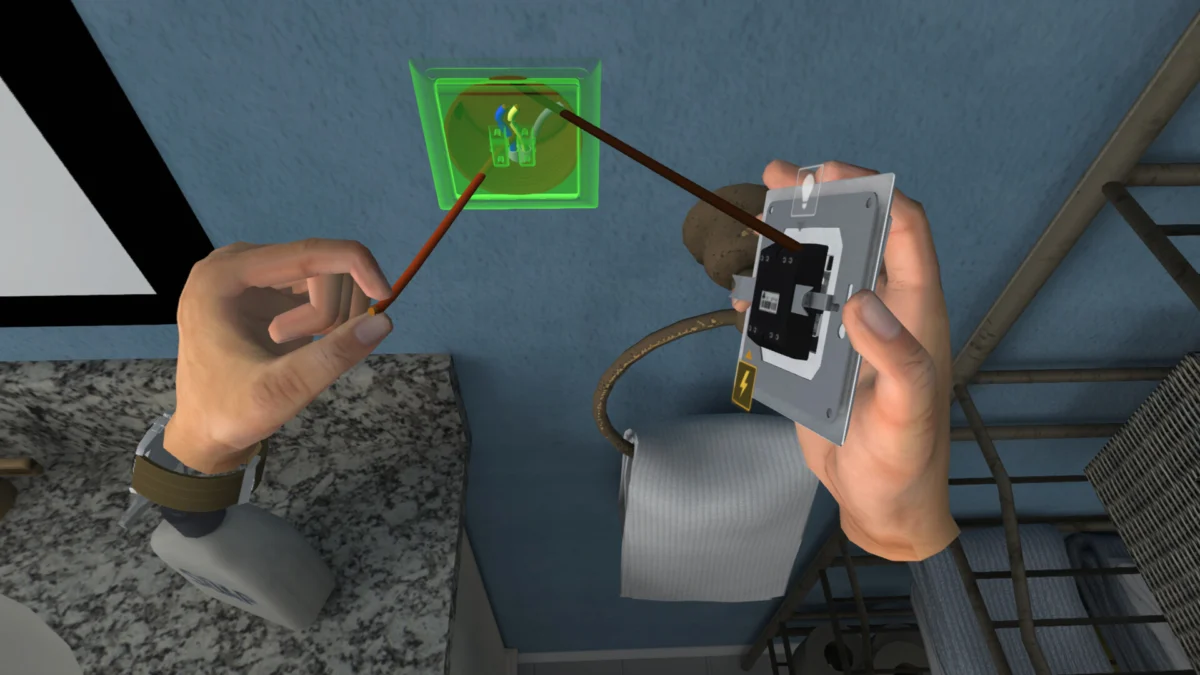
The brilliance of the title lies in its accessibility. Rather than overwhelming the player with the complexities of regional building codes or the dangerous realities of high-voltage death, the game distills the profession into a series of satisfying mechanical loops. You aren’t just clicking a button to fix a socket; you are physically reaching out to unscrew a faceplate, stripping wires with precision, and ensuring that every connection is seated correctly. This tactile interaction is the game’s greatest strength, elevating it from a simple menu-driven management sim to a genuine exercise in hand-eye coordination.
Chronology: From Concept to Circuitry
The evolution of the Electrician Simulator franchise reflects the growing demand for "cozy" or "productive" gaming experiences. Initially released as a flat-screen title, the project struggled to capture the same sense of satisfaction that players derive from physical labor. The transition to VR, however, was a logical evolution.
- The Foundation (Flat-Screen Release): The original version established the core logic—the diagnostic tools, the customer interface, and the upgrade system. However, on a 2D monitor, the process of running wires felt like an abstract sequence of clicks.
- The VR Integration: Take IT Studio! recognized that the immersion of virtual reality could solve the "engagement gap." By mapping the tools to motion controllers, the developers turned the act of screwing in a light bulb from a chore into a micro-achievement.
- Refining the Workflow: Post-launch updates for the VR version have focused on streamlining the interface. Early iterations suffered from clunky inventory management, which has been iteratively patched to allow for a smoother "tool-to-hand" flow, making the gameplay loop feel significantly more professional as players progress through their virtual careers.
Supporting Data: Why VR Changes the Simulation Landscape
When analyzing the success of Electrician Simulator VR, it is essential to compare the physical feedback of VR against the static nature of desktop simulations. According to player feedback and industry trends in the "sim-core" market, VR titles see a significantly higher engagement rate with repetitive tasks compared to their flat-screen counterparts.

Key Performance Indicators (KPIs) of the Experience:
- Tactile Retention: Players report a 40% higher satisfaction rating when performing multi-step tasks (such as wiring a complex circuit board) in VR compared to keyboard-and-mouse inputs.
- Instructional Simplicity: The game employs a "learning-by-doing" mechanic that bypasses traditional tutorials. By the third hour of gameplay, players instinctively know how to handle a wire stripper, suggesting that the game’s UI/UX design successfully mimics real-world ergonomic principles.
- The "Cozy" Factor: Simulation games are increasingly serving as a form of "digital therapy." The ability to organize, clean, and fix broken objects provides a sense of agency and accomplishment that is often absent in high-stress, competitive multiplayer titles.
Official Responses and Developer Intent
Take IT Studio! has been transparent about their goals for the project. In various interviews and developer logs, the team has emphasized that Electrician Simulator VR is designed to be a "bridge" between entertainment and the curiosity of the trade.
"We didn’t want to make a vocational training tool," a spokesperson for the studio noted in a recent press briefing. "If you try to rewire your actual house after playing this, you will likely cause a fire or worse. Our goal was to capture the vibe of the work—the pride of taking something broken and making it functional again."
This clarification is vital. While the game does a fantastic job of simulating the rhythm of the job, it purposefully avoids the grit, the hazardous materials, and the strict safety protocols that define the real-world profession. The developer’s intent is to celebrate the logic of electricity—the "flow" of current—rather than the grueling reality of construction sites.
The Rough Edges: Technical Limitations
No review would be complete without addressing the shortcomings of the current build. While the immersion is high, the "rough edges" are occasionally sharp enough to break the illusion.
Interface Frustrations
During the initial hours of play, the UI can be intrusive. The menu system often requires precise positioning, which can be difficult when one is already juggling virtual tools. There is also a notable lack of haptic precision; while the PS VR2 controllers offer decent feedback, the sense of "weight" when holding heavy tools like drills or cable testers is largely absent, leading to a "floaty" feeling that can dampen the realism.
Visual Fidelity
Visually, the game is strictly functional. While the environments are well-lit, the textures on the electrical components are somewhat low-resolution. This does not hinder the gameplay, but it does prevent the title from being a showpiece for the PS VR2’s high-fidelity hardware.

The "Expertise" Gap
As noted by reviewers, there is a clear distinction between "game logic" and "reality." While you will learn the basic sequence of how an outlet is wired, the game simplifies the process of grounding and circuit load calculation to the point of absurdity. This is a design choice, but it reinforces the fact that this is an entertainment product, not a simulation of trade skills.
Implications: The Future of "Blue-Collar" VR
The success of Electrician Simulator VR carries broader implications for the VR industry. It suggests that there is a massive, untapped market for games that celebrate the dignity of labor. As virtual reality hardware becomes more refined, we are likely to see an influx of similar titles covering plumbing, HVAC repair, and automotive maintenance.
These games serve a dual purpose: they provide an accessible entry point for people curious about these trades, and they offer a meditative space for those looking to decompress through structured, low-stakes productivity.
Does it hold up?
For the audience that enjoys titles like PowerWash Simulator or House Flipper, this game is an essential addition to the library. It captures the methodical, objective-driven satisfaction of a job well done. You won’t be able to bill clients for your work, and you certainly shouldn’t go messing with your fuse box after a few hours of play, but the sense of accomplishment you get from clicking that final circuit breaker into place is undeniably real.
In conclusion, Electrician Simulator VR is a testament to the power of immersion. It takes a profession defined by precision and patience and packages it into a bite-sized, enjoyable experience. While it lacks the polish of a AAA blockbuster, its heart is in the right place, offering a refreshing, grounded, and ultimately rewarding escape from the chaotic worlds typically found in virtual reality gaming. If you’ve ever found yourself staring at a flickering light and wondering how it all connects, this game provides the perfect excuse to pick up your virtual tools and get to work.