For three decades, the Warcraft universe has been defined not just by its iconic art style or its sprawling lore, but by the sweeping, evocative scores that bring the world of Azeroth to life. As World of Warcraft (WoW) enters the second installment of the ambitious "Worldsoul Saga"—a three-expansion narrative arc designed to redefine the MMORPG experience—the role of music has never been more critical.
In a recent, exclusive deep dive, I sat down with Blizzard’s internal audio powerhouse: Lead Composer Leo Kaliski, Music Director Derek Duke, and Principal Producer Charlotte Pyle. Together, we explored how the sound of Azeroth has evolved from its humble, ambient beginnings into the cinematic, multi-layered tapestry that defines the modern era of the game.
A Legacy of Sound: The Weight of 32 Years
World of Warcraft is a colossus of gaming history. With 22 years of continuous live-service development for the MMO and a 32-year legacy stemming from the original Warcraft: Orcs and Humans, the musical DNA of the franchise is dense. For Leo Kaliski, stepping into the role of Lead Composer meant inheriting a sprawling, decades-old library of themes that fans hold in near-religious regard.
"WoW has such a long history of music and so many themes—that was probably one of the most daunting things when I came on as the lead," Kaliski admits. "There’s a patch about the Night Elves, and I have to ensure I know all the existing Night Elf motifs intimately. I have to make the call: do we reference the legacy, or do we forge something entirely new?"

This tension between innovation and preservation is the core challenge of the Blizzard audio team. As Derek Duke, who has served as Music Director for 25 years, notes, the community is incredibly perceptive. "Even something as simple as Troll music—if it deviates too far from the established sound of, say, the Amani Trolls, the community picks up on it immediately. It’s a delicate balancing act of being ‘faithful’ while avoiding the trap of self-imitation."
Chronology of Evolution: From Ambience to Cinema
In its early years, World of Warcraft was a different beast. The musical approach was primarily ambient, designed to fade into the background, allowing the player’s social experience and the emergent gameplay to take center stage. The music acted as a subtle bed for the world-building, emphasizing the scale of the environment rather than the drama of a specific plot point.
However, as the game’s narrative structure shifted toward high-stakes, cinematic storytelling, the music had to follow suit. The transition from the more "grounded" world of the early 2000s to the current, epic scale of the Worldsoul Saga demanded a shift in philosophy.
"The further we’ve come, the more there are now really strong, cinematic narratives with each expansion," Kaliski observes. "That demands the music become bolder and more thematic. We are moving toward a more structured, narrative-driven soundscape, but we are also very cognizant of the fact that there is still a massive demand for that older, ambient style."

This evolution is not a abandonment of roots, but an expansion of the toolbox. The team is currently utilizing the Worldsoul Saga—a connected trilogy consisting of The War Within, Midnight, and The Last Titan—to create an unprecedented audio throughline. Unlike previous expansions, which were often siloed in their musical identity, this trilogy allows the team to weave a central thematic thread that evolves and matures over the course of several years.
Supporting Data: The "Melting Pot" Production
Modern World of Warcraft production is a massive, collaborative endeavor. Gone are the days of a single composer carrying the weight of an entire expansion. For the upcoming Midnight expansion, the team has employed nine distinct composers.
"It creates this melting pot sound," Kaliski explains. "It’s not just one person’s voice; it’s a lot of different voices. Because Azeroth is such a massive, multifaceted world, having more musical perspectives makes the world feel larger and more diverse."
Principal Producer Charlotte Pyle sheds light on the sheer volume of this output. The process begins with a "hero" track—a central, thematic piece of music. From there, the team dissects the score into individual instrument stems—strings, woodwinds, brass, and percussion. This allows the team to create massive, extended variations. For Midnight, the team produced three hours of original "hero" music, which was then expanded through creative arrangement and technical implementation into roughly 15 hours of in-game audio.

This methodology is essential for preventing "ear fatigue." As Pyle and Kaliski explain, the team is constantly monitoring how long a player spends in a zone. If a theme is too prominent, it begins to wear on the player. By using stems and alternative arrangements, they can strip away driving melodies in favor of more ambient, tonal shifts, keeping the experience fresh for players who spend hundreds of hours in a single environment.
Official Perspectives: More Than Just Composers
A recurring theme throughout our conversation was the team’s self-identification as game developers first, and composers second.
"We write the music, but it’s so much more than that," says Duke. "It’s not just a single element to add to the game, and it’s certainly not something to add at the last minute. It’s a core piece of the puzzle. We are constantly thinking about the player experience—where they are, what they’re doing, and how the music can enhance that specific moment."
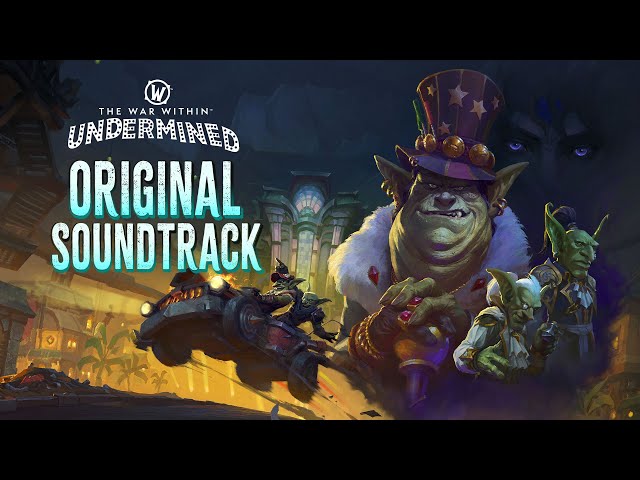
This philosophy was on full display during the Undermine patch, which featured a bold departure into full-blown, authentic jazz. By hiring a dedicated jazz band and eschewing orchestral elements entirely, the team successfully captured the chaotic, entrepreneurial spirit of the Goblins. It was a risk that paid off, resonating deeply with a community that appreciates when the team experiments with new genres.
Similarly, Kaliski’s work on the Manaforge Omega boss track in The War Within stands as a testament to this collaborative, player-focused approach. The track was a highly involved, multi-phase cinematic composition designed to mirror the intensity of the raid encounter. Despite the chaos of boss fights—which are usually filled with sound effects and combat noise—the team was gratified to see that players noticed the nuance and effort put into the composition.
Implications: The Future of Azeroth’s Sound
What does this mean for the future of the Warcraft franchise? The team is clearly looking to move beyond the traditional boundaries of MMO music. The success of the "Goblin Jazz" experiment and the narrative-driven intensity of raid boss themes have emboldened the team to continue pushing these boundaries.
"We definitely pay attention to the community response," Kaliski confirms. "The stuff that works, the stuff that doesn’t—we take all of that into account as we move to the next thing."
As the Worldsoul Saga progresses into Midnight and eventually The Last Titan, the team’s goal remains clear: to avoid complacency. Whether through the use of leitmotifs that span years of gameplay or the implementation of dynamic, reactive music that shifts based on the player’s actions, the Blizzard audio team is committed to the idea that the music of Azeroth is a living, breathing entity.

"We are always looking to level up," Duke concludes. "We never rest on our laurels. We’re always trying to keep moving forward, because in a world as big and as old as this one, standing still is the only way to fall behind."
For the players of World of Warcraft, the implication is clear: the journey ahead will not only be a visual and narrative spectacle, but an auditory one as well. The symphony of Azeroth continues to grow, and if the current trajectory is any indication, the best is yet to be heard.