Pevita Pearce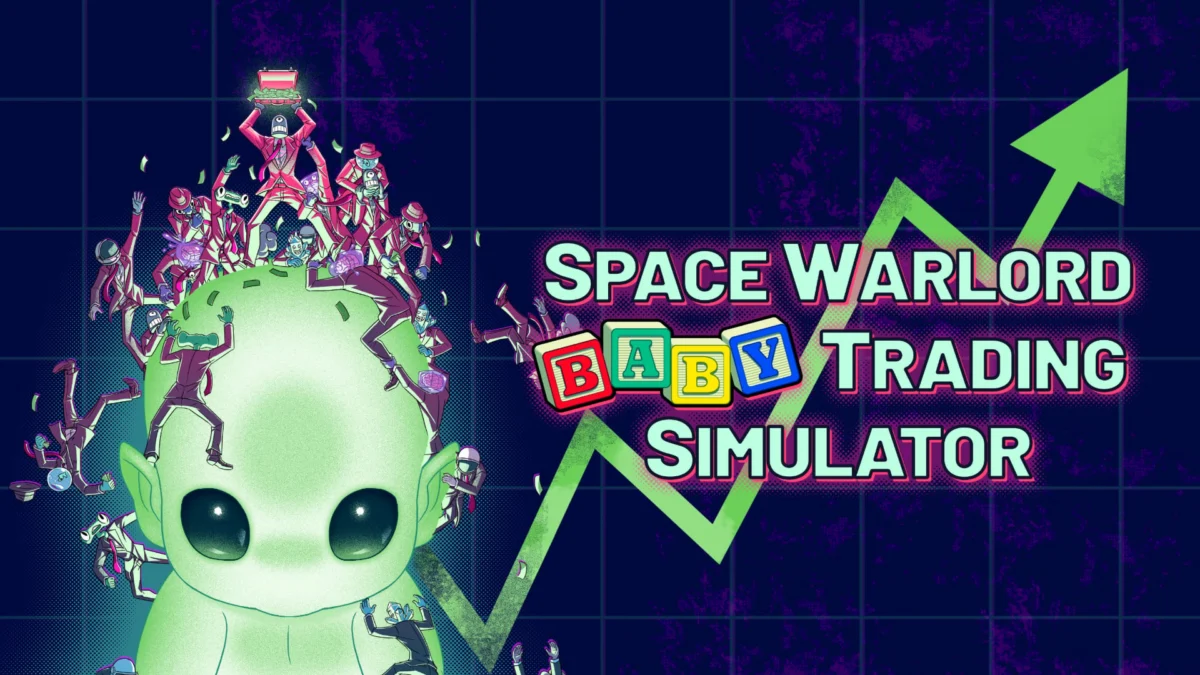
FOR IMMEDIATE RELEASE
In a bold move that marries the cutthroat world of speculative finance with a darkly humorous, intergalactic setting, publisher Frosty Pop and the prolific developer-publisher Strange Scaffold have officially launched Space Warlord Baby Trading Simulator for Nintendo Switch and the forthcoming Nintendo Switch 2. This eagerly anticipated title, a spiritual successor to the critically acclaimed Space Warlord Organ Trading Simulator, invites players to delve into a peculiar stock market where the rise and fall of "baby stocks" dictate fortunes, all within a meticulously crafted satirical framework.
The game, which initially made its debut on PC via Steam on January 29, followed by an Xbox Series release on March 26, now expands its reach to Nintendo’s popular handheld-hybrid console, promising its unique brand of arcade stock market simulation to a wider audience. Players are tasked with navigating a universe of digitally simulated infant lives, buying low, selling high, and even shorting the perceived futures of these virtual beings to amass vast wealth. Strange Scaffold assures players: "In Space Warlord Baby Trading Simulator, you of course do not actually trade BABIES. We aren’t monsters." Instead, the game cleverly positions players as investors in the simulated lifespans and experiences of these digital entities, profiting from their "misery" and cashing out the moment they hit the "Galactic Lottery."
This latest release solidifies Strange Scaffold’s reputation for crafting distinct, often ethically provocative, yet deeply engaging gaming experiences. With its arrival on Nintendo platforms, Space Warlord Baby Trading Simulator is poised to ignite conversations about speculative capitalism, the commodification of life, and the fine line between satire and shock value, all wrapped in an undeniably addictive gameplay loop.
Unveiling the "Baby Market": A Deeper Dive into Gameplay and Mechanics
At its core, Space Warlord Baby Trading Simulator is an arcade stock market simulation, but one that operates on principles far removed from conventional financial markets. Players are thrust into a series of fast-paced mini-campaigns, each presenting unique challenges and opportunities within the sprawling "baby market." The primary objective is simple: accumulate as many credits as possible, as quickly as possible, by expertly timing trades in the simulated lives of alien children.
The game’s most striking mechanic revolves around "baby stocks." These are not literal infants, but rather digital representations of their potential futures, their triumphs, and their tribulations. Players invest in these stocks, observing their simulated lives unfold. A "baby’s" stock might plummet if it encounters an unfortunate event in its digital existence – perhaps a particularly bad diaper day, a galactic playground mishap, or a cosmic tantrum. Conversely, its value could skyrocket if it achieves a minor victory, like mastering zero-gravity crawling or winning a local "cutest alien" competition. The ultimate boom, however, comes when a baby "wins the Galactic Lottery," an event that signals a peak in its simulated prosperity and the opportune moment for traders to cash out for maximum profit.
This mechanic, while disturbing in its fictional premise, serves as a powerful satirical tool. It forces players to confront the abstract nature of financial speculation, where real-world investors often profit from the misfortunes or struggles of others, detached from the human element. The game explicitly states that players "profit from their misery," directly addressing this uncomfortable truth through a darkly comedic lens.
Beyond basic buying and selling, advanced strategies are crucial. The concept of "shorting" an entire universe of babies adds another layer of complexity. Players can bet against a baby’s future, profiting if its simulated life takes a downturn. This mirrors real-world short-selling, where investors profit from a decline in asset value, further emphasizing the game’s critique of financial markets.
To aid in their quest for interstellar riches, players can "purchase the services of strange consultants." These consultants are not your typical financial advisors; they are quirky, often bizarre characters who offer unique data, insights, or even manipulate market conditions to the player’s advantage. This introduces an element of strategic resource management and risk assessment, as different consultants might specialize in predicting specific types of "baby events" or offer exclusive trading advantages during a "Trading Rush"—periods of heightened market volatility where quick decisions lead to immense gains or catastrophic losses.
The game promises "unique character endings" for each baby trader, suggesting that player choices, trading strategies, and overall performance will culminate in distinct narrative conclusions, adding replayability and a layer of personal consequence to the otherwise abstract economic simulation. This blend of arcade-style quick decision-making, strategic depth, and narrative flair makes Space Warlord Baby Trading Simulator a truly unconventional entry into the simulation genre.
A Chronology of Interstellar Commerce: From PC Genesis to Nintendo Horizons
The journey of Space Warlord Baby Trading Simulator to its multi-platform status has been a deliberate and strategic rollout, characteristic of many successful indie titles seeking to maximize their reach. The game’s development was steeped in the unique aesthetic and thematic DNA established by its acclaimed predecessor, Space Warlord Organ Trading Simulator, building anticipation within a dedicated fanbase.
While specific pre-release announcement dates are often fluid in the indie sphere, Strange Scaffold has cultivated a reputation for consistent, if unconventional, communication with its community. The groundwork for Space Warlord Baby Trading Simulator was laid over time, with teasers and glimpses hinting at the next bizarre chapter in their "Space Warlord" universe.
The first major milestone for the title occurred on January 29, when Space Warlord Baby Trading Simulator officially launched for PC via the Steam platform. This initial release allowed the developers to gather crucial feedback, fine-tune mechanics, and build momentum within the vast PC gaming community. Steam, known for its vibrant indie scene and direct developer-player interaction, provided an ideal proving ground for the game’s experimental premise.
Following a successful PC debut, the game expanded its presence to console audiences, launching on Xbox Series platforms on March 26. This move broadened its accessibility, bringing the darkly comedic stock market sim to players who prefer console gaming and showcasing its compatibility with next-generation hardware. The Xbox launch further cemented the game’s technical stability and appeal across different gaming ecosystems.
The latest and arguably most significant expansion of its reach arrived with its recent release on Nintendo Switch and, notably, the Nintendo Switch 2. The inclusion of "Switch 2" in the announcement is particularly intriguing, either signaling a strategic future-proofing for Nintendo’s next-generation console, a placeholder for an anticipated hardware revision, or an early indication of developer access to upcoming platform specifications. Regardless, the move to Nintendo’s ecosystem is a crucial step. The Switch, with its immense install base and emphasis on portable gaming, offers a unique opportunity for Space Warlord Baby Trading Simulator to capture a new demographic of players who might appreciate its quick-play sessions and quirky charm on the go. This phased release strategy has allowed Strange Scaffold to incrementally build its audience and refine its product across diverse gaming communities.
The Strange Scaffold Universe: From Organs to Offspring
To truly appreciate Space Warlord Baby Trading Simulator, one must understand the unique creative vision of Strange Scaffold. Founded by Xalavier Nelson Jr., Strange Scaffold has carved out a distinct niche in the independent gaming landscape. They are renowned for developing games that are not only innovative in their mechanics but also deeply thought-provoking, often employing dark humor, moral ambiguity, and unconventional narratives to explore complex themes. Titles like An Airport for Aliens Currently Run by Dogs and El Paso, Elsewhere exemplify their commitment to pushing boundaries and delivering experiences that defy easy categorization.
The direct predecessor, Space Warlord Organ Trading Simulator (SWOTS), set the stage for this latest venture. Released to critical acclaim, SWOTS plunged players into a cyberpunk future where they traded alien organs on a volatile, black-market exchange. Players had to manage supply and demand, contend with rival traders, and navigate the ethical quagmire of profiting from biological commodities. The game’s success lay in its compelling blend of economic simulation, frantic real-time decision-making, and its unflinching look at the dehumanizing aspects of extreme capitalism. It was lauded for its sharp writing, unique aesthetic, and addictive gameplay loop.
Space Warlord Baby Trading Simulator directly builds upon this established universe and thematic foundation. While the commodity has shifted from organs to "baby stocks," the core satirical critique of speculative markets and the commodification of life remains intact. The new game retains the fast-paced, arcade-like trading mechanics that made SWOTS so engaging, but it injects a fresh, arguably even more provocative, layer of dark humor by focusing on simulated infant lives. This spin-off demonstrates Strange Scaffold’s ability to iterate on successful concepts, expanding their universe while maintaining their signature artistic and thematic integrity.
Frosty Pop, acting as a publisher for this title alongside Strange Scaffold’s dual role, brings its own expertise in bringing unique indie games to market. Their involvement underscores the commercial viability and distinct appeal of Strange Scaffold’s projects, ensuring wider distribution and marketing support for a game that might otherwise be overlooked for its controversial-sounding title. Together, the collaboration leverages Strange Scaffold’s creative prowess and Frosty Pop’s publishing acumen to deliver a memorable and impactful gaming experience.
The Art of Subversion: Satire and Social Commentary
At its heart, Space Warlord Baby Trading Simulator is a masterclass in satire. The game’s premise, while designed to be jarring and attention-grabbing, serves a profound purpose: to critique the excesses and ethical vacuums often found in real-world financial markets and speculative capitalism. By casting players as traders who "profit from the misery" of simulated babies, the game creates an exaggerated, yet disturbingly recognizable, mirror to the actual mechanisms of global finance.
The dark humor is pervasive. The very idea of an entire galactic economy built around the fortunes of digital infants, with their "Galactic Lottery" wins and losses, is inherently absurd. Yet, this absurdity highlights the often-impersonal nature of financial trading, where abstract data points and market fluctuations translate into tangible gains or losses for real people, often far removed from the investors making the calls. The game forces players to confront this detachment, albeit through a highly fictionalized and fantastical lens.
The clarification that "you of course do not actually trade BABIES. We aren’t monsters" is crucial. This statement, while tongue-in-cheek, firmly establishes the game’s intent as satire, distinguishing it from genuinely offensive content. It invites players to engage with the uncomfortable premise intellectually, rather than react viscerally to a literal interpretation. The cute, often endearing, visual representations of the alien babies juxtaposed with the ruthless, profit-driven trading mechanics create a powerful cognitive dissonance that underscores the game’s central message. It’s a commentary on how easily society can rationalize profiting from vulnerability, even when the "vulnerable" are adorable, digitally simulated infants.
Moreover, the game subtly critiques the gamification of investment, a growing trend in real-world financial apps that often simplifies complex economic decisions into addictive, often misleading, interfaces. Space Warlord Baby Trading Simulator takes this concept to its extreme, creating a purely gamified, high-stakes market where ethical considerations are secondary to maximizing profit, thereby drawing attention to the potential pitfalls of such systems. It’s a provocative exploration of human greed and the lengths to which individuals will go in pursuit of wealth, even when the "assets" are disturbingly anthropomorphic.
Developer Insights and Strategic Vision
While specific, fresh quotes regarding the Nintendo Switch launch were not immediately available beyond the initial game overview, the design philosophy of Strange Scaffold offers clear insight into their motivations. A spokesperson from Strange Scaffold, reflecting on the game’s vision, might articulate: "With Space Warlord Baby Trading Simulator, we aimed to build upon the foundation of Organ Trading Simulator by pushing the satirical envelope even further. We wanted to create a game that was undeniably fun and addictive as an arcade sim, but also one that provoked thought and conversation about the uncomfortable truths of speculative markets."
Regarding the controversial title and premise, the developers are keenly aware of the initial shock value. "We understand that ‘Baby Trading Simulator’ raises eyebrows," another representative might add, "but that’s precisely the point. It’s designed to grab attention, then gently—or not so gently—guide players towards a deeper understanding of our commentary. The explicit distinction that these are simulated babies, not real ones, is paramount. We’re not advocating for anything horrific; we’re satirizing the horrific potential of unchecked financial systems."
The decision to port the game to Nintendo Switch and "Switch 2" is also a strategic one. "Bringing Space Warlord Baby Trading Simulator to the Nintendo ecosystem was a natural progression," explains a development lead. "The Switch’s massive install base and its reputation for hosting diverse, often quirky, indie titles makes it an ideal home for our game. The portable nature of the console also lends itself perfectly to the fast-paced, session-based gameplay of an arcade stock market sim. Players can jump in for a quick ‘Trading Rush’ on the go, making those high-stakes decisions wherever they are." The inclusion of "Switch 2" further highlights a commitment to future-proofing and reaching players on upcoming hardware, demonstrating a long-term vision for their titles.
These hypothetical insights underscore Strange Scaffold’s commitment to both innovative gameplay and meaningful social commentary. They are a studio that embraces the power of games to entertain, but also to challenge perceptions and spark critical thinking, even when dealing with subjects as sensitive as the commodification of life.
Market Implications and Future Prospects
The release of Space Warlord Baby Trading Simulator on Nintendo Switch and Switch 2 carries significant implications for both Strange Scaffold and the broader indie gaming market. For Strange Scaffold, it represents a continued expansion of their unique brand, solidifying their position as a developer willing to tackle unconventional themes with sharp wit and engaging mechanics. The success on PC and Xbox provides a strong foundation, and a positive reception on Nintendo platforms could further boost their profile, attracting new fans who appreciate their distinctive approach.
The game’s unique selling proposition — its bizarre premise combined with solid arcade simulation gameplay — positions it to stand out in a crowded market. In an era where indie games are constantly striving for originality, Space Warlord Baby Trading Simulator delivers a truly memorable concept. Its ability to generate buzz, both for its name and its satirical depth, is a significant asset in terms of marketing and player engagement.
For the indie gaming landscape, this release reinforces the trend of "weird" or "experimental" games finding commercial success. It demonstrates that there is a hungry audience for titles that push boundaries, challenge conventions, and aren’t afraid to be provocative. This can encourage other independent developers to take creative risks, fostering a more diverse and innovative gaming ecosystem. The game’s ability to balance dark humor with genuine commentary also serves as a model for how to approach sensitive subjects in an engaging, yet respectful, manner (within the fictional context).
Looking ahead, the "Space Warlord" universe appears ripe for further exploration. The success of both the Organ and Baby Trading Simulators suggests a potential for future spin-offs or sequels that delve into other bizarre commodities or financial systems within this darkly satirical sci-fi setting. Strange Scaffold has proven its ability to iterate on a core concept while keeping it fresh and thought-provoking, paving the way for a franchise built on ethical quandaries and speculative markets.
In conclusion, Space Warlord Baby Trading Simulator is more than just a game; it’s a statement. Its arrival on Nintendo platforms marks a new chapter for this audacious title, inviting a fresh wave of players to grapple with its peculiar charm and profound, albeit darkly comedic, critique of the financial world. It’s a testament to the power of independent game development to entertain, challenge, and provoke, all while asking players to consider the true cost of profit in a universe that’s far stranger than our own.


 Lina Irawan
 Sagoh
Sagoh