
 Siti Muinah
The landscape of the video game industry, long defined by its volatility and rapid cycles of creative expansion and contraction, has been shaken to its core by the latest wave of restructuring within Microsoft’s gaming division. Among the most storied casualties of this turbulent period is id Software, the legendary developer behind the DOOM, Quake, and Wolfenstein franchises. As the studio grapples with what many industry observers are calling a "decimation" of its workforce, the news has drawn a poignant and somber response from one of its primary architects: co-creator John Romero.
The layoffs, which hit the studio with little warning, have raised existential questions about the future of one of gaming’s most influential developers and the broader implications for the preservation of industry history.
The Chronology of the Crisis
The turbulence began on June 6, 2026, a date that will likely live in infamy for those associated with the Texas-based studio. According to multiple sources familiar with the internal operations at id Software, the atmosphere changed abruptly when studio head Marty Stratton sent an urgent message via the company’s internal Slack channel. He instructed staff to refrain from coming into the office that day—a chilling signal in the corporate world that typically precedes major personnel actions.
Shortly thereafter, it was confirmed that the studio had been hit by a massive reduction in force. While the industry had braced for further cost-cutting measures under the Xbox umbrella, the scale of the layoffs at id Software was unprecedented. Reports from former employees suggest that the cuts were not surgical, but sweeping. Micheal Maynard, formerly a Senior Gameplay Systems Programmer at the studio, took to LinkedIn to share the gravity of the situation, stating that "roughly 50% of the company was let go."
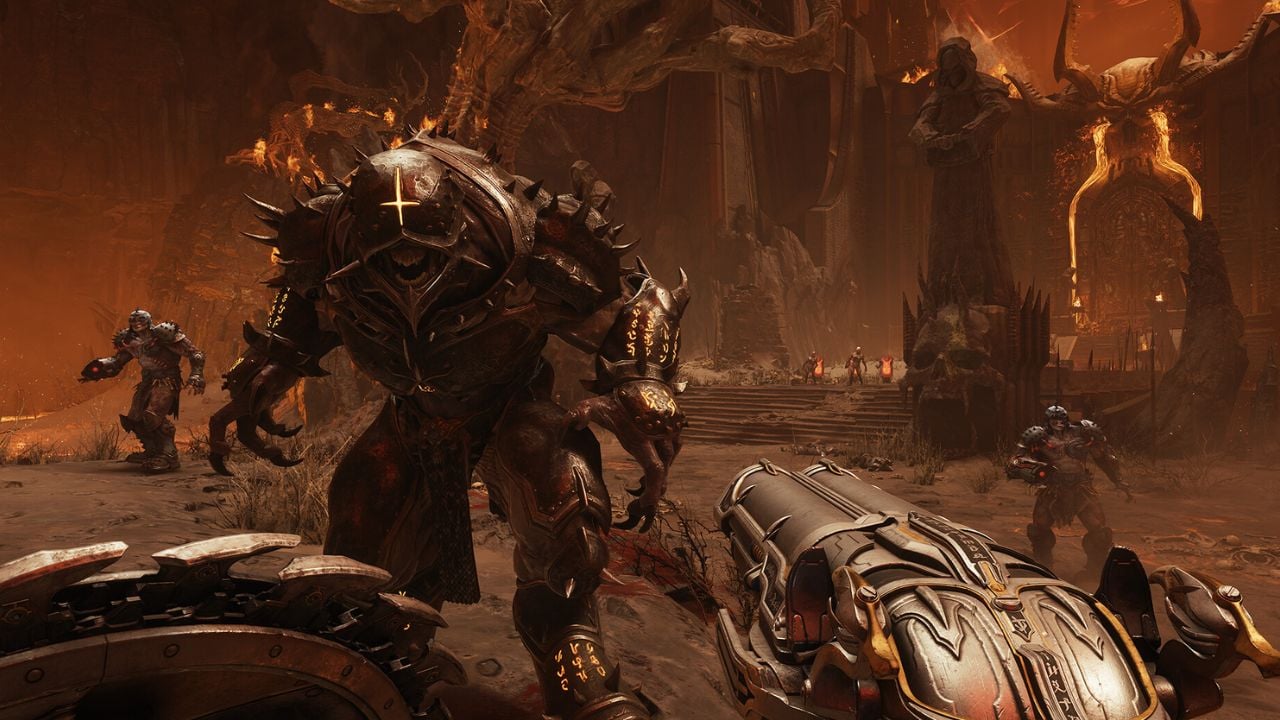
The timing of these layoffs is particularly jarring, as they occurred during the development cycle for DOOM: The Dark Ages. The studio was reportedly in the midst of finalizing what was described as an "expansion-sized DLC" for the title. To see a studio—one that has consistently delivered high-performing, critically acclaimed titles—stripped of half its personnel has sent shockwaves through the development community.
John Romero’s Reflection: A Legacy in Peril
John Romero, who co-founded id Software in 1991 and played a foundational role in defining the First-Person Shooter (FPS) genre, broke his silence on July 7, 2026, via the social media platform Blue Sky. His words reflected a mix of personal grief and institutional concern.
"I’m so sorry for everyone at id Software affected by these layoffs," Romero wrote. "I know what it feels like to leave id while id goes on. It’s a strange and painful thing to step away from a place that holds so much of your work, friendships, and history."
Romero’s statement is particularly resonant given his own history of departing the studio in 1996 to pursue other ventures. He highlighted the unique burden placed upon the current team at id, noting that carrying the torch for franchises like DOOM, Quake, and Wolfenstein is a monumental task in the modern market. "The last few games showed real care, skill, and respect for what those worlds mean to people," he added, defending the quality of the work produced by the team that was subsequently let go.
Beyond the immediate human cost, Romero raised a critical point regarding the preservation of gaming history. As rumors circulate that the proprietary "id Tech" engine—a cornerstone of FPS technology for decades—might be phased out or suffer from a lack of support, Romero emphasized the necessity of archiving the studio’s early materials. He confirmed that he has personally preserved the complete history of id Software from its inception at Softdisk through August 1996, including assets that the studio itself may no longer possess.
Supporting Data and the Human Impact
The sentiment expressed by Romero is echoed by those who were on the front lines of the layoffs. The accounts provided by former employees paint a picture of a company culture that felt blindsided by the decision.
Maynard’s public statement, which serves as a grim testimonial to the events of June 6, highlights the frustration of a workforce that felt betrayed by corporate management. "Microsoft/XBOX decided half the team was no longer needed and should be let go; despite all the amazing work and effort from every designer, programmer, artist, audio specialist, level designer, fx, tech design, and on and on and on," he wrote.
Maynard, a veteran of the industry with over 40 years of experience, expressed a level of weary resignation common among seasoned developers who have seen the industry shift from a creator-centric model to one dominated by corporate "reorganizations." The characterization of id Software—a pioneer and innovator that set the standard for the entire medium—being reduced to an asset for reorganization is a sentiment that has been widely shared by fans and peers alike.
The Broader Implications for id Software and Xbox
The reduction of id Software’s staff by 50% is not an isolated incident; it is part of a broader, more aggressive strategy by Microsoft to consolidate its gaming portfolio. However, the impact on a studio like id is uniquely damaging due to the technical expertise required to maintain the id Tech engine.
The Future of id Tech
For years, id Tech has been regarded as a gold standard in game engine performance. If the layoffs represent a pivot away from developing internal engine technology in favor of third-party solutions, the industry may see the end of a specific lineage of high-performance gaming. If the "brain drain" caused by these layoffs results in the loss of institutional knowledge regarding the engine’s architecture, the consequences for future installments of the DOOM franchise could be severe.
The Corporate Perspective
From the perspective of Microsoft’s executive suite, these moves are often framed as necessary to maintain profitability in an era of ballooning development budgets and high-interest rates. By reducing overhead and streamlining teams, the company aims to ensure that its flagship titles remain financially viable. However, critics argue that such short-term financial maneuvers destroy the long-term value of studios that rely on deep, specialized expertise and decades of collaborative culture.
Conclusion: The Erosion of an Institution
The layoffs at id Software represent more than just a reduction in headcount; they mark a symbolic turning point in the history of the video game industry. When a studio that effectively birthed the FPS genre is subjected to such drastic downsizing, it forces the community to re-evaluate the status of legacy developers within the modern corporate hierarchy.
John Romero’s intervention serves as a poignant reminder that while games are commercial products, they are also cultural artifacts built by human beings with shared histories and passions. As the dust settles on the events of June 2026, the industry is left to wonder if the "reorganization" of id Software will lead to a more efficient future or if it is merely the beginning of the end for one of gaming’s most storied pillars.
For now, the focus remains on the displaced staff. With 50% of the studio now on the job market, the talent pool in the industry has gained a wealth of experience, but the loss to the collective identity of id Software may be irreparable. The saga of id Software continues, but as Romero noted, the act of stepping away—or being forced away—from a place that defines one’s professional life is a profound and lasting pain that cannot be calculated in a spreadsheet.

 Sagoh
Sagoh
 Ammar Sabilarrohman





