

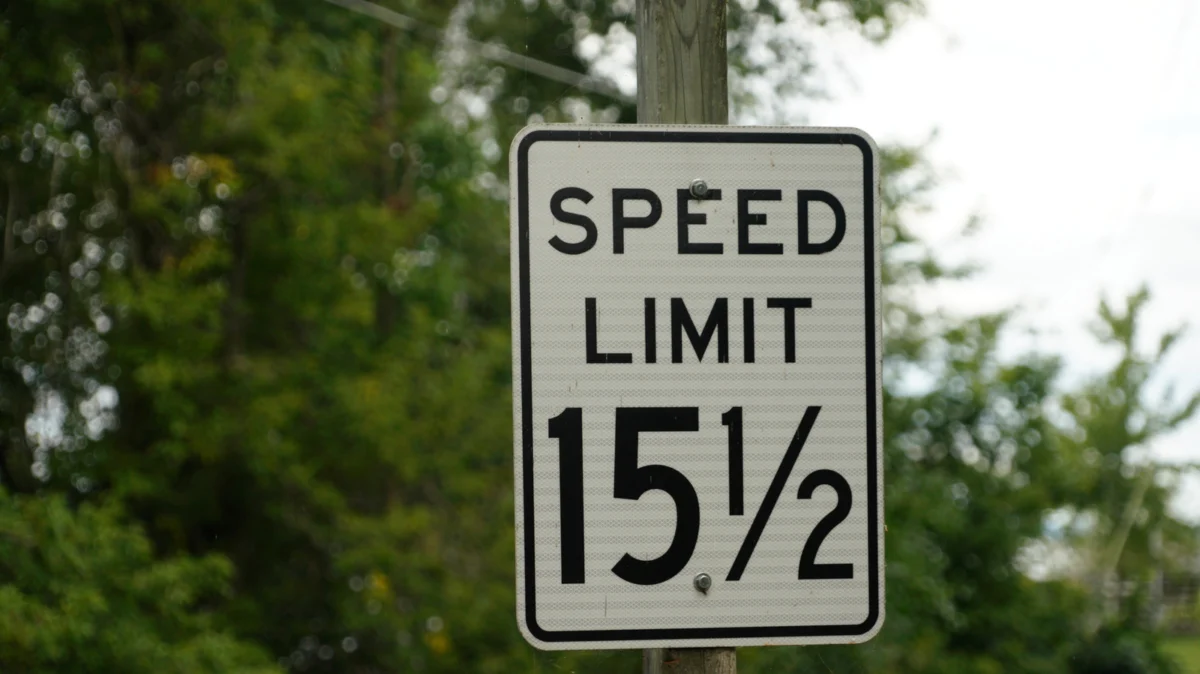
For decades, the American roadside has been defined by a predictable uniformity: white rectangular signs with bold black lettering indicating speed limits in increments of five. This standardization, governed by the Manual on Uniform Traffic Control Devices (MUTCD), was designed to ensure that a driver in Maine could interpret road rules with the same ease as a driver in California. Yet, in recent years, motorists have reported an uptick in "anomalous" signage—speed limit signs displaying fractions like 6 ½ mph or precise decimals like 12.5 mph.
While these signs often trigger confusion or social media amusement, they represent a calculated strategy in traffic calming. By breaking the monotony of standard signage, local jurisdictions are attempting to disrupt the "highway hypnosis" that leads to speeding, forcing drivers to engage with their surroundings in a more conscious, intentional manner.
The Psychology of the "Odd" Sign
To understand why a property manager might choose a 6 ½ mph limit over a standard 5 or 10 mph sign, one must first understand the psychology of habituation. Human beings are incredibly adept at tuning out consistent, repetitive stimuli. When a driver passes the same type of white-on-black sign thousands of times, the brain eventually stops "reading" the sign and instead relies on muscle memory and peripheral awareness.
When a sign breaks this pattern—by utilizing a fraction, a decimal, or an unconventional font—it creates a "cognitive speed bump." The driver’s brain is forced to pause, process the unusual information, and re-evaluate their speed.
Sean Kidston, a senior real estate manager for Shea Properties, addressed this phenomenon when explaining a peculiar 6 ½ mph sign in a Chicago-area parking lot. "The signs are there just to be a little different," he noted. That "difference" serves a critical function: it breaks the driver’s autopilot mode. In high-pedestrian environments like shopping centers, apartment complexes, or private estates, forcing a driver to take a second look can be the difference between a controlled stop and a collision.
A Brief Chronology of Traffic Control Evolution
The evolution of road signage in the United States has been a tension between standardization and local autonomy.
- 1935: The first edition of the MUTCD was published, aiming to create a national language for traffic control. The goal was to remove the ambiguity that plagued the early automotive era.
- The Mid-20th Century: Traffic engineering became a rigid science. "Speed zoning" was almost exclusively determined by the 85th percentile rule—setting limits based on the speed at which 85% of traffic flows naturally. This led to the dominance of 5-mph-increment signs.
- The Late 20th Century: As suburban sprawl increased, the prevalence of mixed-use areas (where cars, pedestrians, and cyclists share space) created a need for more nuanced traffic calming.
- The 21st Century: The rise of social media and the "viral" nature of road signage allowed local communities to experiment. What began as a localized attempt to slow traffic in a specific neighborhood—such as a 12.5 mph sign in a residential zone—quickly became a national conversation piece, highlighting a shift toward psychological traffic management.
Supporting Data: Why Precision Matters
The logic behind non-traditional speed limits is backed by a growing body of research into "traffic calming." Traffic calming refers to the combination of mainly physical measures that reduce the negative effects of motor vehicle use, alter driver behavior, and improve conditions for non-motorized street users.
The 85th Percentile vs. The "Nudge"
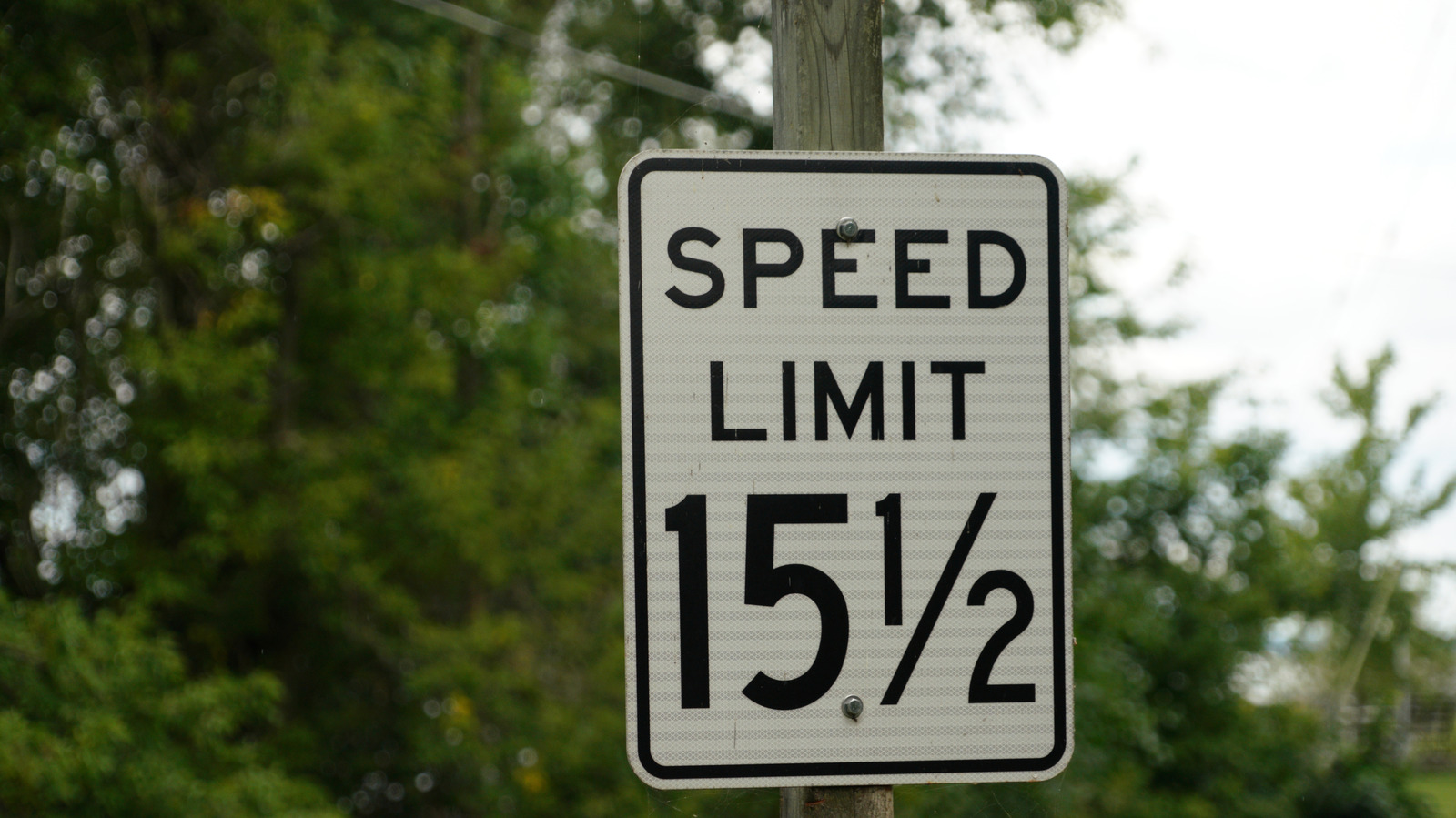
Traditional engineering relies on the 85th percentile rule, but modern urban planners are increasingly adopting "Nudge Theory." By providing a specific, unconventional speed limit, authorities are "nudging" the driver to be more attentive. Research suggests that when a speed limit is perceived as arbitrary or "too low" (like 5 mph), drivers often ignore it entirely. However, a sign that reads 12.5 mph feels more precise and scientific, which can paradoxically increase compliance because the driver assumes the limit was set based on a specific, calculated risk assessment of that exact stretch of road.
Visibility and Conspicuousness
The U.S. Department of Transportation’s MUTCD section on "conspicuousness" emphasizes that signs must not only be legible but also command attention. The manual outlines several strategies to achieve this:
- Fluorescent Yellow/Green Backings: Used primarily in school zones, these colors are scientifically proven to be more visible to the human eye, particularly in low-light conditions.
- Striped Borders: Black and yellow diagonal stripes create a high-contrast visual cue that signals "hazard" or "caution" more effectively than a solid white sign.
- Flags and Reflective Tassels: Angled at 45 degrees, these additions catch the breeze and the sun, creating motion that draws the eye.
Official Responses and Regulatory Friction
The rise of creative signage has not gone unnoticed by federal regulators. The Federal Highway Administration (FHWA) maintains strict oversight to prevent the "sign clutter" that can distract drivers.
Last year, the FHWA took a firm stance against the state of Pennsylvania (PennDOT) regarding "funny" or witty road signs. The administration argued that signs with overly complex or humorous messages distract drivers and dilute the authority of official regulatory signage.
The divide remains clear: while the FHWA demands uniformity on federal and state highways to ensure national safety standards, private developers and local municipalities have more leeway on private property or local low-speed roads. The regulatory consensus is that while creative signs are permissible for traffic calming, they must not cross the line into "entertainment." If a sign causes more distraction than it prevents, it is likely to be flagged for removal.
Implications: The Future of Traffic Safety
The emergence of fractional and decimal speed limits is a symptom of a larger shift in how we view the road. We are moving away from the era of "the road as a conveyor belt" and toward "the road as a shared space."
Integrating Technology
While fractions and decimals are low-tech solutions, they are being supplemented by high-tech alternatives. Digital speed feedback signs—which display a driver’s current speed in real-time—have been proven far more effective than static signs. The future of traffic control likely lies in a hybrid model: the human-centric, "attention-grabbing" signage of today, paired with smart infrastructure that adjusts limits based on real-time traffic density, weather conditions, or pedestrian presence.
The Role of Public Perception
Perhaps the most significant implication is the democratization of traffic safety. When a community advocates for a specific, lower, or more unique speed limit, they are taking ownership of their local environment. These signs represent a dialogue between the road and the driver.
However, there is a limit to the effectiveness of these measures. As drivers become accustomed to 6 ½ mph or 12.5 mph signs, the "novelty effect" will eventually wear off. Traffic engineers must be prepared to innovate further, perhaps moving toward more interactive environments where the road geometry itself—rather than just the signage—dictates the speed.
Conclusion
The sight of a speed limit sign reading "6 ½ mph" might elicit a chuckle, but the intent behind it is far from funny. It is a deliberate, albeit quirky, intervention in a world where distracted driving is a leading cause of accidents.
As we look toward the future of transportation, the goal remains consistent: creating a safe, fluid, and predictable environment for everyone. Whether through the strict, time-honored standards of the MUTCD or the creative, attention-grabbing tactics of local planners, the message to the driver remains the same: Pay attention. The road is not just for cars—it is a space for the community.
As long as these signs remain effective at slowing traffic and increasing driver alertness without becoming a source of genuine confusion or hazard, they will likely remain a fixture of the American roadside. In the complex landscape of traffic engineering, sometimes the most effective tool isn’t a bigger sign or a brighter light—it’s the simple act of making a driver think for a fraction of a second about the number they see on the post.











