

WASHINGTON/TEHRAN – The fragile geopolitical architecture of the Middle East is teetering on the brink of total collapse this weekend, as the uneasy ceasefire between the United States and the Islamic Republic of Iran faces its most severe test since the inception of the current conflict. Following inflammatory rhetoric from the White House and defiant posturing from Tehran, the international community watches with bated breath as the Strait of Hormuz—the world’s most critical energy chokepoint—becomes the epicenter of a widening regional war.
The Escalation: "Locked and Loaded"
On Saturday, U.S. President Donald Trump escalated his rhetoric to unprecedented levels, issuing a stark warning to the Iranian leadership via his Truth Social platform. The President claimed that "1,000 missiles are locked and loaded" and aimed at Iranian targets, promising that "thousands more" would follow should the Iranian government act on perceived threats against his life.
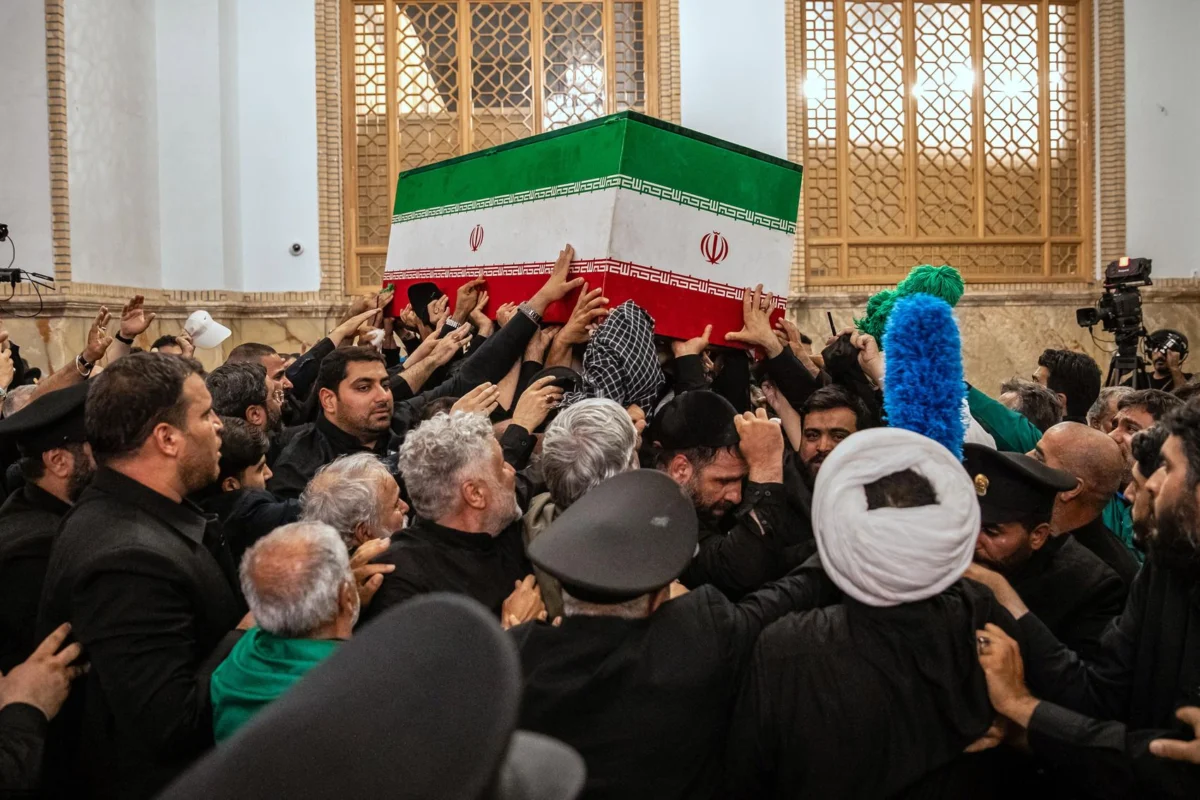
The President’s outburst was prompted by images emerging from the funeral procession of the late Supreme Leader, Ayatollah Ali Khamenei, who was killed in an airstrike on February 28, 2025. During the multi-city funeral services spanning Iran and Iraq, mourners were observed brandishing posters and banners calling for the assassination of both President Trump and Israeli Prime Minister Benjamin Netanyahu.
In a move that has drawn sharp condemnation from advocacy groups, including the Council on American-Islamic Relations (CAIR), President Trump concluded his statement by invoking Arabic religious terminology, vowing to "completely decimate and destroy all areas of Iran—PRAISE BE TO ALLAH!" CAIR, which has previously denounced the President’s conduct, characterized the statement as a "deranged mocking of Islam," further exacerbating the cultural and ideological dimensions of the conflict.
Chronology of the Crisis: From Airstrikes to Chokepoints
To understand the current impasse, one must trace the rapid deterioration of the situation over the past week:
- February 28, 2025: The opening phase of the conflict begins with a precision airstrike that results in the death of 86-year-old Supreme Leader Ali Khamenei.
- Early March 2026: A series of U.S. airstrikes targets Iranian military infrastructure, ostensibly in response to Tehran’s renewed naval aggression.
- Mid-Week, March 2026: Iranian forces attack three commercial vessels in the Strait of Hormuz, prompting a swift retaliatory response from the U.S. military.
- Thursday, March 2026: Following the conclusion of U.S.-led strikes, unidentified forces—suspected to be Gulf Arab states acting in self-defense—launch secondary strikes on Iranian soil. In retaliation, Tehran strikes targets across Bahrain, Jordan, Kuwait, and Qatar.
- Saturday, March 2026: Diplomatic efforts intensify in Oman as Iranian Foreign Minister Abbas Araghchi prepares for emergency meetings, even as the U.S. remains firm on its ultimatum regarding nuclear compliance and maritime freedom.
The Strait of Hormuz: A New Financial Frontier
The most significant point of friction remains the Strait of Hormuz. Historically an international waterway through which approximately 20% of the world’s traded oil and natural gas flows, the route has become a flashpoint for sovereignty disputes.
Tehran has effectively abandoned decades of maritime precedent, insisting that the strait now falls under its exclusive jurisdiction. Iranian officials have gone as far as to demand that vessels pay "transit fees" to pass through the corridor. The United States, refusing to recognize these demands, has urged mariners to bypass the Iranian-controlled areas by utilizing a southern route through Omani territorial waters. This guidance has infuriated the Islamic Revolutionary Guard Corps (IRGC), leading directly to the recent spike in ship attacks.
While oil prices initially surged to $120 a barrel at the war’s onset, the market has seen a sharp decline in recent days. However, analysts warn that this is not a sign of stability, but rather a reflection of the global economic anxiety caused by the persistent threat of a total blockade.
Official Responses and Diplomatic Deadlock
Senior U.S. officials, speaking on condition of anonymity, have articulated a dual-track strategy: a limited window for diplomatic resolution paired with an ironclad resolve to use military force if the Iranian government refuses to yield.
The U.S. position on the nuclear front remains non-negotiable: Tehran must surrender its stockpile of highly enriched uranium. This material, which the International Atomic Energy Agency (IAEA) notes is at levels unseen in any non-weapons program, remains stored in subterranean facilities that survived earlier U.S. bombing campaigns. U.S. officials confirmed that if a deal is not reached to remove these materials, the military has prepared options to ensure the sites remain "buried underground forever."
Tehran, however, presents a narrative of internal unity. Despite the power vacuum created by the death of the elder Khamenei, the theocracy claims that the new Supreme Leader, Ayatollah Mojtaba Khamenei, has successfully consolidated control. Iranian Foreign Minister Abbas Araghchi has pushed back against U.S. demands, characterizing the American ending of oil-sale waivers as a direct violation of the interim deal.
"Reality check: There can only be mutual compliance," Araghchi posted on X, signaling that Tehran views the U.S. economic sanctions as the primary driver of the current instability.
Implications for Global Security
The implications of this standoff are profound. The current conflict is no longer a localized dispute; it is a fundamental challenge to the international rules-based order. By attempting to nationalize a vital global waterway, Iran is forcing the hand of the international community. Simultaneously, the U.S. administration’s rhetoric suggests a departure from traditional diplomacy, leaning instead into a strategy of existential threats.
Regional powers are caught in the crossfire. Turkish Foreign Minister Hakan Fidan has expressed cautious optimism that a solution regarding the strait can be negotiated between Iran and Oman this weekend. However, given the intensity of the latest retaliatory strikes involving Bahrain, Jordan, Kuwait, and Qatar, the prospect of a localized "understanding" seems increasingly detached from the reality on the ground.
The humanitarian cost of the war, the instability of the energy markets, and the looming threat of nuclear escalation have created a volatile environment where a single miscalculation could trigger a much larger conflagration. As the world awaits the outcome of the Omani-Iranian discussions, the message from Washington is clear: the United States is prepared to escalate to preserve the status quo, even if the price of doing so is the complete dismantling of the current Iranian state.
For now, the region holds its breath, waiting to see if the "locked and loaded" missiles will remain in their silos or if the next phase of this conflict will irrevocably reshape the map of the Middle East.











