

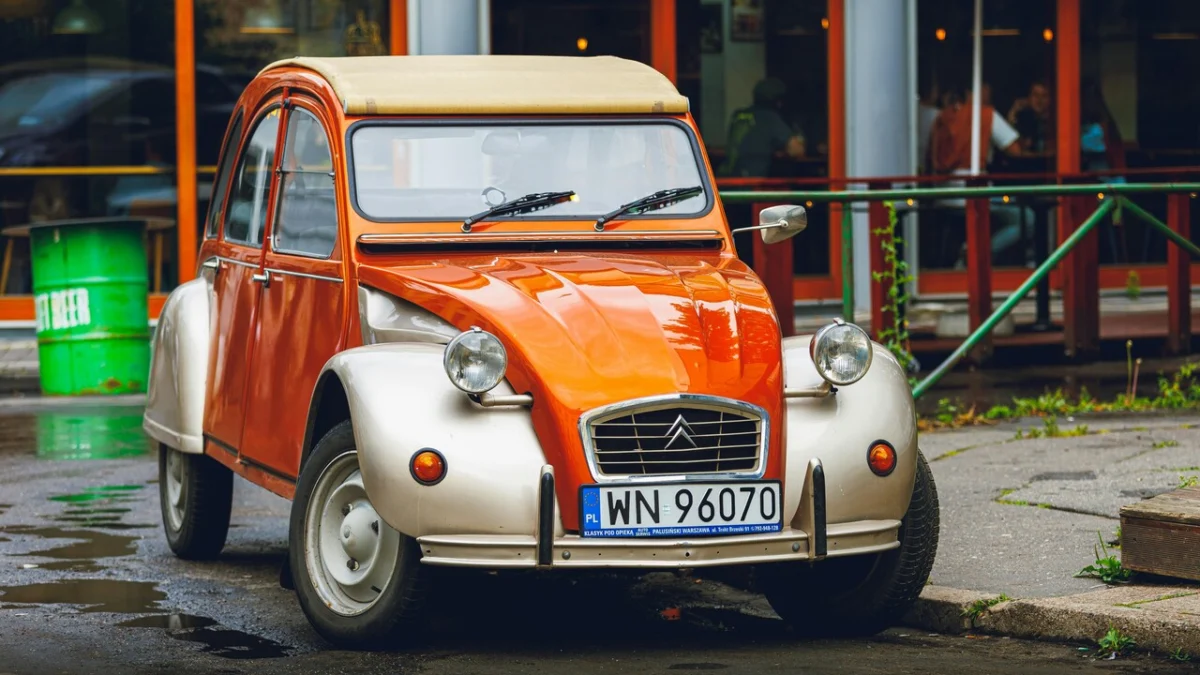
The automotive world is witnessing a nostalgic revolution. Following the successful revival of heritage models like the Fiat 500 and the Renault 5 E-Tech, French automaker Citroën has officially confirmed the return of its most legendary vehicle: the 2CV, affectionately known globally as the "Ente" (the Duck). By pivoting to an all-electric powertrain, Citroën aims to capture the hearts of a new generation while addressing the urgent industry need for affordable, accessible urban mobility.
This revival is not merely a design exercise in retro-futurism; it is a strategic pillar within the Stellantis "FaSTLAne 2030" roadmap, designed to position the brand as a leader in the entry-level EV segment. With a projected price point below €15,000 and a targeted European production footprint, the new 2CV aims to replicate the original’s mandate: bringing freedom of movement to the masses.
The Legacy of the "Duck": A Chronology of Innovation
To understand the weight of this announcement, one must look back at the original 2CV. Introduced in 1948 at the Paris Motor Show, the 2CV was born from a simple but radical brief: design a vehicle capable of carrying four people and a basket of eggs across a ploughed field without breaking them. It was intended for the rural French population—farmers, doctors, and families who needed utility over luxury.
- 1948: The debut of the Citroën 2CV in Paris. It quickly becomes a symbol of post-war recovery and practical, utilitarian design.
- 1948–1990: A staggering production run of over 5.1 million units. The car evolves through various iterations (Charleston, Dolly, Sahara) but remains true to its air-cooled, simple-to-repair roots.
- 1990: Production officially ceases in Portugal, marking the end of an era.
- 2020s: Citroën experiments with the "Ami," a micro-mobility quadricycle that proves there is a massive market for minimalist, affordable electric transport.
- 2024: Citroën formally announces the development of an all-electric 2CV, bridging the gap between its historic past and the future of electrification.
- 2026: Official unveiling scheduled for the Paris Motor Show.
- 2028: Projected commercial market launch.
The Strategic Vision: Why Now?
The decision to bring back the 2CV is driven by a convergence of economic necessity and market trends. As the European Union tightens emissions regulations and the average price of new electric vehicles continues to climb, the middle class has been increasingly priced out of the EV transition.
Citroën, under the Stellantis umbrella, is uniquely positioned to fill this void. By leveraging shared platforms and economies of scale, the company intends to move beyond the constraints that often plague boutique EV projects. Unlike the Ami, which is limited in speed and range, the new 2CV is expected to be a fully-fledged passenger car, capable of highway speeds and regional commuting.
Addressing the "Affordability Gap"
The "under €15,000" price tag is the most discussed aspect of the upcoming release. In an era where many EVs start well above €30,000, this target price is ambitious. Industry analysts suggest this will be achieved through:
- Simplified Manufacturing: Drawing inspiration from the original’s minimalist design, the new 2CV is expected to feature a reduced part count.
- LFP Battery Technology: Utilizing Lithium Iron Phosphate batteries, which are cheaper to produce and more durable than traditional Lithium-ion cells.
- Localized Production: By manufacturing in Italy and keeping the supply chain within Europe, Citroën aims to mitigate logistical costs and potential import tariffs, aligning with the "FaSTLAne 2030" goal of regionalized production.
Official Stance: The Voice of Citroën
The announcement has been met with significant enthusiasm, bolstered by a teaser video that shows a silhouette unmistakably inspired by the original’s iconic sloping roofline and circular headlamp configuration.
Citroën CEO Xavier Chardon has emphasized that the new project is rooted in the philosophy of the original, rather than mere aesthetic imitation. In a recent statement, he remarked:
"The original 2CV was never designed to be an icon. It became one because it gave people freedom. The new 2CV will carry that same spirit—not through nostalgia, but through a contemporary interpretation of simplicity and accessibility. Just as the original once democratized mobility, the new 2CV aims to make electric mobility desirable for a new generation."
The company is careful to distinguish the new 2CV from the Ami. While the Ami served as a "proof of concept" for low-cost, minimalist electric transport, the 2CV is being positioned as a versatile vehicle that can serve as a primary car for families.
Implications for the European Automotive Landscape
The introduction of an affordable, retro-styled EV has profound implications for the competitive landscape in Europe.
1. The Challenge to Asian Manufacturers
Chinese manufacturers have been aggressively targeting the European market with low-cost EVs. The revival of the 2CV serves as a defensive and offensive measure for Stellantis, proving that European manufacturers can compete on price while leveraging the immense "brand equity" of heritage nameplates.
2. The Shift in Consumer Perception
The 2CV represents a shift away from the "bigger is better" mentality. In the last decade, SUVs have dominated sales. By introducing a smaller, lighter vehicle, Citroën is betting on a change in urban consumer behavior, where parking ease, efficiency, and environmental consciousness outweigh the desire for bulk and excess horsepower.
3. Regulatory and Infrastructure Impact
As European cities implement more stringent Low Emission Zones (LEZ), vehicles like the 2CV offer a pathway for owners of older, combustion-engine cars to upgrade without the financial burden of high-end luxury EVs. This could accelerate the overall fleet turnover, assisting governments in meeting their carbon neutrality targets.
A Technical Outlook: What to Expect
While official specifications remain under lock and key until the 2026 reveal, industry insiders are piecing together the technical expectations:
- Range: A target of 250 to 300 kilometers (WLTP cycle) is considered the "sweet spot" for an urban-focused vehicle.
- Design Language: Expect modern interpretations of the 2CV’s classic elements. While a full-length fabric sunroof would be a popular addition, structural safety requirements may lead to a panoramic glass roof instead.
- Connectivity: Despite the "simplicity" mantra, the car will inevitably feature modern safety systems, including automated emergency braking and lane-keeping assistance, as required by EU regulations.
- Customization: Following the trend of the Fiat 500, Citroën will likely offer a wide range of color palettes and interior modularity to appeal to the younger, fashion-conscious demographic.
Conclusion: A Gamble on History
The resurrection of the 2CV is a high-stakes gamble. If Citroën delivers a vehicle that is truly affordable, durable, and evocative of the original’s charm, it could become the defining electric car of the late 2020s. However, the company must balance the pressure of modern manufacturing costs with the promise of the "under €15,000" price point.
As we look toward the 2026 Paris Motor Show, the automotive world waits with bated breath. The return of the "Duck" is not just a trip down memory lane—it is a bold statement that the future of mobility, much like the past, should be simple, affordable, and fundamentally human-centric. Whether the new 2CV will carry the weight of its predecessor’s legacy remains to be seen, but the intent is clear: to put the world on wheels once more, this time with a silent, electric heart.












No comments yet. Be the first to join the conversation!