

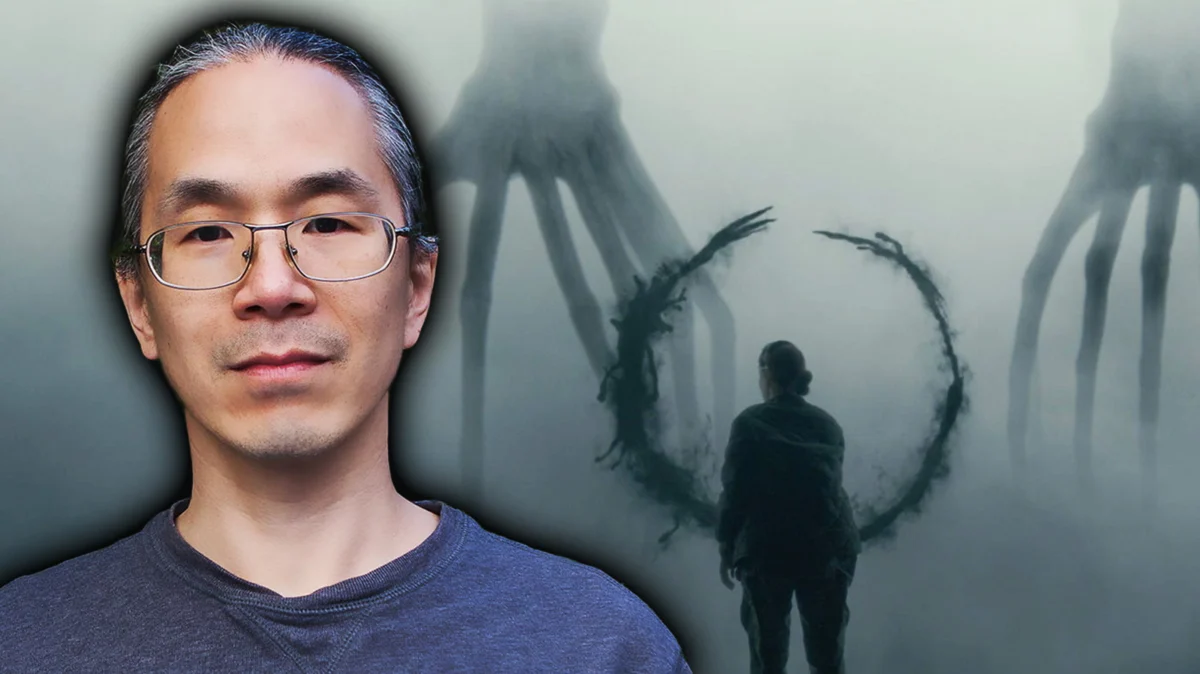
In the landscape of modern speculative fiction, few names command as much intellectual reverence as Ted Chiang. Known for his rigorous, philosophical approach to science fiction—exemplified by works like "Tower of Babylon" and his incisive 2024 New Yorker essay on artificial intelligence—Chiang occupies a unique space in the literary canon. While his short story "Story of Your Life" served as the foundation for Denis Villeneuve’s Academy Award-winning film Arrival, Chiang himself maintains a humble distance from the machinery of Hollywood. When pressed on which films successfully capture the elusive "essence" of their literary sources, Chiang points not to a cerebral sci-fi epic, but to a swashbuckling classic: Rob Reiner’s 1987 masterpiece, The Princess Bride.
The Man Behind the Heptapods
Ted Chiang’s career is defined by precision. Unlike many of his contemporaries who lean into the "space opera" tropes of the genre, Chiang writes with the analytical depth of a linguist and the curiosity of a mathematician. His breakout story, "Story of Your Life," explored the Sapir-Whorf hypothesis through the lens of first-contact communication, positing that language is not merely a tool for expression but a fundamental filter for reality.
When this story was adapted into the 2016 film Arrival, starring Amy Adams, it garnered massive critical acclaim. The film’s success brought Chiang’s work to a global audience, yet the author remained pragmatic about his role in the transition from page to screen. For Chiang, the leap from the internal, meditative pacing of a short story to the external, visual demands of a feature film is a process he views with profound respect—and a healthy dose of intimidation.
A Masterclass in Metafiction: The Princess Bride
When discussing what constitutes a "perfect" adaptation, Chiang’s choice of The Princess Bride is as telling as it is unexpected. William Goldman’s 1973 novel is a complex piece of postmodern literature. Structured as a "book within a book," it purports to be an abridgment of a fictional text by the imaginary historian S. Morgenstern. Goldman’s prose is peppered with editorial interjections, creating a narrative layer that challenges the reader’s relationship with the story itself.
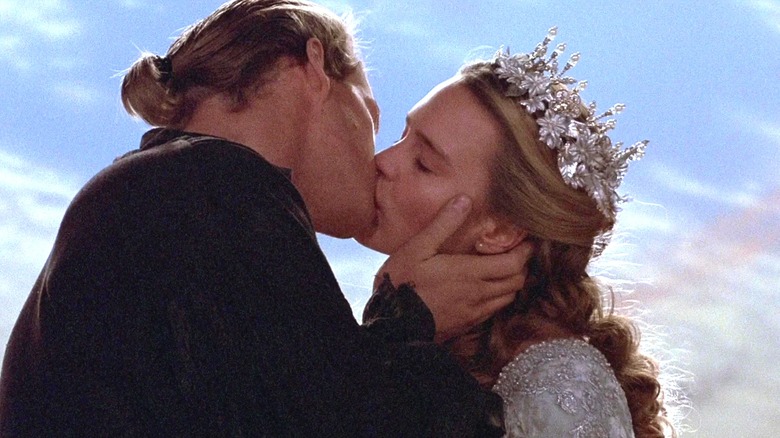
Adapting such a work for the screen seems like a fool’s errand, yet the 1987 film achieves this through a brilliant structural pivot. By introducing a grandfather (Peter Falk) reading the book to his skeptical grandson (Fred Savage), the film replaces Goldman’s textual commentary with a cinematic frame. This device allows the audience to experience the "Good Parts" of the story while maintaining the meta-narrative wit of the original novel.
In a 2016 interview with Literary Hub, Chiang remarked: "I don’t know if it’s fair to count The Princess Bride, because William Goldman wrote both the novel and the screenplay, but that’s definitely an example of a great movie that captures the essence of the original story."
Chronology of an Adaptation
To understand why Chiang holds this specific film in such high regard, one must look at the timeline of the project:
- 1973: William Goldman publishes The Princess Bride. It is immediately noted for its unique, arch, and self-aware voice, blending fairy-tale tropes with biting, cynical, and humorous commentary.
- 1987: Rob Reiner brings the story to the screen. Goldman, having already proven his mastery of the screenplay format (with hits like Butch Cassidy and the Sundance Kid), serves as the architect of the film’s transition.
- 2016: Ted Chiang’s Arrival hits theaters. The film marks a landmark moment in "hard sci-fi" cinema, proving that high-concept linguistic theory can be translated into a blockbuster format.
- Present Day: Chiang continues to reflect on the nature of narrative translation, frequently citing Goldman’s work as the gold standard for how to preserve the spirit of a story while bowing to the constraints of a different medium.
The Exhaustion of the Screenplay
Chiang’s admiration for Goldman is deeply rooted in his own experience with the development process of Arrival. While he was pleased with the result, he has been vocal about his lack of desire to repeat the experience. Writing for the screen is, in his estimation, an exercise in endurance.
"I read a couple of drafts of the screenplay and offered some feedback, and the screenwriter Eric Heisserer and I were in email contact," Chiang explained. "But I wasn’t actively involved in the adaptation process, which I was fine with. I’m not a screenwriter, and the development process sounds exhausting."
Chiang cites the sheer volume of work involved as a primary deterrent. Eric Heisserer, who penned Arrival, famously wrote nearly 100 drafts over five years. For a writer accustomed to the singular, self-contained nature of short fiction, the iterative, collaborative, and often chaotic nature of studio filmmaking is a foreign—and taxing—environment.
Supporting Data: Why "Essence" Trumps "Accuracy"
The film industry has long debated the merits of "faithful" adaptations versus "interpretive" ones. Data from box office trends and critical aggregation sites like Rotten Tomatoes suggest that audiences prioritize emotional truth over literal plot recreation.
Chiang’s argument for The Princess Bride centers on this concept of "essence." He notes that a great adaptation doesn’t need to capture every minor character or subplot; it needs to capture the voice and the intent of the original work. Because Goldman wrote both, the transition was seamless. He understood that the meta-commentary of the book could not be translated as voiceover text, but it could be translated as an interpersonal dynamic between the film’s framing characters. This is a lesson many modern adaptations—which often fall into the trap of over-explaining or bloating the narrative—fail to learn.
The Implications for Future Science Fiction
What does Chiang’s perspective mean for the future of science fiction cinema? As studios continue to mine the vast libraries of literary sci-fi for content, the "Chiang Model" offers a path forward.
- Respecting the Authorial Voice: The most successful adaptations, like Arrival, involve the original author in an advisory capacity, ensuring the philosophical core of the work remains intact.
- Structural Integrity: Rather than forcing a book into a three-act film structure, filmmakers should look for ways to adapt the spirit of the story. If the book is metafictional, find a cinematic device that performs the same function as the text.
- The "Good Parts" Philosophy: Goldman’s approach in The Princess Bride was to strip away the "boring" parts of the fictional S. Morgenstern text. Modern filmmakers should be equally ruthless. A film does not need to be a 1:1 reflection of the novel to be a successful adaptation.
Official Responses and Industry Reception
The relationship between novelists and directors is historically fraught. However, the partnership between Ted Chiang and Denis Villeneuve is widely considered a triumph of the genre. Villeneuve’s commitment to the slow-burn, intellectual pacing of Chiang’s story allowed the film to succeed where others might have succumbed to the pressure of making "aliens" into generic action movie villains.
Industry critics have lauded Chiang’s ability to remain grounded despite his rising profile in the entertainment world. By acknowledging his own limitations as a screenwriter, he inadvertently highlights the specialized skill set required to adapt complex literature. He has expressed deep gratitude for Heisserer’s labor, noting that without that specific, grueling process of iteration, the nuances of the heptapods’ language would have remained trapped on the page.
Conclusion: The Art of the Translation
Ultimately, Ted Chiang’s admiration for The Princess Bride serves as a reminder that the best art often transcends its medium. Whether it is a fantasy romance or a linguistic puzzle about the nature of time, the goal of an adaptation is not to replace the original, but to provide a new lens through which to view it.
Chiang’s humility regarding his own work, coupled with his deep appreciation for the craft of William Goldman, offers a refreshing perspective in an era of endless reboots and adaptations. It suggests that while the "development process" may be exhausting, the result—when handled with the care of a master—is worth every single one of those hundred drafts. In the end, just like Westley and Buttercup in the Fire Swamp, the most successful adaptations are those that navigate the perils of their medium to arrive, against all odds, at a perfect conclusion.










