

The music industry’s ongoing confrontation with artificial intelligence is entering a decisive, nuanced, and perhaps more practical phase. After two years of aggressive litigation, copyright battles, and public outcry regarding the unauthorized scraping of intellectual property, the focus has shifted from outright prohibition to mandatory transparency. A powerful coalition of record labels, artist advocacy groups, and industry organizations is now pressuring streaming giants like Spotify and Apple Music to implement clear, user-facing labels that identify when a track has been created—in whole or in part—by artificial intelligence.
This initiative, which represents a significant pivot in the industry’s stance, suggests a recognition that the genie cannot be put back in the bottle. Instead of attempting to purge AI from the digital ecosystem, the industry is betting on a "disclosure-first" approach, arguing that the modern listener’s primary right is the right to know exactly what they are consuming.
The Evolution of the Conflict: A Brief Chronology
To understand the current push for labeling, one must look at the rapid trajectory of the AI music explosion:
- 2022: The Emergence of Generative Audio: As AI models like Jukebox and Riffusion began producing increasingly coherent musical snippets, the industry largely viewed them as curiosities.
- Early 2023: The "Heart on My Sleeve" Moment: The viral success of an AI-generated track mimicking the voices of Drake and The Weeknd served as a wake-up call. It demonstrated that AI could not only replicate human style but could convincingly imitate the most valuable brands in music.
- Late 2023: The Legal Wave: Record labels, led by entities like the RIAA, began filing lawsuits against AI firms, alleging that these models were trained on copyrighted music without consent.
- 2024: The Proliferation of AI Spam: Streaming platforms found themselves overwhelmed by a flood of low-quality, AI-generated tracks designed to manipulate algorithms and siphon royalty pools.
- 2025–2026: The Shift to Transparency: Recognizing that AI is now a legitimate, albeit contentious, production tool, major stakeholders have moved toward a standardized metadata and labeling framework.
The Proposed Labeling System: A Two-Tiered Approach
The proposal, currently being championed by the Recording Industry Association of America (RIAA), the International Federation of the Phonographic Industry (IFPI), the Recording Academy, and the Human Artistry Campaign, suggests a simple, two-tiered labeling system designed for immediate recognition.
1. Fully AI-Generated
This tag would be reserved for tracks where the core musical elements—the lead vocals, primary melodic lines, or essential instrumentation—are entirely the product of artificial intelligence. These are songs where the "creative spark" is essentially delegated to a machine.
2. AI-Assisted
This tag would acknowledge the reality of modern music production. Many human artists now use AI as a digital assistant, much like they would use a synthesizer, a drum machine, or Auto-Tune. This label would indicate that the work remains fundamentally human-driven, but that AI was utilized as a tool during the creative process, such as for mixing, mastering, or generating background textures.
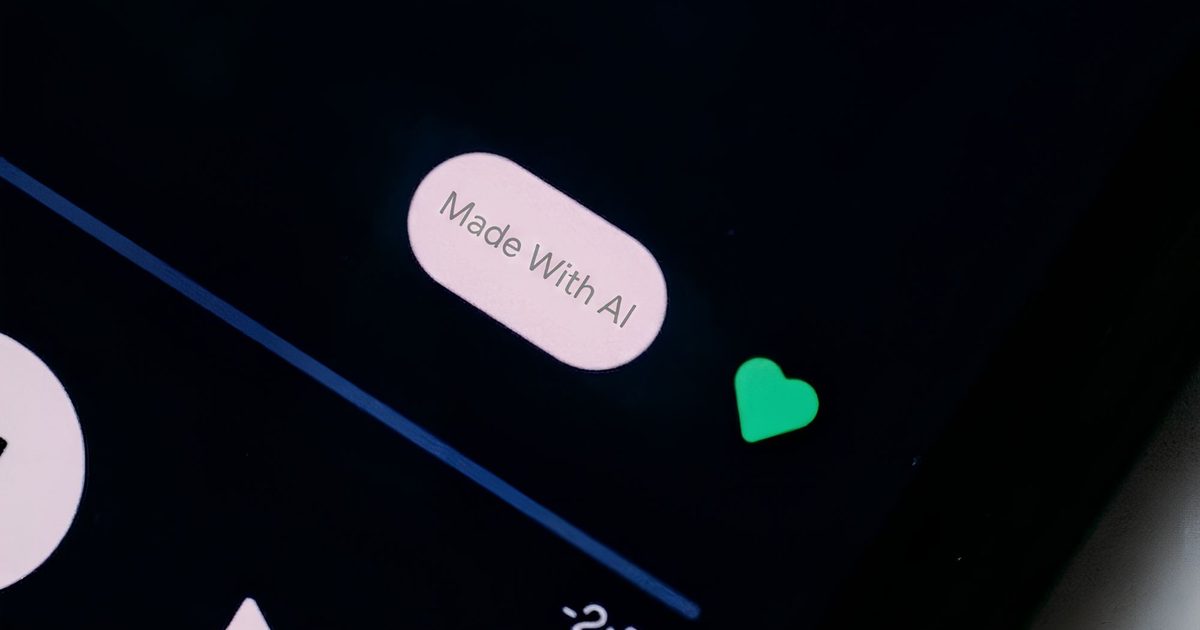
The intention is to mirror the success of the "Explicit" content warning, a long-standing industry standard. By making the status of a song immediately visible on the player UI, the industry hopes to maintain the integrity of the listening experience without hindering the distribution of legitimate creative works.
Supporting Data: Why Trust is the New Currency
The economic and psychological implications of this shift are profound. Data from streaming platforms reveals that the proliferation of "AI-slop"—low-effort, automated tracks—has created a crisis of confidence.
According to internal reports from major streamers, the sheer volume of AI-generated content has forced platforms to remove thousands of tracks that exist solely to exploit algorithmic recommendation systems. The industry’s concern is that if a listener cannot distinguish between a heartfelt, human-composed ballad and a machine-generated piece of "mood music," the perceived value of all recorded music risks devaluation.
Furthermore, a survey conducted by independent music organizations indicates that over 70% of frequent streamers believe they should be informed if a song was generated by AI. This desire for transparency is not necessarily rooted in an anti-AI sentiment, but in a desire for authenticity. In an era where "realness" is increasingly difficult to verify, metadata and clear labeling are the only tools left to preserve the emotional contract between the artist and the fan.
Official Responses and Industry Friction
The response from the tech sector has been cautious but generally cooperative. The Digital Media Association (DiMA), which represents the interests of streaming services like Spotify and Apple Music, has emphasized that any labeling system must be robust, scalable, and—crucially—reliant on accurate input.
"The effectiveness of these labels is only as good as the data provided by the creators," notes a spokesperson for a major distributor. "If the metadata is inaccurate, the entire system fails."
The industry giants are already laying the groundwork. Spotify has begun integrating AI-related disclosures into its deeper "Song Credits" menus, while Apple Music has introduced metadata fields that allow labels to flag AI usage in audio, artwork, and video. The current push by the RIAA is a demand for these platforms to elevate that information from the "fine print" of the metadata menu to the front-facing user interface.
Mitch Glazier, CEO of the RIAA, has been a vocal proponent of this shift. He frames the issue as one of consumer empowerment: "We aren’t calling for a ban on innovation. We are calling for a standard of honesty. Artists have always used tools; the difference is that we, as the audience, deserve to know the nature of those tools so we can make informed choices about what we support."
Implications: The Future of the Listening Experience
The move toward mandatory, visible labeling carries several long-term implications for the music business:
- The Valuation of "Human-Made": If a song carries a "Human-Made" or "AI-Assisted" badge, we may see the emergence of a new premium market where listeners specifically seek out, and perhaps pay more for, works that are documented as being entirely free of generative AI.
- Algorithmic Transparency: As these labels become standardized, it is likely that recommendation algorithms will eventually use this data to sort music. This could lead to "AI-free" playlists, allowing users to curate their listening environments based on their personal philosophy toward technology.
- Standardization of Credits: The move will likely force a global standard for music metadata. Just as the ISRC (International Standard Recording Code) is vital for royalty tracking, an "AI-Status Code" could become a standard requirement for all digital music distribution.
The Philosophical Shift: Trust vs. Tooling
The debate has moved beyond the simple question of "Is AI music good?" and into the much deeper territory of "What constitutes a performance?"
Many producers argue that the industry has been using AI-adjacent technology for decades. When a producer uses a VST (Virtual Studio Technology) plugin to create a drum loop, or when they use a digital compressor to "glue" a mix together, they are using algorithms to make creative decisions. The distinction, critics argue, lies in intent and agency. If an artist uses AI to expand their own voice, that is a continuation of human creativity. If a user prompts a machine to "make a song about heartbreak in the style of [Artist X]," the creative agency is fundamentally shifted to the developer of the model.
This is why the proposed labels are so essential. They provide a shorthand for the listener to navigate this complex reality. A listener might not mind a song where AI was used for subtle sound design, but they might feel misled by a track that mimics a famous singer’s voice without their consent or involvement.
Conclusion: A New Era of Informed Listening
As we look toward the future, the integration of AI into music is inevitable. However, the industry’s push for labeling proves that the human element remains the most valuable asset in the creative economy. By bringing AI usage out of the shadows and into the sunlight of the user interface, the music industry is attempting to protect the sanctity of the human-artist relationship.
For the average listener, this will change little in terms of the actual enjoyment of music. A great song is a great song, regardless of how it was made. But for those who value the story, the struggle, and the human intent behind a composition, these labels will serve as an essential guide. They will not stop the technological revolution, but they will ensure that when we listen, we are doing so with our eyes—and our ears—wide open. Transparency, after all, is the only way to build trust in a digital world that is rapidly becoming impossible to navigate without a map.











