Ali Ikhwan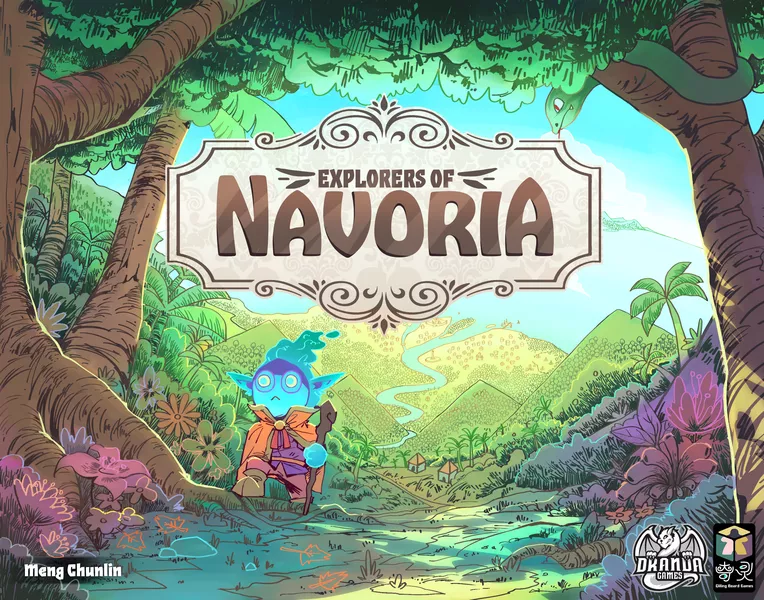
In the ever-expanding universe of modern tabletop gaming, the "gateway-plus" category—games that serve as a bridge between light family titles and complex strategy heavyweights—has become increasingly crowded. Yet, every so often, a title emerges that manages to balance aesthetic charm with mechanical precision so effectively that it demands attention. Explorers of Navoria, the latest release from Qiling Board Games, designed and illustrated by Meng Chunlin, is one such title. By synthesizing drafting, tableau-building, and resource management into a cohesive, fast-paced fantasy adventure, Explorers of Navoria has positioned itself as a must-play for both families and hobbyists alike.
The Core Mechanics: A Study in Elegant Design
At its heart, Explorers of Navoria is a game of calculated momentum. Supporting 2–4 players with a runtime of 40 to 80 minutes, the game challenges participants to act as expedition leaders, recruiting adventurers and charting newly emerged continents. The gameplay is bifurcated into two distinct phases per round: the Recruit Phase and the Gather Phase, both of which rely on a clever, bag-building drafting mechanic.
The Recruit Phase: Precision Drafting
The Recruit Phase sets the tempo for the entire session. Players draft action tokens from a communal bag, which dictate their ability to recruit cards from the central display. This is not merely a game of luck; the "town center" mechanic allows players to pick up tokens that others have discarded, adding a layer of tactical depth. By selecting these tokens, players secure adventurers—cards that provide ongoing abilities, point-scoring multipliers, or essential income streams. This phase is an exercise in synergy; players must weigh the immediate benefits of a card against its long-term utility in their growing tableau.
The Gather Phase: Execution and Expansion
Following recruitment, the Gather Phase transforms the collected tokens into tangible progress. Here, players spend their tokens to activate specific spaces on the game board. The color-coded action spaces—ranging from exploration and resource gathering to military influence and income generation—allow for a high degree of specialization. As the game progresses, these actions become more potent, rewarding players who have effectively built a tableau that supports their strategic goals.
The Chronology of Play: A Three-Round Arc
The structure of Explorers of Navoria is built upon a three-round cycle, a duration that allows for a satisfying sense of progression without overstaying its welcome.
- The Early Game (Round 1): Focus is placed on establishing an engine. Players prioritize income-generating cards and basic resource acquisition to ensure they aren’t starved for options in the later stages.
- The Mid-Game (Round 2): This is where the competition intensifies. As the board fills up, the scarcity of action spaces becomes apparent. Players begin to pivot toward specific scoring paths, such as military dominance or exploration track progression.
- The Final Push (Round 3): The endgame is defined by set collection and bonus objective optimization. With the final round’s cleanup, players tally their accumulated military influence, exploration milestones, and bonus cards, culminating in a final score that often remains neck-and-neck until the very last reveal.
Supporting Data and Accessibility
What distinguishes Explorers of Navoria from its contemporaries is its accessibility. While the game offers deep strategic decisions, the reliance on iconography over dense text makes it remarkably approachable.
The "Gateway-Plus" Factor
For families transitioning from classics like Ticket to Ride or Sushi Go!, Explorers of Navoria provides a perfect "next step." Its complexity is intuitive; the learning curve is gentle, yet the ceiling for optimization is high. Data from recent playtests suggests that while six-year-olds can participate with minimal guidance, the game provides enough tactical friction to keep seasoned hobbyists engaged for the duration of the 80-minute playtime.
Component Quality and Aesthetic Merit
The production value of Explorers of Navoria deserves special mention. The artwork is characterized by a "cozy fantasy" style—vibrant, whimsical, and inviting. From the bird-faced hot air balloons to the detailed explorer meeples, every component contributes to a cohesive, immersive experience. The use of a canvas bag for token drafting provides a tactile, sensory satisfaction that digital games simply cannot replicate. The sturdy card stock and clear, readable resource tokens ensure that the game remains functional even during high-intensity sessions.

Interaction and Strategic Depth: A Professional Assessment
The interaction within Explorers of Navoria is largely indirect, which makes it an excellent choice for groups who enjoy competition without the bitterness of direct "take-that" mechanics.
The Art of "Hate Drafting"
While players are primarily focused on their own expeditions, the scarcity of card displays necessitates a watchful eye on one’s opponents. Identifying when an opponent desperately needs a specific card and drafting it first—a maneuver known as "hate drafting"—adds a layer of tension that elevates the game beyond a solitary solitaire-style experience. It is a game of "stepping on toes" rather than "burning bridges," maintaining a friendly, adventurous atmosphere throughout.
The Case for Replayability
The game’s longevity is bolstered by the randomized nature of the card deck. Because players only encounter a fraction of the available cards in any given session, no two games play exactly the same. One session might favor a military-heavy strategy, while another rewards the intrepid explorer or the merchant tycoon. This variance forces players to adapt their strategies based on the cards revealed, preventing the "solved game" syndrome that often plagues lighter titles.
Implications for the Future of the Genre
While Explorers of Navoria is a polished and complete experience, the current tabletop market landscape suggests that its potential is far from exhausted.
The Expansion Potential
Critics and players alike have noted that the foundation laid by Meng Chunlin is ripe for expansion. The game possesses a robust framework that could easily accommodate new modules—perhaps adding asymmetric player powers, new exploration tracks, or additional card types—to further diversify the strategic landscape. The current game acts as a canvas, and one or two well-designed expansions could elevate it from a successful gateway title to a staple of the hobbyist shelf.
Final Verdict: Is it Worth Your Time?
For those seeking a game that marries beauty with brevity, Explorers of Navoria is a triumph. It respects the player’s time, keeps the decision-making process lean and mean, and offers a visual feast that makes it a delight to set up and play. While those searching for the crushing complexity of heavy Euro-style games may eventually look elsewhere, the vast majority of players will find that Explorers of Navoria hits the "Goldilocks zone"—not too heavy, not too light, but perfectly balanced for an evening of adventure.
As it stands, Qiling Board Games has delivered a title that succeeds by focusing on what makes tabletop gaming magical: the tactile joy of drafting, the thrill of the draft, and the satisfaction of watching an engine hum to life. Whether you are a parent looking to expand your family’s game night horizons or a hobbyist looking for a refreshing, mid-weight experience, Explorers of Navoria is an expedition well worth taking.


 Sagoh
Sagoh
 Ammar Sabilarrohman