Dwi Wanna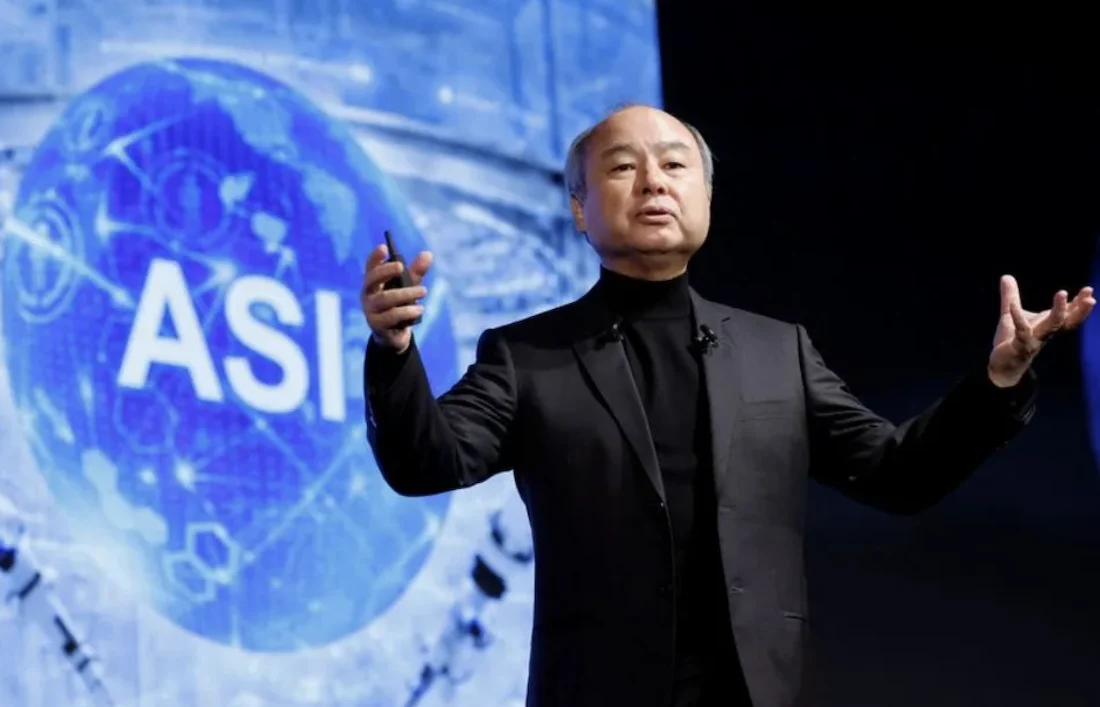
By [Your Name/Journalist Desk]
In a resounding defense of the artificial intelligence revolution, SoftBank Group CEO Masayoshi Son has characterized skepticism surrounding AI investment as not merely misplaced, but fundamentally regressive. Speaking at SoftBank’s annual executive summit in Tokyo this week, the billionaire investor—whose firm has served as the primary engine for global tech disruption for over four decades—dismissed the growing market anxieties regarding an “AI bubble” as “foolish,” comparing such doubts to historical skepticism regarding the utility of automobiles and aviation.
As financial markets grapple with the volatility of high-flying chipmakers like Nvidia and the staggering capital expenditures directed toward hyperscale data centers, Son remains unflappable. For the SoftBank visionary, the transition toward Artificial General Intelligence (AGI) is not a speculative fever dream, but the inevitable evolution of the human experience.
The Core Argument: Beyond the Bubble
The current market sentiment, characterized by a mix of euphoria and trepidation, has been fueled by the meteoric rise of tech valuations. Critics argue that the massive capital outlays—often running into the hundreds of billions of dollars—may never be recouped through consumer or enterprise software revenue.
Son, however, views these concerns through a different lens. “To ask whether AI is a bubble is a foolish question,” he told a packed hall of global executives. He argued that the current investment cycle is the necessary foundation for a fundamental shift in the global economy. By his estimation, those who refuse to adapt to the reality of machine intelligence are effectively “closing down their world,” while those who actively condemn the progress of AI are “spitting upward”—a metaphor suggesting that the backlash will only fall back on the critics themselves.
Chronology of a Tech Titan’s Vision
To understand Son’s current stance, one must look at the four-decade trajectory of SoftBank. Founded in 1981, the firm began as a software distributor before pivoting into one of the world’s most aggressive venture capital vehicles.
- The Early Days (1980s–1990s): Son established SoftBank as a gateway for Western tech to enter the Japanese market, building a reputation for early identification of digital trends.
- The Vision Fund Era (2017–2020): Launching the world’s largest tech-focused investment vehicle, Son poured tens of billions into companies ranging from ride-sharing giants to chip designers. While some bets—such as WeWork—drew significant criticism, his early, prescient investment in Arm Holdings solidified his status as a kingmaker in the semiconductor space.
- The AI Pivot (2021–Present): Following a period of financial consolidation, SoftBank has sharpened its focus exclusively on the "AI stack." This includes high-profile investments in OpenAI, a strategic divestment from Nvidia to reallocate capital, and an aggressive push into energy infrastructure to support the massive electricity needs of future compute clusters.
Supporting Data: The $5 Trillion Blueprint
Son’s optimism is backed by a roadmap that defies the conventional caution of institutional analysts. He projects that for the AI revolution to reach its full potential, the global economy must commit approximately $5 trillion annually toward an integrated AI infrastructure ecosystem.
This capital deployment is categorized into three critical pillars:
- Data Center Expansion: Massive, hyperscale facilities are required to train increasingly complex Large Language Models (LLMs).
- Chip Production: A surge in demand for specialized GPUs and custom ASICs (Application-Specific Integrated Circuits) to manage the massive compute loads.
- Energy Infrastructure: Perhaps the most overlooked aspect, Son argues that the future of AI is tethered to electricity. He has recently launched a battery-storage business in Japan to prepare for the projected surge in energy consumption—a move that underscores his belief that AI is not just a software play, but a physical industrial transformation.
By 2040, Son predicts that nearly 20% of the world’s GDP will be generated by or directly related to AI-driven industries. This "world of superintelligence" represents a shift in labor and productivity that he believes will eclipse the Industrial Revolution in its scope and impact on human prosperity.
Official Responses and Market Reactions
While Son’s rhetoric is bold, it mirrors a growing divide in the investment community. Institutional investors at Goldman Sachs and Morgan Stanley have recently voiced concerns that the “AI trade” is becoming crowded, questioning whether the projected profit margins for companies like OpenAI or its competitors will materialize before the current wave of venture capital dries up.
SoftBank’s latest financial report serves as a strong counter-narrative to these skeptics. For the fiscal year ending in March, the group reported a near five-fold increase in profits, totaling 5 trillion yen ($32 billion). This performance was largely attributed to the successful appreciation of its AI-centric portfolio.
Despite selling its stake in Nvidia last year—a move that some analysts initially questioned as premature—Son has maintained that the capital was necessary to fund the next wave of investments. The company’s $34.6 billion commitment to OpenAI remains its most visible bet, signaling that SoftBank is betting on the applications and models of the future rather than just the hardware of the past.
Implications: The Road Ahead
The implications of Masayoshi Son’s strategy are profound for global markets and geopolitical stability.
The Energy Crisis
One of the most pressing implications is the physical constraint on AI growth. As data centers consume more electricity, the race for AI dominance becomes a race for power. Son’s diversification into energy storage and grid management suggests that SoftBank is preparing for a reality where power availability is the primary bottleneck for technological progress.
The Economic Shift
If 20% of global GDP is tied to AI by 2040, the transition will likely trigger significant social and economic upheaval. Governments will face mounting pressure to address the displacement of labor. However, Son’s perspective suggests that this transition will be profit-generative rather than destructive. He posits that the "superintelligence" era will create entirely new categories of wealth, far outweighing the disruption to legacy industries.
Institutional Confidence
For the broader market, SoftBank’s continued profitability acts as a bellwether. As long as the Vision Funds and their parent company continue to show robust returns on AI-heavy assets, the “bubble” narrative will struggle to find a foothold among institutional investors who fear missing out on the next paradigm shift.
Conclusion: A Philosophy of Evolution
Masayoshi Son’s message is clear: the history of human progress is a history of embracing the "impossible." Just as the steam engine, the internal combustion engine, and the microchip were once treated with skepticism, the current expansion of artificial intelligence is merely the next logical step in our trajectory.
Whether or not the $5 trillion investment figure proves accurate remains to be seen, but Son’s conviction is absolute. By positioning SoftBank at the nexus of compute, energy, and intelligence, he is not just betting on a trend; he is betting on the fundamental nature of the future. As he stated during the Tokyo event, "Those who refuse to evolve are closing down their world." For SoftBank and its leader, the world is not closing down—it is just beginning to wake up.
Disclaimer: This article is based on recent financial reports and public statements provided by SoftBank Group Corp. Market investments carry inherent risks, and projections regarding GDP and AI-driven growth are speculative in nature. AP business reporting contributed to the initial data set.


 Neng Nana
 Asro
Asro