Evan Lee Salim
The high-end gaming monitor market is witnessing a significant technical shift. After months of anticipation following their initial debuts at CES and Computex, ASUS has officially confirmed the forthcoming retail availability of two flagship displays: the ROG Swift OLED PG27UCWM (26.5 inches) and the ROG Swift OLED PG32UCWM (31.5 inches). These monitors represent a convergence of cutting-edge panel technology, high-speed connectivity, and novel power management solutions designed to push the boundaries of eSports and enthusiast-grade gaming.
Main Facts: A New Era of Pixel Precision
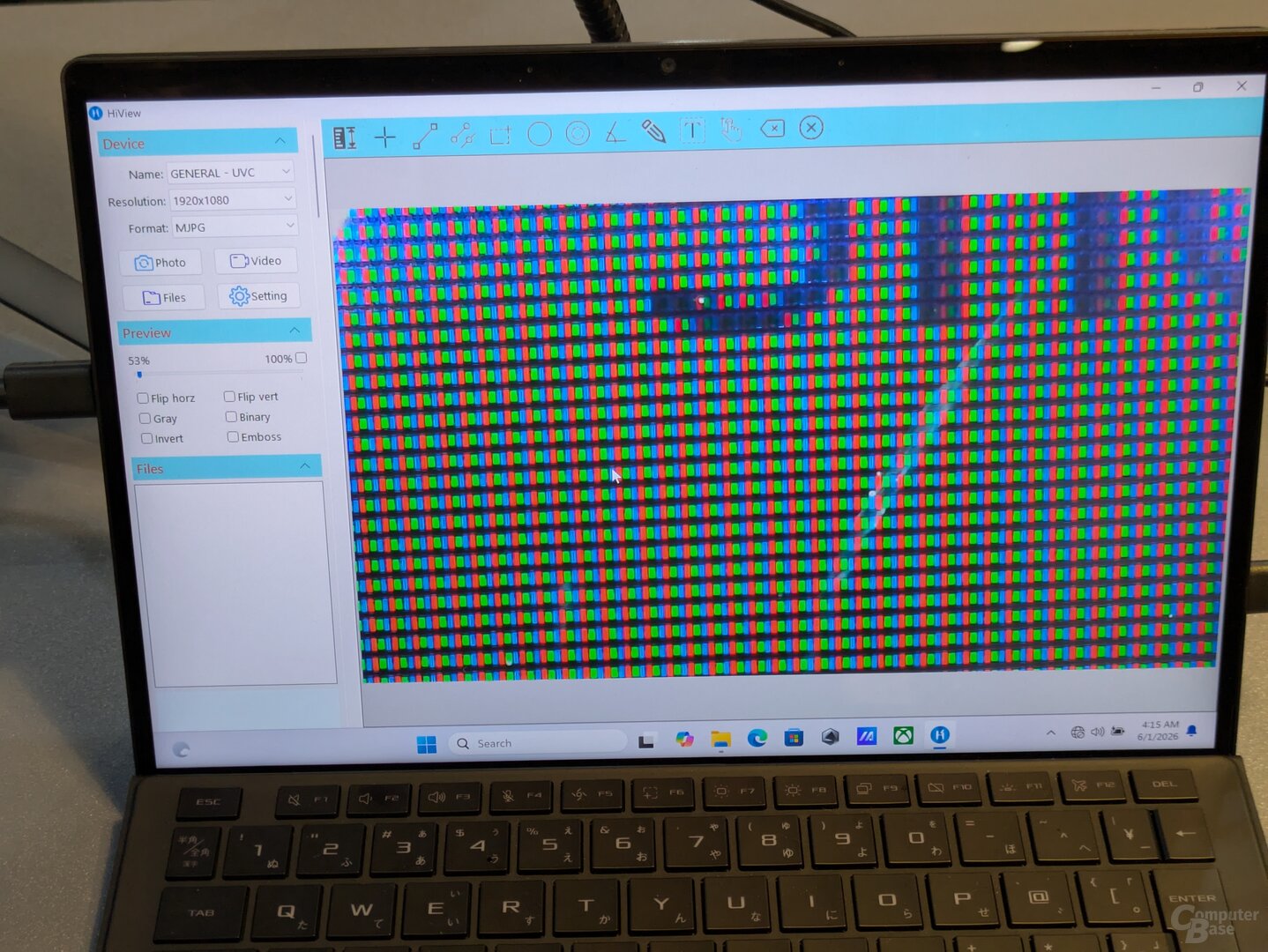
At the core of these new ROG Swift monitors lies a revolutionary display panel from LG Display. Departing from the traditional WOLED (White OLED) architecture, which relied on white subpixels to boost brightness, these new models utilize a pure RGB-Stripe subpixel layout.
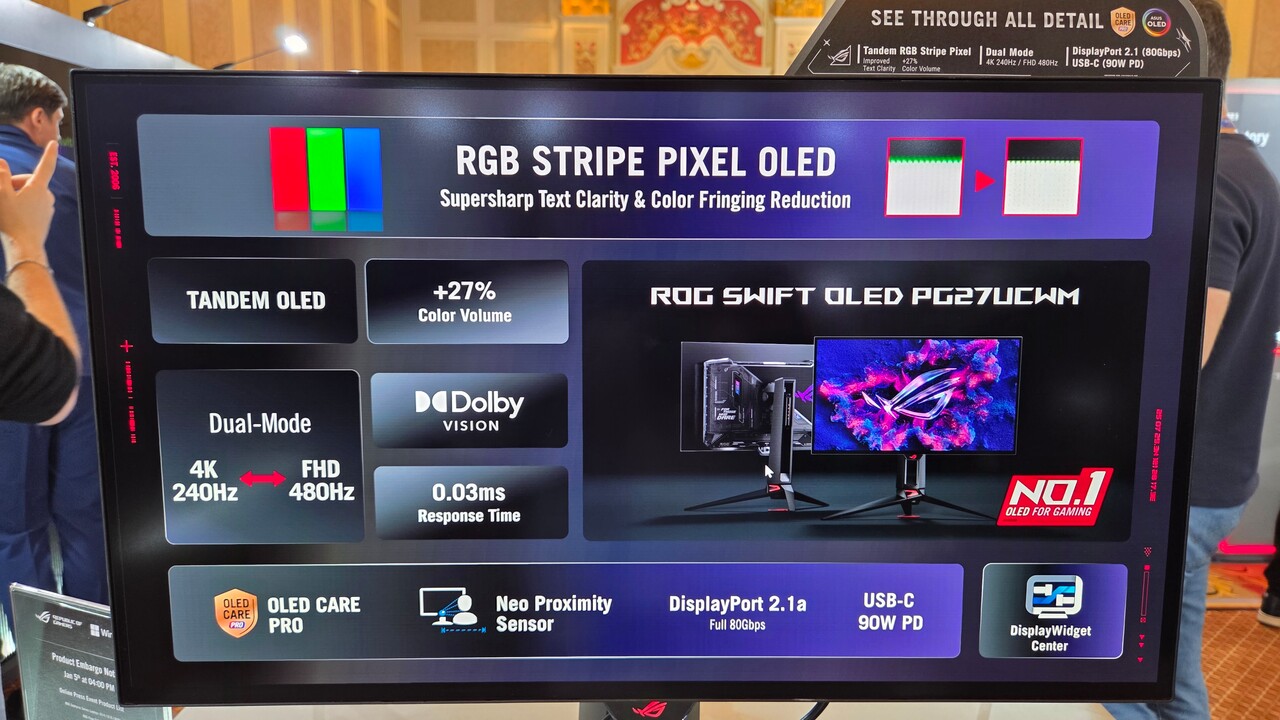
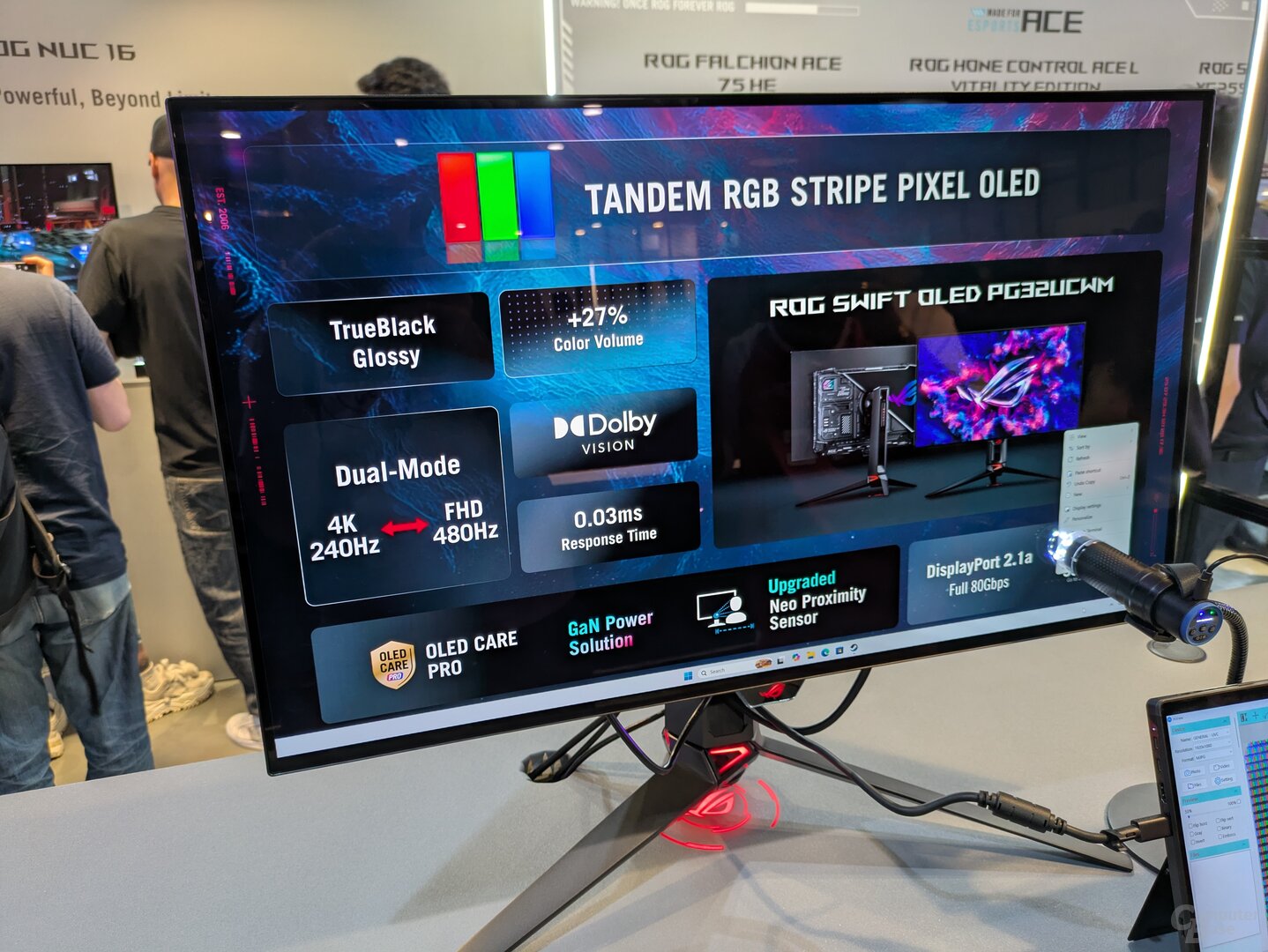
This structural change is not merely a specification shift; it is a fundamental improvement in image quality. By arranging the red, green, and blue subpixels in a clean, linear stripe, the monitors eliminate the "color fringing" that has historically plagued OLED text rendering. For users who switch between high-intensity gaming and productivity tasks, the text clarity on these new panels is a massive leap forward. Furthermore, the new panel design boasts a 27% increase in color gamut compared to previous WOLED generations, promising more vibrant and accurate color reproduction.
Both models feature a 4K UHD resolution (3,840 x 2,160 pixels) in a 16:9 aspect ratio. Versatility is a cornerstone of this release: while users can enjoy the full 240Hz refresh rate at native 4K resolution, the monitors also include a "Dual Mode" feature. This allows users to drop the resolution to 1,920 x 1,080 pixels while boosting the refresh rate to an staggering 480Hz, a feature specifically targeted at competitive eSports titles where frame rates are paramount.
Chronology: From Concept to Consumer Reality
The journey of the PG27UCWM and PG32UCWM began in the glare of the world’s most prestigious technology trade shows.
- January 2024 (CES): ASUS first teased the "RGB Stripe" OLED technology. The industry was quick to identify this as the answer to long-standing complaints about OLED text clarity.
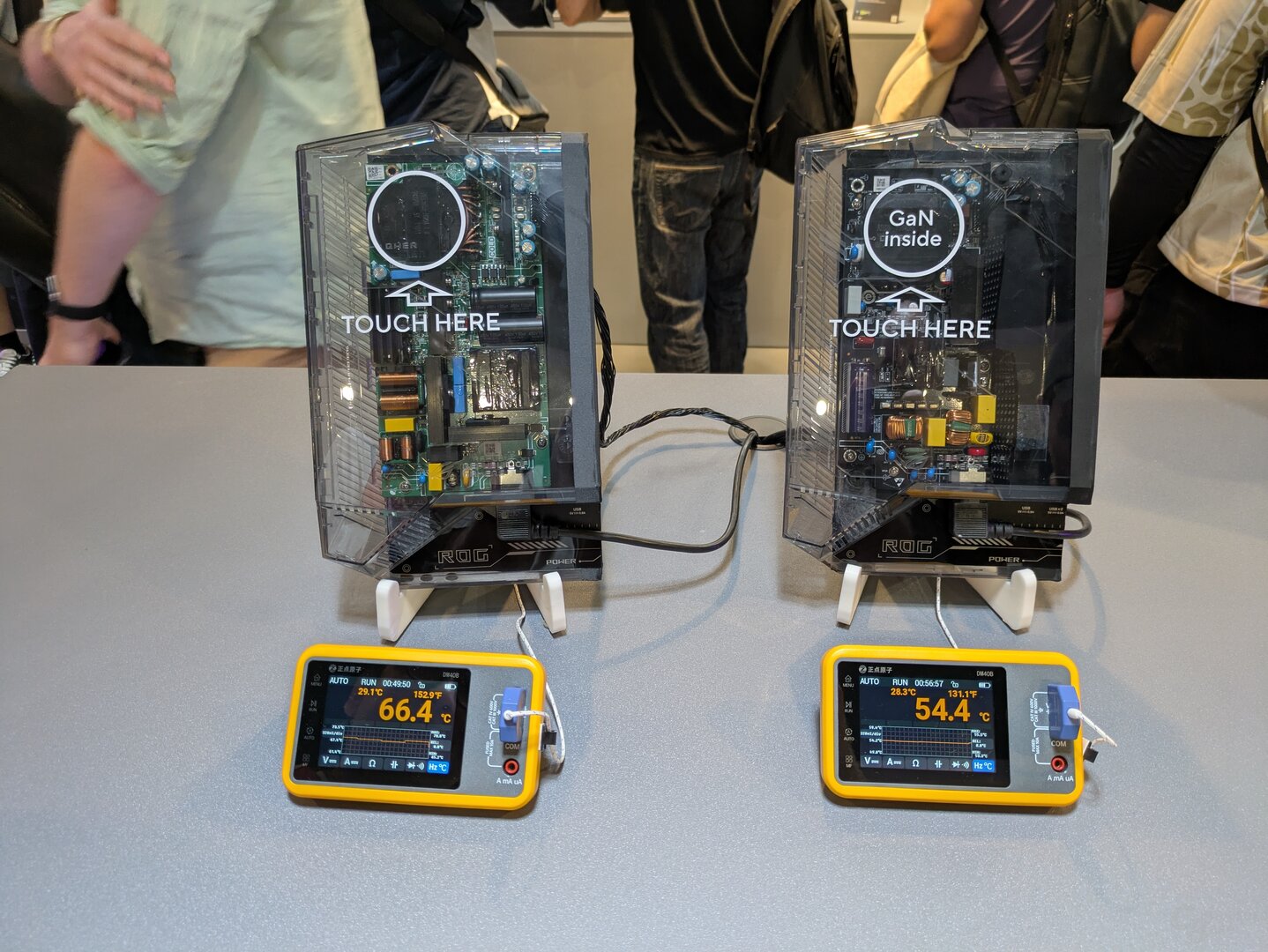
- June 2024 (Computex): ASUS provided deeper technical demonstrations, specifically highlighting the integration of Gallium Nitride (GaN) technology in the power supply. The company used this platform to showcase thermal efficiency improvements, providing a tangible comparison between traditional power modules and their new GaN-based counterparts.
- Mid-2024: Industry speculation grew regarding the "TrueBlack" performance and the potential for a premium price point.
- August 2024: ASUS officially announced the impending availability of both units via its international press portal, setting the stage for a Q3 rollout.
Technical Innovation: GaN and Thermal Management
One of the most innovative, yet understated, aspects of these new monitors is the implementation of Gallium Nitride (GaN) in the power delivery system. Traditionally, monitor power supplies generate significant heat, which can be detrimental to the delicate organic compounds in OLED panels over time.
By shifting to GaN semiconductors—technology popularized by compact, high-efficiency smartphone chargers—ASUS has managed to significantly reduce thermal output. During internal demonstrations at Computex, ASUS showcased a temperature differential of 12°C in favor of the GaN-equipped modules. This reduction in operating heat is not just a marketing bullet point; it is a functional necessity for maintaining the longevity of the OLED panel. Cooler operation directly correlates to a reduced risk of image retention and burn-in, two of the primary concerns for prospective OLED buyers.
Advanced Protective Features
Beyond hardware efficiency, ASUS has refined its software-based protective measures. Both monitors include an upgraded proximity sensor with a customizable "Auto-Away" timer. Users can adjust the sensitivity of the motion detection to prevent the monitor from entering a low-power "black screen" state while they are still in front of the desk. The timer can be set between one and 15 minutes, ensuring that the screen remains dark only when the user is truly absent, thereby extending the life of the display.
Connectivity: Embracing the Future with DP 2.1
In an era where high-resolution, high-refresh-rate gaming pushes the limits of bandwidth, ASUS has equipped both the PG27UCWM and PG32UCWM with the latest connectivity standards.
Both monitors feature DisplayPort 2.1a (UHBR20), supporting a massive 80 Gbit/s bandwidth. This ensures that the monitor can handle the full 4K 240Hz signal without the need for aggressive Display Stream Compression (DSC), which can occasionally introduce latency or visual artifacts. Additionally, the monitors feature:

- Two HDMI 2.1 ports for console compatibility.
- USB-C power delivery (90W), allowing users to charge high-performance laptops while simultaneously using the display.
- Integrated headphone outputs to round out the desk setup.
Official Responses and Market Outlook
Despite the excitement surrounding these panels, ASUS has maintained a measured approach to its retail strategy. When approached for comment regarding specific regional release dates and MSRP, an ASUS Germany spokesperson confirmed that the monitors are "expected" to be available by the end of the third quarter, which concludes in September.
However, the lack of an official price tag is telling. As of mid-August, neither the regional pricing nor a firm "Day One" release date has been confirmed. This suggests that while the production chain is ready, the company is likely monitoring the competitive landscape before committing to a price that reflects the premium nature of these flagship displays.

Implications: The High-End Gaming Landscape
The release of the PG27UCWM and PG32UCWM marks a critical juncture for desktop gaming. By adopting the LG-manufactured RGB-stripe panel, ASUS is effectively bridging the gap between professional design displays and hardcore gaming monitors.
Why this matters:
- The Death of the "OLED Text Blur": For years, the subpixel layout of WOLED panels made them poor choices for office work or reading-heavy tasks. The RGB-stripe transition effectively removes this barrier, making these monitors true "do-it-all" devices.
- Thermal Longevity: The integration of GaN is a proactive step in solving the thermal management issues that have historically hindered OLED durability in high-brightness scenarios.
- eSports Versatility: The "Dual Mode" capability (switching from 4K/240Hz to 1080p/480Hz) acknowledges that professional gamers often prefer smaller, faster, and lower-resolution screens. ASUS is effectively selling two monitors in one, which may help justify the high expected price.
The HDR Caveat
It is worth noting that the transition to the new RGB-stripe panel comes with a trade-off. Because the panel lacks the dedicated white subpixel, the peak brightness is lower than some of the more "blinding" HDR monitors currently on the market. Both models are certified for DisplayHDR True Black 400. While this offers superior contrast and inky blacks that only OLED can provide, users seeking the high-nit performance of mini-LED panels may find the HDR brightness output modest by comparison.

Conclusion
The ASUS ROG Swift OLED PG27UCWM and PG32UCWM are clearly positioned at the top of the food chain. They represent a "no-compromise" approach to display technology, balancing the deep, infinite contrast of OLED with the practical needs of clarity and thermal efficiency. While the industry awaits official pricing, one thing is certain: ASUS has set a new technical benchmark that competitors will be scrambling to match throughout the remainder of 2024 and beyond. Whether for the competitive eSports professional or the high-fidelity enthusiast, these monitors offer a compelling glimpse into the future of the desktop visual experience.

 Nana Wu
 Neng Nana