Layla Zulfa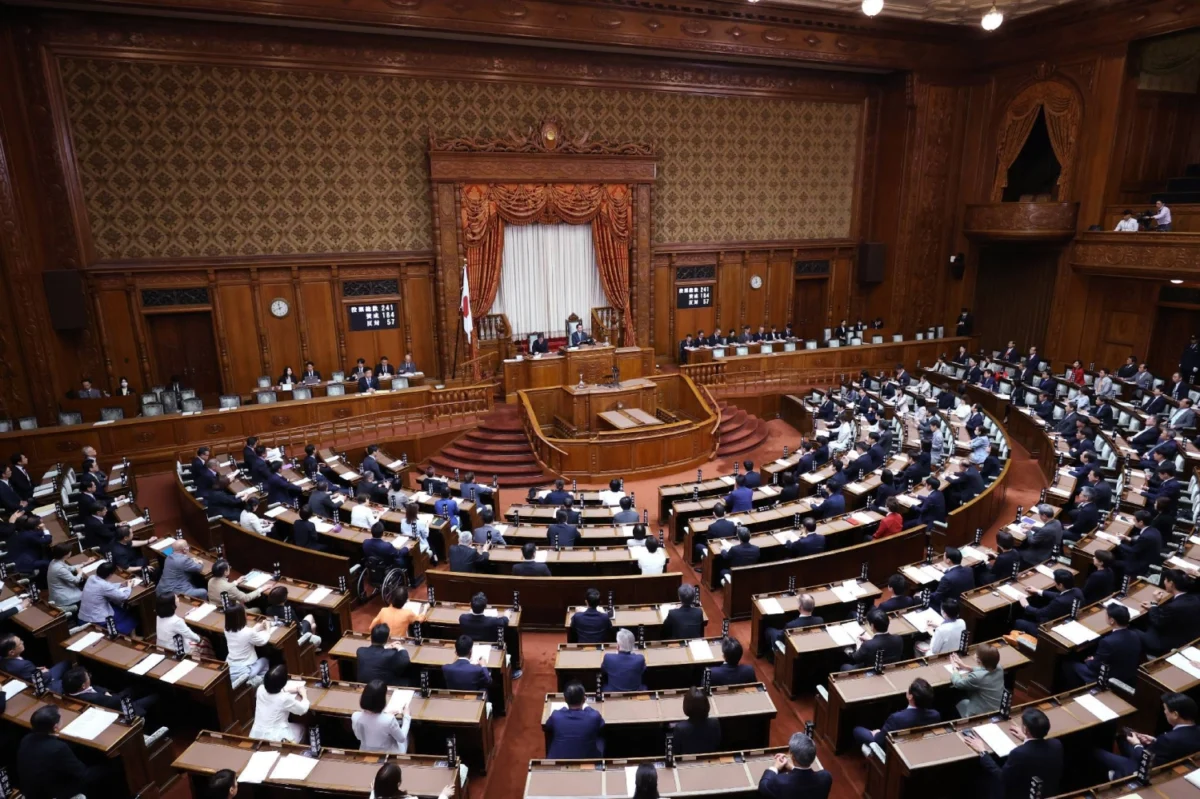
TOKYO — In a move that marks the most significant transformation of the Japanese monarchy in nearly eight decades, the Upper House of the Diet passed a contentious package of bills on Friday aimed at addressing the existential threat posed by the dwindling number of imperial family members. The legislation, which cleared the plenary session with 184 votes in favor to 57 against, signals a decisive shift in how Japan manages the succession and composition of its oldest hereditary institution.
The passage of these bills represents the first substantive revision to the Imperial House Law since its inception in 1947, during the post-World War II Allied occupation. By allowing princesses to retain their royal status after marriage and enabling the adoption of male members from former branches of the imperial line, the government hopes to secure the future stability of a dynasty that currently faces a severe shortage of eligible heirs.
The Core Provisions: A New Framework for Succession
The newly enacted legislation introduces two primary mechanisms designed to alleviate the demographic crisis facing the Imperial Household.
1. Retaining Female Members
Under the previous legal framework, which had been in place since 1947, any female member of the imperial family who married a commoner was required to forfeit her royal status, title, and public duties. This provision has contributed to the steady depletion of the imperial ranks, as many of the younger generation are princesses. The new law permits these women to remain within the imperial family, effectively expanding the pool of members capable of performing ceremonial and diplomatic roles.
2. Adoption from Former Branches
Perhaps the most debated aspect of the bill is the provision allowing for the adoption of males from former branches of the imperial family into the current imperial lineage. These "former branches" were stripped of their royal status during the American-led reforms of 1947. Proponents argue that this move is essential to ensure that there are enough male heirs to satisfy the strict male-only succession rules mandated by the current law, thereby preserving the "unbroken" lineage that has defined the Japanese monarchy for centuries.
The legislation is set to take effect three months following its formal promulgation, a timeline that suggests the government is eager to begin the implementation of these complex genealogical adjustments.
Chronology of a Crisis: The Path to Reform
The path to Friday’s vote was paved by years of mounting concern over the viability of the imperial succession.
- 1947: The Imperial House Law is enacted under the new Constitution, strictly limiting the succession to male descendants in the male line and removing collateral branches of the family to reduce government expenditure.
- 2005–2006: A government panel discusses the possibility of allowing female succession, but the momentum stalls following the birth of Prince Hisahito, the nephew of the current Emperor.
- 2017: The Diet passes a one-time special law allowing Emperor Akihito to abdicate, sparking a renewed national conversation about the long-term sustainability of the imperial system.
- 2021: A panel of experts appointed by the Cabinet submits a report recommending the retention of female members and the adoption of men from former branches as the most viable path forward.
- 2026 (July): After months of intense legislative maneuvering and committee deliberation, the bill clears the Upper House, finalizing a multi-year effort to reform the institution.
Supporting Data: A Dwindling Lineage
The urgency behind the legislation is rooted in hard demographic data. As of mid-2026, the imperial family has shrunk to a historically low number of members. With the aging of the current Emperor and the fact that Prince Hisahito is currently the only eligible heir in his generation, the risk of the imperial line ending—or being reduced to a single individual—has become a matter of national security and cultural anxiety.
Conservative estimates suggest that without these reforms, the number of people available to perform official imperial duties would have fallen below the functional threshold within the next two decades. By integrating former imperial branches and retaining female members, the government aims to create a "buffer" that stabilizes the family’s presence in public life, ensuring that Japan’s constitutional symbol remains active and visible.
Official Responses and Political Friction
The vote was far from unanimous, reflecting the deep-seated ideological divides regarding the nature of the monarchy and the role of tradition in modern Japan.

The Government’s Position
Prime Minister and Cabinet officials have framed the legislation as a "necessary pragmatic response" to a demographic reality. Supporters of the bill, largely drawn from the ruling Liberal Democratic Party (LDP), argue that the reforms strike a balance between preserving tradition and ensuring the survival of the institution. They maintain that the adoption of former branch members honors the "bloodline" while providing a pragmatic solution to the lack of male heirs.
The Opposition’s Stance
The dissent was spearheaded by the Constitutional Democratic Party of Japan (CDP), the Japanese Communist Party, and Reiwa Shinsengumi. Their opposition was rooted in several concerns:
- Constitutional Doubts: Critics argue that allowing the adoption of individuals from former, non-royal branches into the imperial family may violate the spirit of the 1947 reforms, which were intended to democratize the institution and strip it of its pre-war political baggage.
- Gender Equality: Many opposition members expressed frustration that the bill does not go far enough to address gender equality, specifically by failing to allow female heirs to ascend to the Chrysanthemum Throne.
- Lack of Public Consensus: Some opposition lawmakers contended that the bill was pushed through too quickly, without adequate public debate or a national referendum on the future of the monarchy.
"This is a patchwork solution," said one opposition lawmaker during the debate. "We are forcing the imperial family into a 21st-century reality using 19th-century logic, without addressing the fundamental question of gender equity."
Implications: The Future of the Chrysanthemum Throne
The passage of this bill is not merely a legislative milestone; it is a profound cultural statement. By choosing to preserve the male-only succession line—even through the artificial mechanism of adoption—Japan has signaled that it prioritizes the continuity of tradition over the modernizing trends seen in other monarchies, such as those in Europe, which have largely moved toward absolute primogeniture.
The "Imperial Function"
The immediate implication is a stabilization of the "Imperial function." Princesses who were previously destined to leave the family will now be able to assist in the increasing number of state duties. This is expected to relieve the pressure on the current Emperor and Empress, who have faced a demanding schedule in recent years.
The Social Divide
However, the legislation has sparked a broader societal debate. In cities and rural prefectures alike, the question of whether the imperial family should be a "modern" family that mirrors the changes in Japanese society—or a "traditional" symbol that stands apart from them—remains unsettled.
The move to reinstate members from former branches has also raised questions about transparency. How will these individuals be selected? What vetting process will ensure they are suitable for the immense responsibility of representing the Japanese state? These details remain largely opaque, leading to calls for further oversight as the government moves toward implementation.
Conclusion
As Japan navigates the complexities of a shrinking population and a changing national identity, the imperial family remains a pivotal, if sometimes controversial, anchor. The reforms passed on Friday are a testament to the government’s determination to keep the monarchy alive and relevant. Whether this legislative package will be sufficient to secure the throne for the next century, or if it will eventually require a more radical overhaul of the Imperial House Law, remains to be seen.
For now, the Japanese government has secured a bridge to the future, albeit one that is built on the foundations of a traditionalist consensus that continues to be tested by the realities of the modern age. The world will be watching closely as the three-month countdown to the law’s implementation begins, marking a new chapter in the history of the world’s oldest continuous hereditary monarchy.


 Neng Nana
 Asro
Asro