

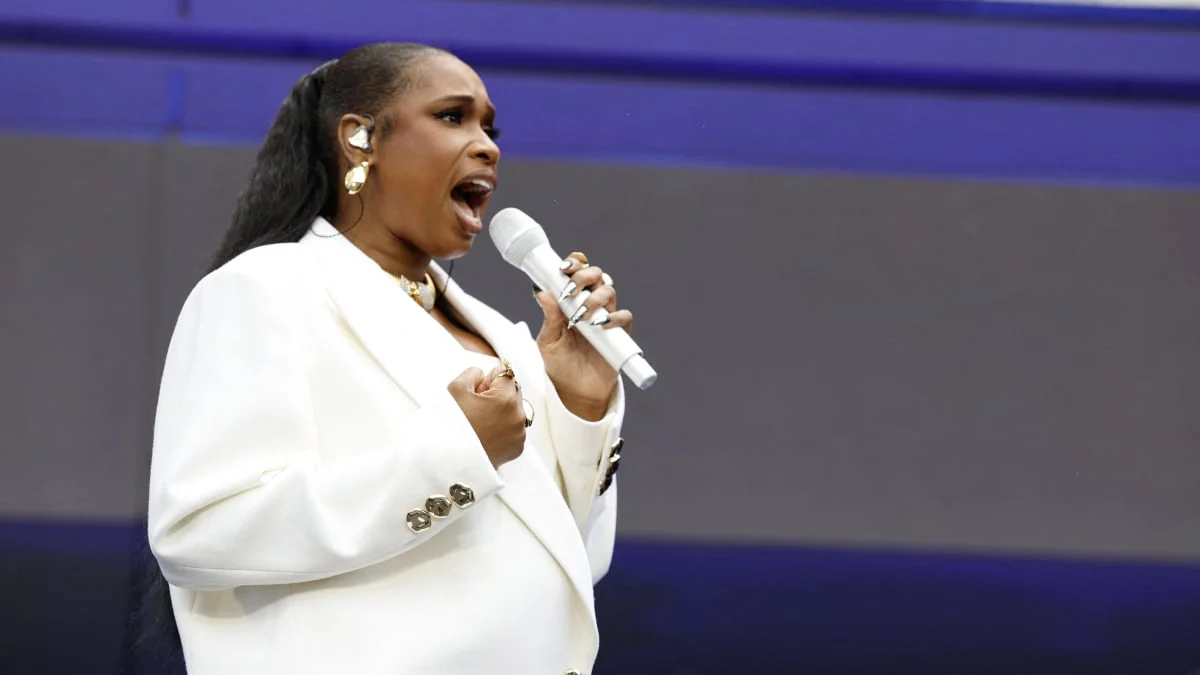
The stage is set at the iconic New York-New Jersey Stadium, formerly known as MetLife Stadium, for the climax of the 2026 FIFA World Cup. On Sunday, July 19, the world’s eyes will turn to East Rutherford, New Jersey, where the national teams of Spain and Argentina will clash in a battle for football immortality. However, as the final approaches, the narrative has shifted from the tactical prowess of the finalists to an unexpected cultural firestorm: the decision by FIFA to feature a performance of "The Star-Spangled Banner" by Grammy and Academy Award-winning artist Jennifer Hudson.
While the U.S. Men’s National Team (USMNT) saw their tournament run end long before the final whistle, the American national anthem will take center stage during the pre-match festivities. The decision has left international soccer purists bewildered and has ignited a heated debate about the commercialization of the "Beautiful Game" and the perceived "Americanization" of the world’s most prestigious sporting event.
A Chronology of Controversy: From Pitch to Performance
The controversy began on July 14, when FIFA released the official schedule for the tournament’s closing ceremony. The announcement detailed a star-studded pre-game spectacle, headlined by musician Post Malone, and featuring a “special rendition” of the U.S. national anthem by Jennifer Hudson.
The timeline of the Sunday, July 19, event is as follows:
- 1:30 p.m. ET: The World Cup Closing Ceremony commences, intended to celebrate the unique nature of a tournament hosted across three nations—Canada, Mexico, and the United States.
- Pre-Kickoff: Jennifer Hudson performs "The Star-Spangled Banner," alongside appearances by global icons including Robbie Williams, Nicole Scherzinger, Laura Pausini, and digital creator IShowSpeed. Actor Tom Cruise is also slated for a mysterious, high-profile cameo.
- 3:00 p.m. ET: The official kickoff between Spain and Argentina. Before the match begins, both nations will observe the traditional protocol of playing their respective national anthems.
For many fans, the presence of the U.S. anthem at a match where the U.S. is not playing feels like an unnecessary intrusion of domestic pageantry into a global tradition. Critics argue that the World Cup should remain a neutral ground, governed by international etiquette rather than the customs of the host nation.
The Logic of Host-Nation Protocol
FIFA’s official stance, though largely communicated through press releases and background briefings, centers on the geographic significance of the host nation. FIFA maintains that as the final is taking place on American soil, the performance is a tribute to the host, rather than an indication of support for a specific team.
Historically, this is not entirely unprecedented. During the 1994 World Cup, held in the United States, legendary saxophonist Kenny G performed a rendition of the U.S. national anthem during the closing ceremony, preceding the final match between Brazil and Italy. FIFA is leaning on this precedent to justify the inclusion of Hudson, framing it as a celebration of the host’s hospitality rather than a departure from standard soccer protocols.
However, detractors point out that the 2026 tournament is unique in its tri-national hosting arrangement. By highlighting the U.S. anthem while omitting those of Canada and Mexico, FIFA has inadvertently created a sense of imbalance, leading many to question if the organization is prioritizing the massive American market over its shared-hosting responsibilities.
Data-Driven Decisions: The Economics of the Final
To understand the decision-making process behind these elaborate ceremonies, one must look at the financial landscape of FIFA. The organization is currently in the midst of its most lucrative cycle to date, projecting record revenues of $13 billion. The primary engine behind this fiscal growth is the American market—a territory that has historically been the "final frontier" for the global expansion of soccer.
The data suggests that FIFA’s strategy is working. Fox Sports reported that the group-stage broadcasts for the 2026 tournament averaged over 5 million viewers per match, a nearly 100% increase from the numbers recorded during the 2022 tournament in Qatar. Similarly, Spanish-language broadcasts on Telemundo and Peacock have seen an exponential rise in viewership, cementing the U.S. as a powerhouse for soccer consumption.
By investing heavily in celebrity-driven spectacles, FIFA is effectively converting casual viewers—those who may not be die-hard football fans—into active consumers of the tournament. The integration of American cultural staples, like pre-game anthems and, eventually, a halftime show, is a calculated attempt to make the World Cup feel familiar to a domestic audience raised on the spectacle of the Super Bowl.
The Halftime Show: A Historic Shift
If the anthem was the spark, the announcement of the halftime show was the accelerant. For the first time in the history of the FIFA World Cup, a halftime performance will take place during the final. Curated by Coldplay frontman Chris Martin, the 11-minute show will feature an array of global superstars, including Madonna, Shakira, BTS, and Justin Bieber.
The show, which also includes participation from the PS22 Chorus and beloved characters from Sesame Street and The Muppets, is tied to the FIFA Global Citizen Education Fund. While the charitable aspect of the performance is widely praised, the structure itself has drawn significant criticism.
Traditionalists argue that a halftime show disrupts the flow and intensity of the game. For decades, the World Cup final has been a 90-minute (plus stoppage) test of endurance and tactical discipline, undisturbed by the entertainment-industry tropes prevalent in U.S. professional sports. The fear among fans is that once the door is opened for a halftime show, the sanctity of the match as a pure athletic competition will be permanently compromised by the demands of television networks and advertisers.
Implications for the Future of Football
The backlash to the ceremony plans highlights a growing tension within the global football community. Soccer fans, particularly those in Europe and South America, view the World Cup as a cultural artifact that should remain insulated from the hyper-commercialized model of American sports.
Conversely, FIFA’s leadership sees these innovations as essential to the sport’s longevity. The rise of the "event-ification" of sports—where the game itself is only one component of a broader entertainment package—is a trend that FIFA is eager to embrace to maintain its competitive edge against other global entertainment forms.
The criticism, as seen in the vocal discourse on social media, often centers on the perception that FIFA is sacrificing the game’s soul for the sake of higher ad revenue. The hydration breaks implemented earlier in the tournament, for instance, were decried by many as "commercial timeouts" disguised as player safety measures. While FIFA maintains these breaks are necessary for player welfare in warm climates, the cynical interpretation—that they are simply windows for advertisers—has taken root among the fanbase.
Conclusion: Bridging the Divide
As the world prepares for the final in East Rutherford, the debate over Jennifer Hudson’s performance serves as a microcosm of a much larger struggle. It is a collision of cultures: the long-standing traditions of international football meeting the relentless, profit-driven showmanship of the American sports industry.
Whether or not the performance of "The Star-Spangled Banner" is viewed as a respectful nod to the host nation or a jarring departure from tradition, one thing is clear: FIFA is committed to its path. The organization is betting that by blending global athletic competition with the scale and production value of American entertainment, it can solidify the United States as a permanent, high-value pillar of the World Cup ecosystem.
For the millions of fans who will tune in on Sunday, the anthem will be a brief moment of distraction before the real test begins. Once the music fades and the players take their positions, the spectacle will recede, and the focus will return to where it belongs: the pitch. But as the 2026 tournament draws to a close, it leaves behind a fundamental question for the sport: in the quest to conquer the American market, has FIFA fundamentally changed what the World Cup is, and what it represents to the rest of the world?
The final result of the match will be decided on the field, but the verdict on FIFA’s new direction may take years to settle.











