Jia Lissa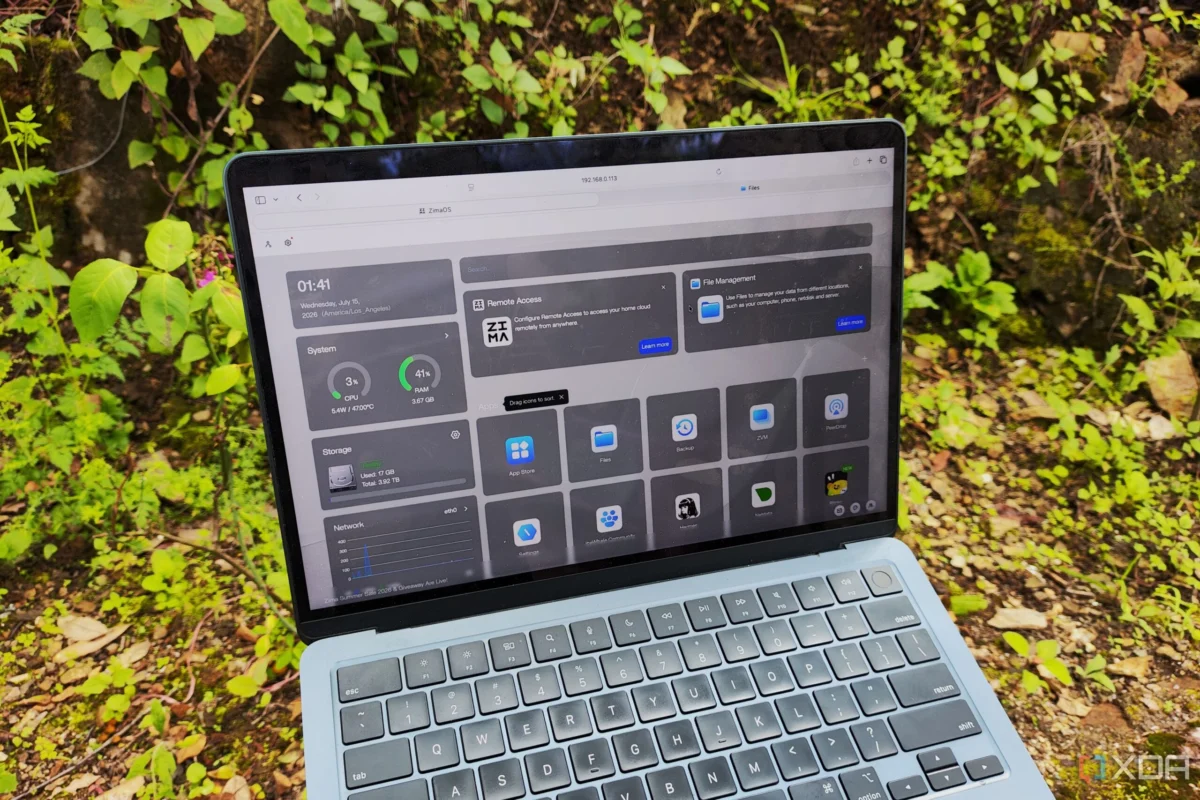
For years, the Network-Attached Storage (NAS) market has been defined by a stark dichotomy: expensive, turnkey proprietary systems like Synology, or complex, resource-heavy DIY distributions like TrueNAS and Unraid. However, as hardware costs rise and the demand for accessible self-hosting grows, a new contender has emerged to bridge this gap. ZimaOS, developed by IceWhale, is rapidly becoming the preferred operating system for budget-conscious users who need efficiency without the steep learning curve.
The Evolution of the DIY NAS Experience
The journey toward a perfect home server is often paved with trial and error. For many enthusiasts, the initial impulse is to reach for enterprise-grade solutions. However, seasoned builders have learned that the operating system is the true heartbeat of the machine. A mismatched setup—such as deploying a ZFS-heavy distribution on hardware with limited RAM—can lead to performance bottlenecks and unnecessary frustration.
My personal experience with the 2-bay TerraMaster F2-425 serves as a case study in this friction. While powerful, the hardware struggled to maintain the overhead required by more robust distributions. It became clear that the industry needed a platform that prioritized lightweight efficiency, intuitive UI design, and flexibility regarding boot-drive architecture. ZimaOS was designed specifically to fill this niche.
Chronology: From Concept to Consumer-Ready Distro
The development of ZimaOS is rooted in the success of CasaOS, the popular container management platform that simplified the Docker experience for thousands of users. Recognizing that users wanted a more comprehensive, storage-focused environment, IceWhale pivoted to build ZimaOS.
- Initial Concept: The team aimed to create an OS that felt like an appliance but offered the modularity of a Linux-based server.
- Beta Phase: Early releases focused on stability and the integration of Zima’s proprietary "Storage Wizard."
- Current Iteration: The latest version has successfully integrated advanced containerization and basic virtualization, positioning itself as a legitimate competitor to established players like OpenMediaVault (OMV).
Supporting Data: Why Requirements Matter
The primary barrier to entry for home servers has always been the "hardware tax." TrueNAS, the industry gold standard, effectively mandates 8GB of RAM, and preferably more for ZFS to function optimally. In an era where memory prices remain volatile, this creates an immediate barrier for users repurposing older office PCs or budget-tier NAS units.
| Feature | ZimaOS | TrueNAS | Unraid |
|---|---|---|---|
| Min. RAM | 2GB | 8GB | 4GB |
| License | Freemium (Perpetual) | Free | Paid (Tiered) |
| Ease of Use | High | Medium/Low | Medium |
| Virtualization | Basic | Advanced | Advanced |
As shown above, ZimaOS significantly lowers the floor for entry. By allowing the OS to reside on the same drive as user data—a configuration often discouraged or difficult to achieve in other distributions—ZimaOS makes the most of 2-bay NAS units that lack dedicated boot-drive slots.
The User Experience: Interface and Functionality
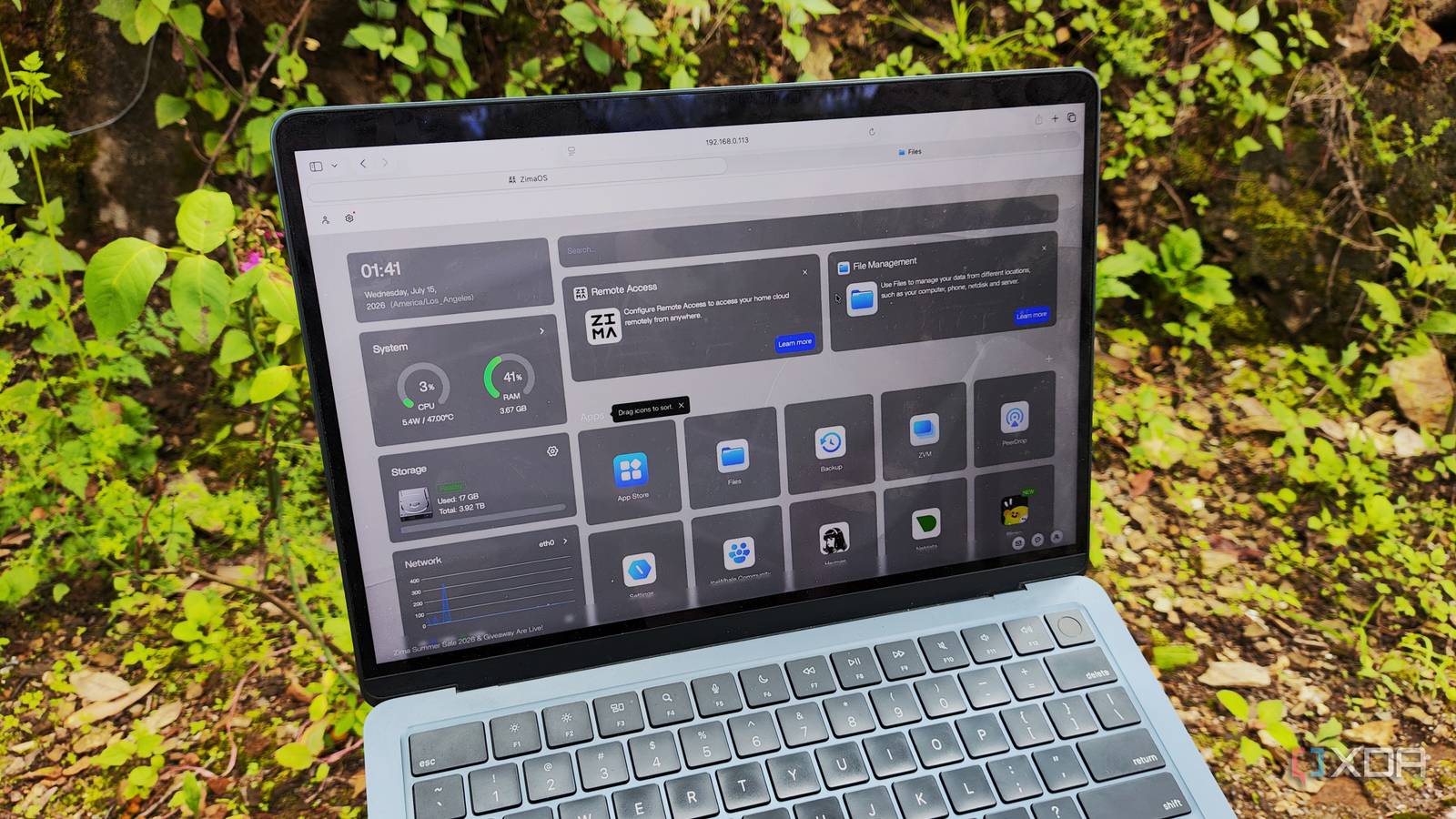
The hallmark of a great OS is its ability to hide complexity. ZimaOS does this by leveraging a web-based interface that feels more like a modern smartphone OS than a command-line Linux backend.
The Power of the Web UI
If you have ever managed containers via CasaOS, the transition to ZimaOS is seamless. The interface is clean, responsive, and prioritizes the most frequent tasks: disk management, user permissions, and application deployment.
Streamlined SMB and Network Shares
One of the most tedious aspects of home server maintenance is configuring Samba (SMB) shares. ZimaOS transforms this into a right-click operation within the file manager. By removing the need for manual configuration files and complex Access Control Lists (ACLs), the system allows even novice users to manage network permissions confidently.
Pre-installed Ecosystem
ZimaOS comes equipped with PeerDrop for rapid file transfers, effectively turning the NAS into a personal cloud. The inclusion of mobile and desktop monitoring apps ensures that users can maintain their 3-2-1 backup strategy without being tethered to a keyboard and monitor.

Docker and Virtualization: The Prosumer Edge
While ease of use is a priority, ZimaOS does not sacrifice power for the sake of simplicity. Its approach to containerization is perhaps its most "killer" feature.
Application Deployment
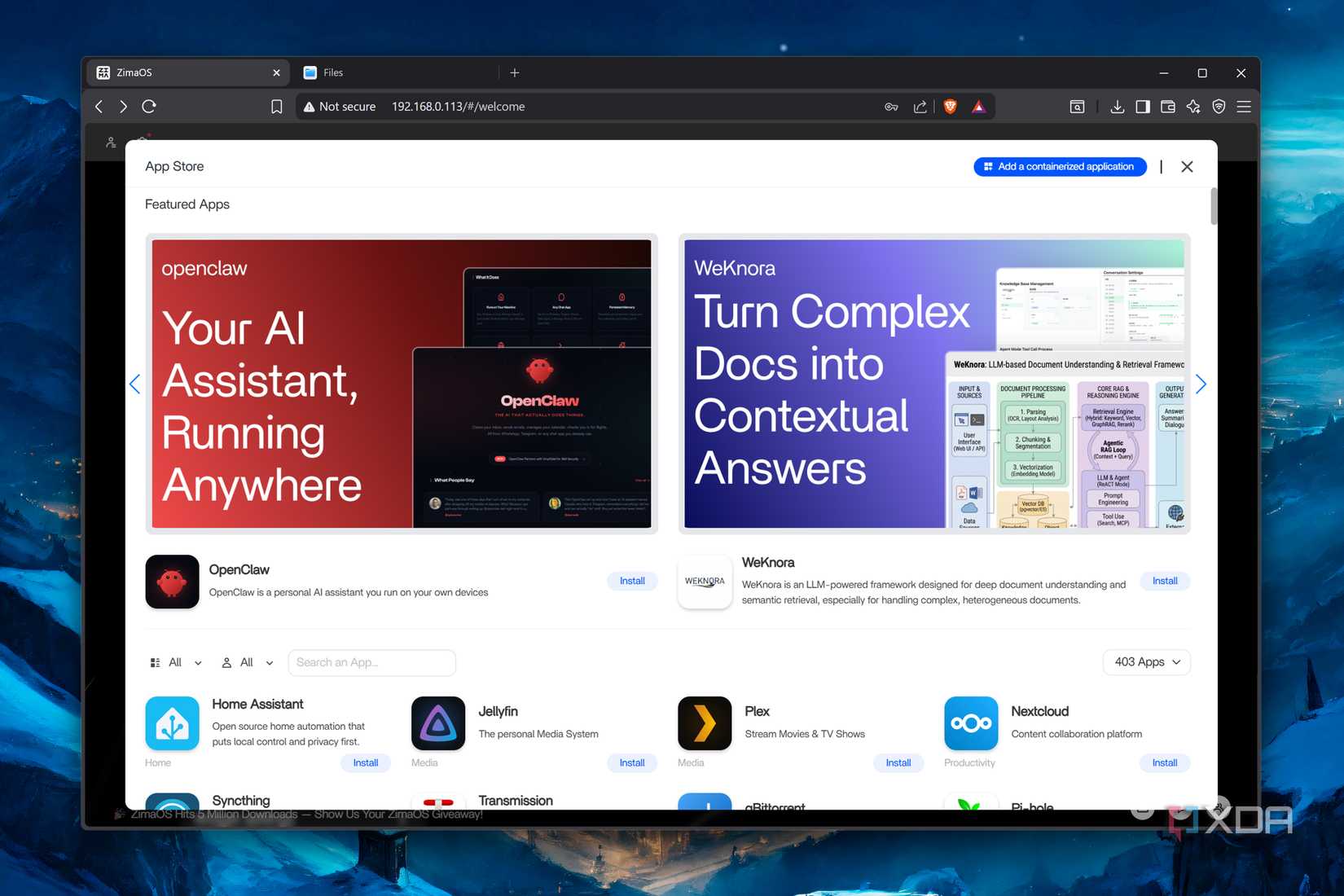
The App Store within ZimaOS provides a curated list of FOSS (Free and Open Source Software) tools that can be deployed with a single click. Unlike other platforms that require users to navigate complex YAML configurations, ZimaOS provides sensible defaults, making it trivial to spin up a media server, a torrent client, or a password manager.
Virtualization Capabilities
For users looking to expand into virtual machines, ZimaOS provides a capable, if basic, environment. While it lacks the granular hardware passthrough capabilities found in dedicated hypervisors like Proxmox or the enterprise-grade tools in TrueNAS, it is more than sufficient for running light Linux distros. In testing, allocating 2GB of RAM and two CPU cores allowed for a snappy experience on Fedora and Debian, providing a perfect sandbox for beginners.
Official Responses and Future Outlook
IceWhale’s philosophy centers on the "No-Nonsense" approach. In recent communications, the development team has acknowledged the community’s demand for more advanced networking protocols. Currently, while SMB is handled via a beautiful GUI, protocols like NFS and iSCSI still require manual command-line intervention.
The company has publicly committed to filling these gaps. The "Coming Soon" label on their JBOD (Just a Bunch of Disks) functionality and the promised GUI expansion for network protocols signal that ZimaOS is in a state of rapid, user-driven growth.
Implications for the NAS Market
The rise of ZimaOS carries significant implications for the broader storage industry:
- Lowering the Barrier to Self-Hosting: By making the "hard" parts of NAS management invisible, ZimaOS is effectively bringing self-hosting to the masses, potentially siphoning market share from proprietary, locked-down devices like those from Western Digital or Seagate.
- Increased Hardware Longevity: By being lightweight enough to run on low-spec hardware, ZimaOS encourages the recycling of aging PC hardware, reducing e-waste.
- Pressure on Legacy Platforms: If platforms like TrueNAS or Unraid do not find ways to lower their entry barriers or simplify their UIs, they risk becoming "niche" products for hardcore data centers, while casual users flock to more approachable, modern alternatives.
Conclusion: Is ZimaOS Right for You?
It is important to maintain perspective. ZimaOS is not a replacement for ZFS-powered enterprise storage. If your primary objective is long-term, bit-rot protected archival of massive data sets, TrueNAS remains the superior choice due to its robust data integrity features and mature ZFS implementation.
However, for the vast majority of users—those who want a reliable, easy-to-configure, and lightweight server for media, backups, and containerized apps—ZimaOS is a revelation. It manages to balance the power of Linux with the accessibility of a consumer product. As the platform matures and adds the promised GUI support for advanced protocols, it is poised to become the default recommendation for anyone asking, "How do I build my first home server?"
The era of the "overkill" NAS is fading. In its place, ZimaOS offers a streamlined, efficient, and remarkably capable future for the home lab enthusiast. Whether you are a total beginner or a tinkerer looking to consolidate your 2-bay unit, ZimaOS proves that you don’t need to be a systems administrator to take control of your data.


 Reynand Wu
 Neng Nana