Basiran
The adventure genre stands as a foundational pillar of interactive entertainment. While modern gaming is dominated by cinematic blockbusters and expansive open-world sandboxes, the roots of the medium were firmly planted in a soil of text prompts, logic puzzles, and the boundless potential of the player’s imagination. Unlike passive media, the adventure game demands active participation, requiring the player to navigate, solve, and decode the logic of a virtual world to advance a narrative.
Tracing the lineage of this genre reveals a fascinating evolution—not just of technology, but of the philosophy behind how we tell stories in a digital space. From the humble, character-limited inputs of the 1970s to the lush, living environments of the turn of the millennium, these ten titles represent the technological and design milestones that built the genre we know today.

The Dawn of Interaction: Text and Logic (1977–1980)
10. Zork (1977)
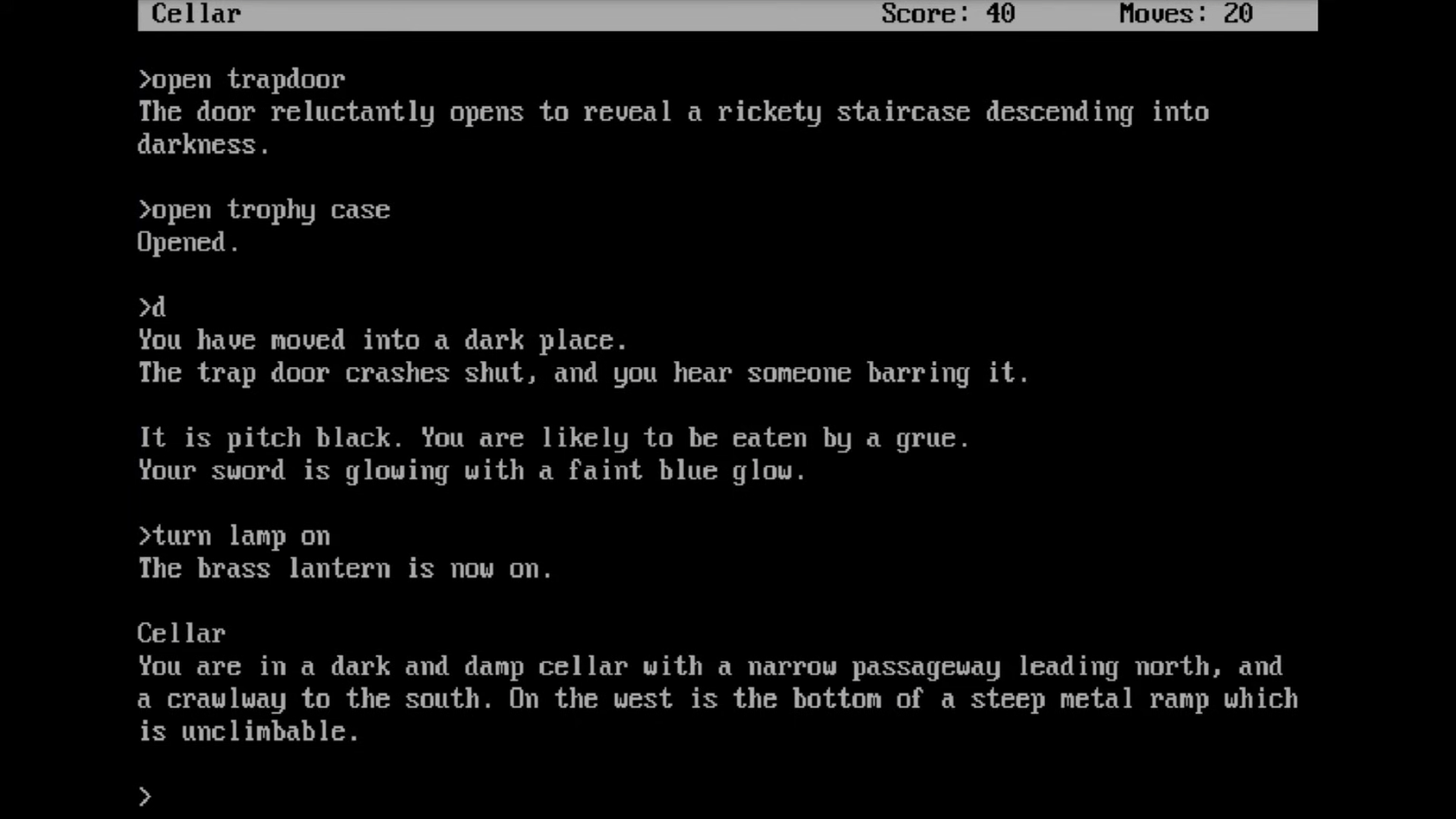
In the late 1970s, personal computing was in its infancy. For early developers, the hurdle was not just creating a story, but overcoming the severe hardware limitations of machines like the PDP-10. Zork, developed by Infocom, revolutionized the genre by introducing a sophisticated text parser. Unlike the primitive two-word commands of predecessors like Colossal Cave Adventure, Zork allowed players to enter complex, multi-word commands. By relying entirely on text descriptions, it forced players to project their own mental imagery onto the screen, establishing the genre’s focus on exploration and deductive reasoning.
9. Adventure (1980)
While Zork mastered the text interface, Warren Robinett’s Adventure for the Atari 2600 tackled the problem of visualization. Faced with the console’s limited hardware, Robinett pivoted away from text-heavy gameplay to a graphical representation of a quest. Adventure introduced the concept of multi-screen exploration and item management. It is also historically significant for housing the first widely recognized "Easter Egg"—a secret room containing the developer’s name—a quiet act of rebellion against a company that refused to credit its programmers.

8. Mystery House (1980)
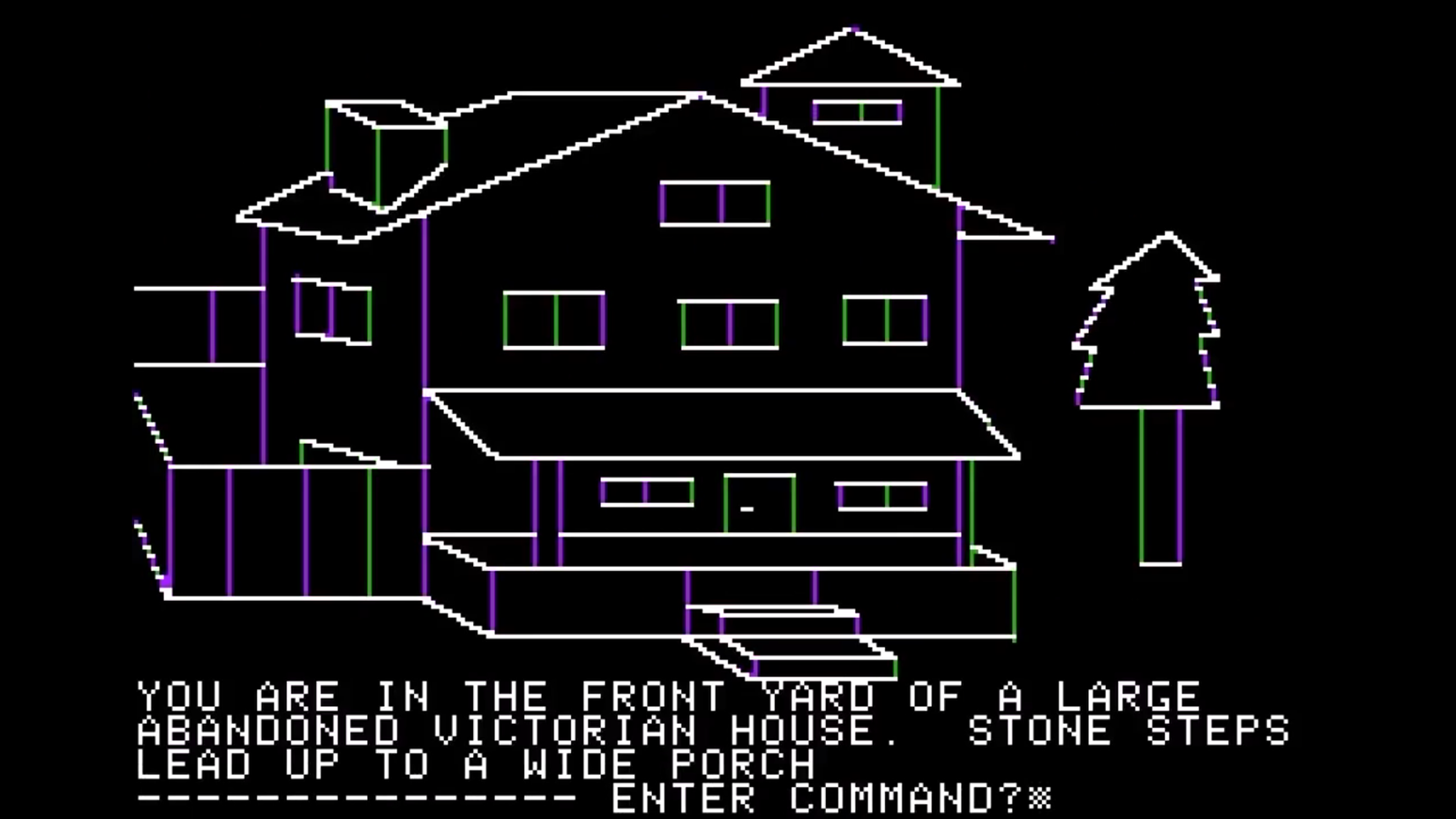
As the Apple II ushered in a new era of home computing, On-Line Systems (the precursor to the legendary Sierra On-Line) sought to bridge the gap between text and visuals. Mystery House was a landmark title, featuring static illustrations that accompanied the text descriptions. This hybrid approach allowed for a more immersive horror experience, as players could now literally see the "spooky house" they were trapped in. It set the standard for graphical adventure interfaces for the next decade.
Branching Paths and Global Influence (1983–1984)
7. The Portopia Serial Murder Case (1983)
Adventure gaming was a global phenomenon, and Japan’s contributions were instrumental in shaping the genre’s narrative depth. Yuji Horii’s The Portopia Serial Murder Case introduced the concept of the branching narrative and the investigation-heavy gameplay loop. By eliminating "game over" states in favor of re-evaluation, the game prioritized storytelling over punitive difficulty. Its influence cannot be overstated; it provided the blueprint for the mystery genre and famously inspired Hideo Kojima to pursue a career in game design.
6. King’s Quest (1984)
By 1984, the hybrid approach was becoming the industry standard, but Sierra’s King’s Quest pushed the boundaries of interactivity. By moving away from static screens to animated sprites that could navigate an environment, the game required players to position their character, King Graham, precisely to interact with objects. This innovation introduced spatial awareness to the adventure genre, though it also popularized the "Save Early, Save Often" mantra due to its unforgiving propensity for sudden, unexpected death.
The Golden Era: Streamlining and Sound (1987–1993)
5. Maniac Mansion (1987)
The clunky nature of text inputs finally met its match in 1987 with the release of Maniac Mansion. Ron Gilbert and Gary Winnick of Lucasfilm Games (later LucasArts) introduced the SCUMM engine, which replaced the command line with a point-and-click interface. By providing a menu of verbs on the screen, the game removed the frustration of guessing the "correct" word the developer intended. This streamlined system allowed for more complex, open-ended puzzles and cemented the point-and-click mechanic as the genre’s gold standard.

4. Sam & Max Hit the Road (1993)
As CD-ROM technology became more prevalent, developers began to leverage audio to enhance characterization. Sam & Max Hit the Road stands as a titan of this era, integrating the iMUSE audio system to synchronize music, sound effects, and voice acting. The inclusion of full voice acting transformed the player’s connection to the characters, turning a funny script into a genuinely comedic performance. It proved that the adventure genre could provide a cinematic, character-driven experience akin to television or film.
3. Myst (1993)
If Sam & Max proved the potential of CD-ROMs, Myst proved their necessity. Cyan Worlds utilized the massive storage capacity of the format to deliver a surreal, pre-rendered world filled with FMV sequences and atmospheric audio. While some critics dismissed it as "artsy" or slow-paced, its massive commercial success forced the entire industry to shift toward the CD-ROM format. Myst redefined what a "puzzle game" could be, transforming the experience into an artistic, meditative journey.
The Modern Synthesis (1999–2004)
2. Shenmue (1999)
By the end of the 90s, the adventure genre began to merge with the simulation genre. Yu Suzuki’s Shenmue attempted to create a "living world" where time was a constant, ticking factor. Residents followed daily schedules, and the world reacted to the passage of time. While its massive development budget led to financial struggles for Sega, the implications were profound. Shenmue proved that adventure games didn’t have to be static; they could simulate the flow of real life, creating a sense of presence that paved the way for modern open-world design.
1. Cave Story (2004)
The turn of the millennium saw the adventure genre become increasingly corporate, but the spirit of the pioneer remained alive in the burgeoning indie scene. Daisuke Amaya’s Cave Story was a solo effort, developed over five years as a passion project. By blending Metroidvania-style platforming with deep, puzzle-filled exploration, Cave Story demonstrated that a single developer could produce a work of art that rivaled corporate titles. It proved that the "indie spirit" was not just a business model, but a vital engine for innovation, ensuring the adventure genre would continue to thrive in the modern era.

Implications for Future Game Design
The history of the adventure game is a history of removing friction between the player and the story. We have moved from the mental labor of deciphering text to the intuitive ease of modern controllers, yet the core objective remains the same: immersion.
The implications of this trajectory are clear. As technology advances, the boundary between the player and the world continues to blur. Whether through the lens of VR, procedural storytelling, or the refined mechanics of modern indie developers, the lessons learned from Zork to Cave Story continue to inform every aspect of game design. The adventure genre is no longer just a category on a store shelf; it is the fundamental language of how we interact with digital worlds, a testament to the idea that the journey is, and always will be, the destination.


 Pevita Pearce
 Azzam Bilal Chamdy