

For over a decade, the advice regarding personal computing was as reliable as the tides. If you were a creative professional, a power user, or someone looking for a seamless, high-end experience, you bought a MacBook. If you were a budget-conscious student, a casual user, or someone who valued hardware variety and gaming prowess, you turned to the vast, competitive world of Windows PCs. The PC market’s primary selling point was simple: "You can get more for your money."
However, in 2026, that fundamental equation has effectively evaporated. Due to a volatile confluence of global memory shortages, shifting supply chain logistics, and aggressive pricing strategies from Cupertino, the laptop market has reached a historical inflection point. Apple, once the undisputed king of the "premium tax," has paradoxically become the rational, pragmatic choice for the average consumer, while the Windows ecosystem finds itself struggling to justify its rising price tags.
The Paradigm Shift: From Premium Aspiration to Market Disruption
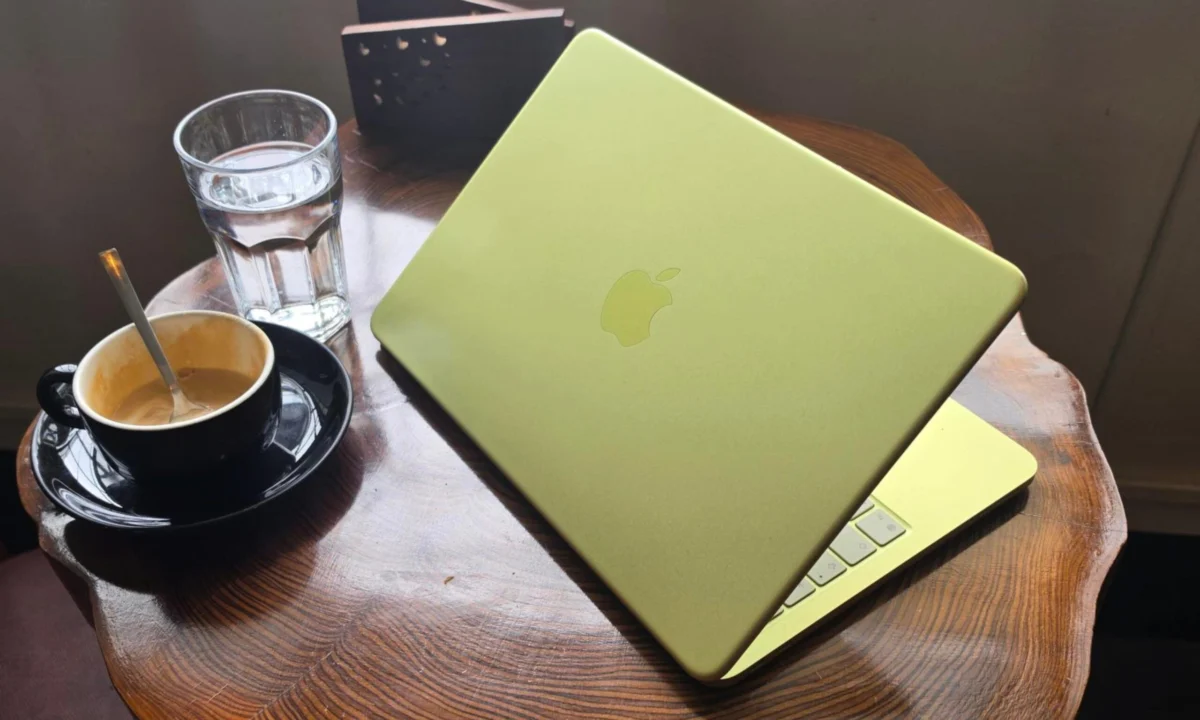
The introduction of the MacBook Neo has served as the catalyst for this dramatic shift. Starting at a remarkably aggressive $599, the Neo features the A18 Pro chip, a crisp 13-inch Liquid Retina display, and the latest iteration of macOS, "Tahoe." While purists will rightly point out that the base configuration—8GB of unified memory and 256GB of storage—remains a limiting factor for heavy workflows in 2026, the value proposition is undeniable.
For the first time in modern computing history, Apple has successfully entered the "affordable" tier without compromising on the build quality, aesthetics, and software ecosystem that define its brand. Where consumers previously had to weigh the "Mac tax" against the affordability of a budget Dell or HP, they now find themselves looking at a base-model Mac that outperforms almost anything in its price bracket.

A Chronology of the Component Crunch
The roots of this shift lie in the global memory crisis that began in late 2025. As demand for high-bandwidth memory (HBM) for AI-driven servers skyrocketed, the supply available for consumer-grade LPDDR5 and DDR5 RAM plummeted.
- Q4 2025: DRAM and NAND flash manufacturers announced significant production shifts, prioritizing data center contracts. This led to a sharp increase in the wholesale cost of memory components.
- Q1 2026: Major PC OEMs—including HP, Dell, and Asus—began passing these costs directly to consumers. Budget laptops, which previously retailed for $400 to $500, saw their price floors climb by 20% to 30%.
- Q2 2026: Microsoft launched its new Surface for Business lineup. Despite the hardware being highly capable, the pricing was met with public shock. The base-model Surface Laptop, with 8GB of RAM, debuted at $1,299, positioning it as an expensive alternative to the $1,099 M5 MacBook Air.
- May 2026: Apple’s supply chain leverage proved its worth. By utilizing their proprietary A-series and M-series chip architectures and long-term contracts with memory suppliers, Apple successfully shielded the MacBook Neo from the worst of the price hikes, effectively "buying" market share through price stability.
Supporting Data: The Cost of Computing
The divergence in pricing strategies is best illustrated by the direct comparison of mid-range hardware.
Consider the requirements of the modern Windows 11 ecosystem. With the aggressive integration of Copilot and the increasing overhead of AI-enhanced background processes, 16GB of RAM is no longer a "luxury" for a Windows user; it is a necessity for a smooth experience. Yet, manufacturers are charging a premium for this jump in capacity.
| Feature | $599 MacBook Neo | $1,299 Surface Laptop |
|---|---|---|
| Processor | A18 Pro | Intel/Qualcomm (Base) |
| RAM | 8GB Unified | 8GB LPDDR5 |
| Display | 13-inch Retina | 13-inch PixelSense |
| Value Perception | "Entry-level powerhouse" | "Premium-priced base model" |
The math is brutal. When a consumer compares a $1,299 Windows laptop with 8GB of RAM against a $1,099 MacBook Air with 16GB of RAM, the value argument for Windows breaks down. The Windows PC is no longer the "cheaper" option; it is often the more expensive, less efficient one.

Official Responses and Industry Sentiment
While official statements from PC manufacturers have been guarded, the sentiment within the industry is one of concern. During a recent earnings call, leadership from major PC OEMs acknowledged the "unprecedented pressure" on component pricing.
"We are navigating a very difficult supply environment," noted an executive from a major hardware firm. "Our focus is on protecting margins while trying to provide value, but the reality is that the cost of entry for high-performance computing has risen globally."
Conversely, Apple has leaned into its "practicality" narrative. By positioning the MacBook Neo as the ideal machine for students, families, and remote workers, they have successfully captured the demographic that was previously the sole domain of the Windows budget sector. Analysts from various tech research firms have noted that Apple’s "walled garden" is now more inviting than ever, simply because the price of admission to the "open" Windows garden has become prohibitively high.
The Long-Term Implications for the PC Market
The current landscape leaves the Windows ecosystem in a vulnerable position. While Windows maintains an insurmountable lead in gaming, niche industrial applications, and repairability, the "everyday" user—the person who needs a laptop for email, media consumption, and basic productivity—is migrating to Apple.

The Death of the Budget Mid-Range
The most immediate implication is the disappearance of the "bang-for-your-buck" mid-range PC. If a consumer cannot find a reliable laptop for under $800, they are much more likely to save an extra $200 to $300 to invest in a machine that carries higher resale value and better build quality. This hurts the mid-tier PC market, which has historically relied on volume sales.
The Ecosystem Lock-in
Once a user switches to the Mac for its value, they are unlikely to return. The "ecosystem comfort" mentioned by early adopters—iCloud integration, Handoff, and the stability of macOS—is a powerful retention tool. By lowering the entry price, Apple is effectively seeding its user base for the next decade, ensuring that these customers remain within the Apple ecosystem for their smartphones, tablets, and wearable purchases.
A Call for Innovation
For Windows to remain competitive, it cannot rely on the "lower price" argument any longer. It must pivot toward innovation that Apple cannot match. This includes form factors like foldables, specialized gaming hardware, and a more modular approach to laptop design. The industry needs a "Windows Neo"—a device that captures the efficiency of ARM-based chips while offering the flexibility of the Windows operating system at a consumer-friendly price point.
Conclusion: The New Reality
In 2026, the question "Should I buy a Mac or a PC?" no longer has the same answer it had in 2020. The emotional argument for Apple—that you buy a Mac for the status or the design—has been replaced by a mathematical one.

The MacBook Neo isn’t a perfect machine; it has its constraints, and it isn’t designed for the high-end creative professional who requires 64GB of RAM or massive storage arrays. However, it provides a functional, durable, and highly efficient computing experience at a price that makes the current Windows alternative look like an expensive miscalculation.
As we look toward the remainder of the year and into 2027, the ball is firmly in the court of Microsoft and its hardware partners. They must find a way to navigate the memory crunch or risk losing an entire generation of mainstream users to the very brand they once competed against on price alone. For now, the "practical" choice has officially shifted to Cupertino.












No comments yet. Be the first to join the conversation!