

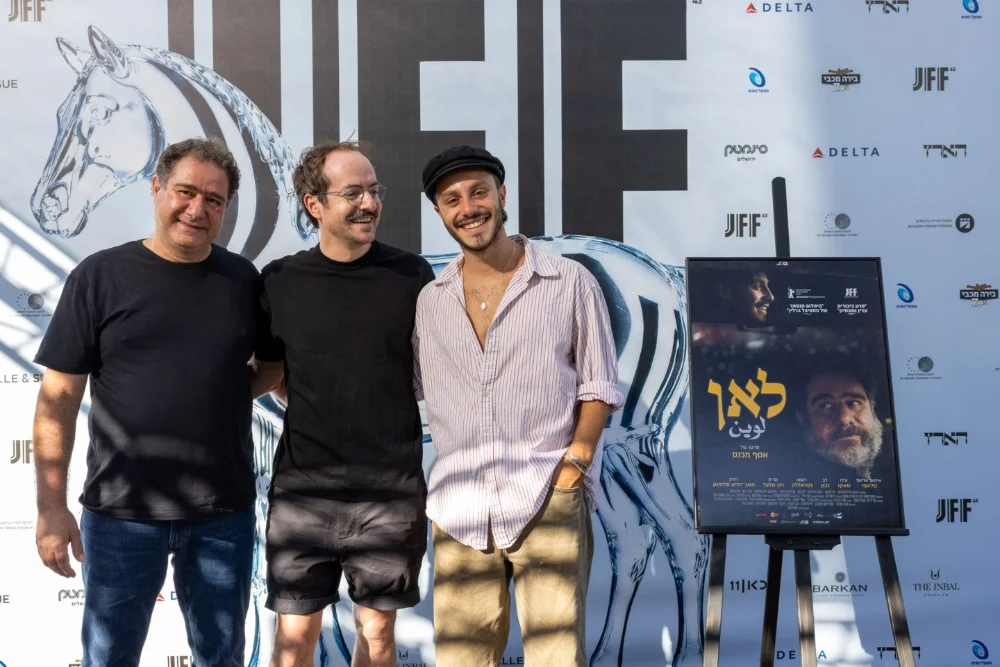
In an era defined by deep-seated political polarization and the escalating use of cultural boycotts as a tool of protest, the Jerusalem Film Festival (JFF) has positioned itself at the center of an increasingly contentious debate. Following the conclusion of its 43rd edition, Roni Mahadav-Levin, the executive director of the Jerusalem Cinematheque and the festival itself, has issued a poignant and provocative open letter. His message is a direct appeal to the international creative community—and specifically to Palestinian filmmakers—to reject the siren call of cultural withdrawal and instead utilize the festival’s screens as a platform for dialogue, resistance, and human connection.
The Context: A Festival Amidst Conflict
The 43rd Jerusalem Film Festival, which ran from July 9 to July 19, unfolded against a backdrop of regional instability and intense global scrutiny. As Israel faces ongoing internal political friction and a broader conflict that has left the region deeply scarred, the logistics of hosting an international cultural event have become a matter of both artistic and political sensitivity.
For years, the Boycott, Divestment, and Sanctions (BDS) movement and other activist groups have pressured artists and institutions to shun Israeli-linked film events. These calls for boycotts are often framed as a moral imperative, a way to exert pressure on the Israeli government’s policies. However, Mahadav-Levin argues that this strategy is fundamentally flawed. He contends that while the intentions behind such boycotts may be rooted in a desire for justice, the actual outcome is a self-defeating isolation that harms the very voices seeking to challenge the status quo.
A Chronology of Engagement
Despite the prevailing climate of tension, the 2025 edition of the festival managed to maintain a level of diversity that organizers view as a triumph of cultural persistence.
- July 9: The festival opened with the premiere of Tell Me Everything, directed by Moshe Rosenthal, signaling the start of a ten-day program that hosted a robust delegation of international industry professionals, including directors, producers, and scriptwriters.
- Mid-Festival Highlights: The program featured a cross-section of narratives, including works by Palestinian and Arab-Israeli filmmakers. A significant moment of recognition occurred when Palestinian actor Ehab Elias Salami was awarded the prize for Best Acting Performance for his role in Assaf Machnes’ feature, Where To?.
- Curation and Dialogue: The festival also showcased All That Remains, a curated compilation of short films by six Palestinian filmmakers, organized by Fadi Far. This inclusion served as a practical manifestation of Mahadav-Levin’s vision: that these stories should be heard by the broadest possible audience, including those within Israel who may not otherwise encounter such perspectives.
- July 19: The festival concluded, leaving behind a legacy of debate that would ultimately lead to the publication of Mahadav-Levin’s open letter, aimed at shaping the discourse for the 44th edition.
Supporting Data and the "Monolith" Myth
Mahadav-Levin’s argument rests on his observation of the festival’s audience, which he insists is far from a monolithic entity. During the ten-day run, the cinemas were filled with a heterogeneous mix of Jews, Arabs, secular citizens, religious adherents, locals, and international visitors.
Data from the festival organizers suggests that even in a climate of "hardline" governmental policies, the appetite for cross-cultural cinematic experiences remains high. When the house lights dim, the shared experience of watching a film creates a temporary, yet vital, space for empathy. The lobby discussions that follow—often centered on uncomfortable truths—act as what Mahadav-Levin describes as the "building blocks of a resilient society."
This resilience is contrasted against the "creeping authoritarianism" seen globally. By referencing political instability in the United States, Hungary, and the protest movements in Iran, Mahadav-Levin frames the struggle of the Jerusalem Film Festival as a micro-version of a global battle to preserve democratic discourse against populist and fundamentalist factions.
Official Responses and the Logic of the Boycott
The core of Mahadav-Levin’s message is a deconstruction of the boycott movement’s efficacy. He posits a "bitter irony": that the boycott movement, while claiming to oppose hardline policies, ends up doing the work of the censors.
"When you block your film from certain audiences," Mahadav-Levin writes, "you are doing the censors’ work for them." His argument is rooted in the belief that dictatorships and authoritarian regimes are rarely dismantled by external diplomatic isolation. Instead, he points to historical precedents—notably the period following the fall of the Berlin Wall—to argue that real, sustainable change is driven from within by the people themselves.
He urges filmmakers to view the festival not as an endorsement of the Israeli government, but as a neutral, essential venue for the transmission of ideas. By participating, he suggests, artists do not validate the state; they validate the humanity of the audience they are reaching.
The Philosophical Implications of Cultural Exchange
The implications of Mahadav-Levin’s plea are profound. He is asking for a recalibration of the role of the artist in times of conflict. Should art be a weapon used to signal moral purity, or should it be a bridge used to infiltrate the consciousness of the "other"?
The Danger of Ideological Purism
Mahadav-Levin characterizes the refusal to engage as "ideological purism." He argues that withdrawing from the cultural arena in a place like Jerusalem—which he describes as a "complex, mixed city"—is an act of abandonment. With elections looming in the coming months, he argues that the current period is a "critical, fragile moment" where the presence of diverse voices is more necessary than ever.
Challenging the Status Quo
The executive director’s assertion is that if a filmmaker believes in universal values, they have a responsibility to exhibit their work wherever it might challenge the status quo. If an artist’s work is meant to confront injustice, then hiding that work from an audience that is perhaps most in need of that confrontation is, in his view, "reckless."
Conclusion: A Call to Lean In
As the Jerusalem Film Festival looks toward its 44th year, the invitation remains open. Mahadav-Levin’s letter is not merely a press release; it is a challenge to the international film community to reconsider the ethics of engagement.
"Now is the time to lean in," the letter concludes. "Be part of this change. Be brave. Be heard."
Whether this appeal will successfully shift the tide remains to be seen. The discourse surrounding the Israeli-Palestinian conflict is perhaps the most entrenched in the world, and the use of the boycott as a protest tool is unlikely to vanish overnight. However, by clearly articulating the perspective of a cultural institution that sees itself as a site of resistance rather than a tool of the state, Mahadav-Levin has added a necessary layer of complexity to a debate that often favors binary thinking. The future of the festival, and the influence of the voices it chooses to amplify, will depend on whether more filmmakers choose to heed his call or maintain their distance.










