Siti Muinah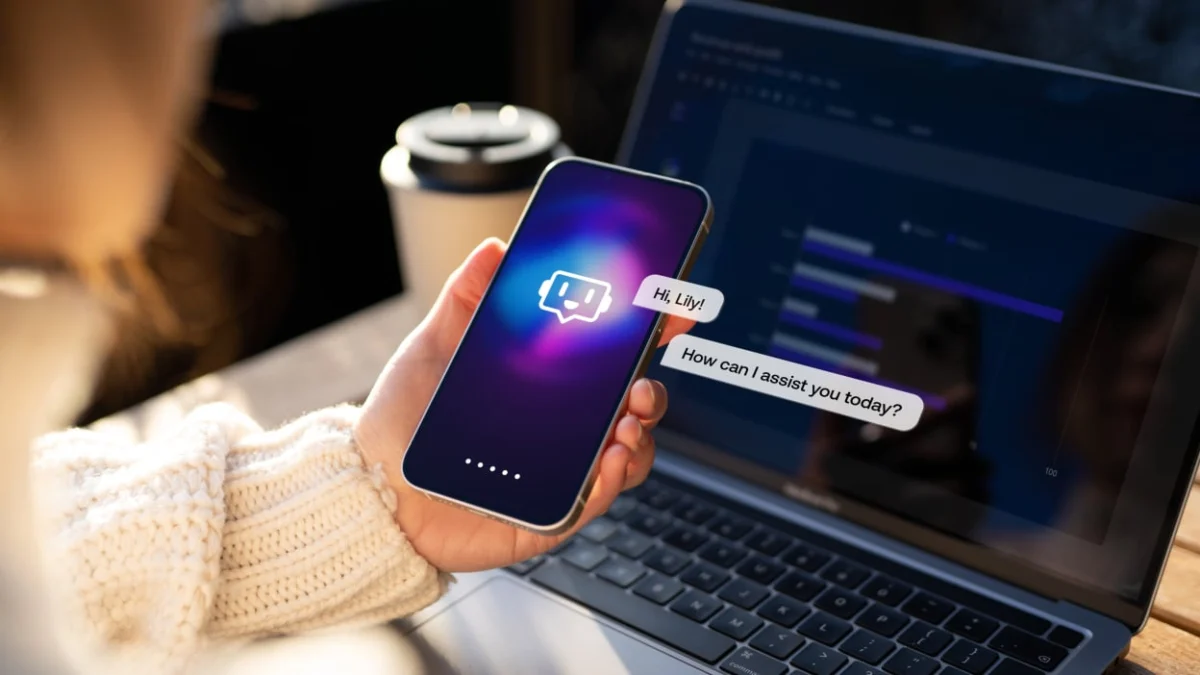
In an era where artificial intelligence is rapidly encroaching upon professional workflows—summarizing emails, scheduling board meetings, and automating complex logistics—a new question has emerged: Should we allow algorithms to manage our most intimate human connections?
This week, the tech startup Orchid discovered the hard way that while users are eager for efficiency in the workplace, they are profoundly skeptical of it in the bedroom. Following the release of a high-production, cinematic advertisement that depicted an AI assistant "saving" a relationship by remembering a forgotten anniversary, the internet erupted in a visceral display of collective unease. The ad, which has garnered over 20 million views in mere days, has become a lightning rod for the growing debate over the automation of human affection.
The Viral Catalyst: A Cinematic Failure of Romance
The advertisement, released on X (formerly Twitter) on July 28, 2026, presents a scenario familiar to many: a man forgets his anniversary. Rather than the woman addressing the failure through conversation, the video shows her turning to Orchid. The AI promptly steps in as a digital mediator, contacting the partner, booking a high-end restaurant reservation, and arranging a floral delivery—all while keeping the user updated on his progress.
Orchid’s marketing copy accompanied the video with the tagline: "Introducing Orchid, the first assistant that actually gets you. It remembers what you forget. Down to the flower."
While the production quality was high, the emotional reception was abysmal. Viewers did not see a helpful tool; they saw a dystopia. The comment section under the post was flooded with thousands of replies from users describing the scenario as "dystopian," "soulless," and "a hallmark of a dying relationship." The consensus was clear: the gesture of remembering an anniversary is valuable precisely because it requires human cognitive effort and emotional labor. Outsourcing it to an AI, they argued, renders the act hollow.
A Chronology of the Backlash
The timeline of the controversy unfolded rapidly:
- July 28, 2026: Orchid releases the promotional video on X, positioning the assistant as a life-management tool.
- July 29, 2026: The video goes viral, shifting from tech-focused circles to the broader cultural discourse. The tone of the replies pivots from curiosity to intense moral critique.
- July 30, 2026: As the backlash intensifies, Orchid’s team attempts to pivot, releasing behind-the-scenes content claiming they intended to tell a "real story" about modern life, rather than produce a standard product demo.
- July 31, 2026: Interns and supporters of the project attempt to engage with critics on social media, inviting feedback, which only seems to further fuel the perception of a "tone-deaf" tech culture.
The State of AI in Human Connection: Supporting Data
The public’s reaction to Orchid is not happening in a vacuum. We are witnessing a massive cultural shift in how we relate to technology.

According to a 2025 study conducted by Match and The Kinsey Institute, roughly 26 percent of U.S. singles are already utilizing AI to "enhance" their dating lives—a 333 percent increase from the previous year. Tasks include filtering potential matches, drafting clever messages, and analyzing their own dating habits for self-improvement.
However, this transition into long-term relationships is proving to be a cultural red line. A 2026 survey of 1,000 married U.S. adults found that while 44 percent had sought AI advice for relationship issues, this adoption has not led to higher levels of comfort. In fact, a concurrent report from the Pew Research Center suggests that nearly half of all U.S. adults believe that the encroachment of AI into our personal lives will fundamentally worsen our ability to form and maintain meaningful, authentic relationships.
What is Orchid, Actually?
Beneath the controversy, Orchid is a sophisticated, text-based personal assistant. Its core functionality involves managing emails, calendar scheduling, travel planning, and administrative logistics. It is currently built to integrate with Gmail and Google Calendar, with planned expansions into Slack, Notion, and other professional software.
The startup’s target demographic is explicitly professional: "founders, investors, lawyers, agents, and agency owners." The company argues that for these individuals, time is a finite commodity that should be spent on "real work" rather than administrative friction.
However, the advertisement suggested a much deeper integration than mere scheduling. The video implied that Orchid has access to the user’s private communications (iMessage), allowing it to act as a bridge between two people. When asked about this, co-founder Nizar Abi Zaher stated that the "shared agent" feature is currently intended for coordinating group chats and meetings, yet the advertisement’s implication of a "man-in-the-middle" approach to relationship maintenance remains a point of intense scrutiny.
Corporate Response and Defensive Strategy
As the backlash grew, the team at Orchid appeared caught off guard. In a series of social media posts, the company clarified that the AI operates only within user-defined parameters—nothing is sent without approval, and user data is allegedly not used to train their models.
Lucas Valbuena, an intern at the company, took the brunt of the criticism by soliciting feedback on X, asking what would make the public "actually use" the tool. This move was widely mocked by users who felt that the company was failing to understand the core objection: that the "problem" being solved was not a technical one, but an emotional one.

The company’s defense—that they wanted to "build a story around a real situation"—backfired. Instead of humanizing the technology, the storytelling highlighted the perceived moral bankruptcy of using an algorithm to mimic the care one should have for a romantic partner.
The Professional Skepticism: Is the EA Obsolete?
The conversation eventually migrated to professional forums, including the r/ExecutiveAssistants subreddit. Here, the perspective shifted from moral outrage to professional assessment. Many career administrative professionals were entirely unimpressed by Orchid’s capabilities.
"Execs are way too lazy to work these out themselves," one user commented, noting that for an AI to truly replace an assistant, it would need to possess the emotional intelligence required to handle nuanced, high-stakes human interactions—something an algorithm currently lacks. The consensus among these experts was that Orchid might be a useful tool for basic reminders, but it is a poor substitute for the human intuition that defines professional support.
Implications: The Automation of Care
The Orchid incident highlights a fundamental friction in the development of AI. As we build tools capable of managing the "boring" parts of life, we are inevitably forced to draw a line between "logistics" and "affection."
The outrage surrounding the ad suggests that, for many, the act of remembering an anniversary is not a task to be optimized; it is an act of devotion. When that act is delegated, it ceases to be a reflection of the partner’s care and becomes a reflection of the partner’s indifference.
As AI companies continue to push the boundaries of what can be automated, the Orchid case serves as a cautionary tale. It proves that technology, no matter how efficient, cannot manufacture the intangible value of human effort. In the future, the most successful AI tools will likely be those that empower humans to do more, rather than those that attempt to do the humanizing for us. For now, if you want to save your relationship, it seems the public expects you to buy the flowers yourself—and remember the date without a notification.


 Asep Darmawan
 Muslim