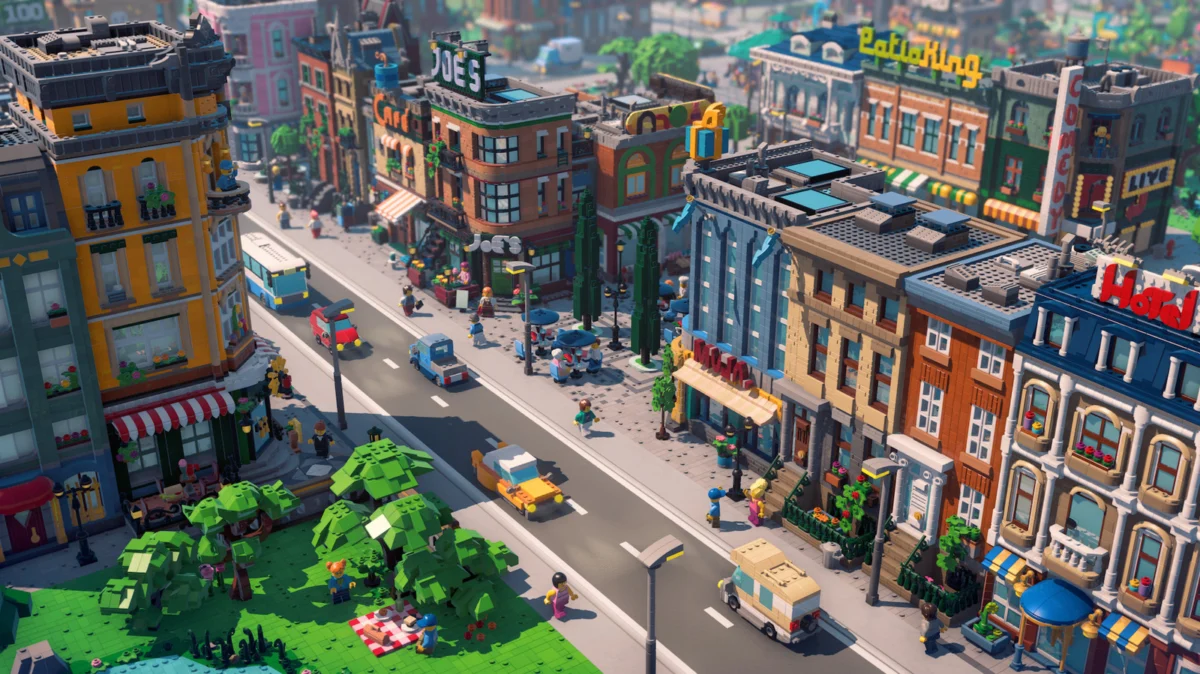
The nostalgia of childhood afternoons spent hunched over a carpeted floor, assembling plastic bricks into sprawling, nonsensical urban landscapes, is about to be digitized. During the high-octane spectacle of Gamescom’s Opening Night Live, Paradox Interactive and Iceflake Studios officially pulled the curtain back on Lego Skylines, a vibrant, cozy city-building simulation that promises to marry the intuitive, creative joy of the Lego brand with the complex mechanical depth of modern urban planning games.
The announcement, which was punctuated by a whimsical trailer showcasing a bustling, colorful metropolis taking shape in real-time, has ignited a firestorm of excitement among both casual gamers and dedicated city-building enthusiasts. While the title is currently in active development for Steam, PlayStation 5, Xbox Series X/S, and the highly anticipated Nintendo Switch 2, the publisher has remained tight-lipped regarding a specific release window.
The Genesis of a Collaborative Vision
The announcement of Lego Skylines represents a significant pivot for the genre. Unlike the hyper-realistic, often taxing simulations that dominate the market, Lego Skylines aims to occupy a "cozy" niche—a space where players can experiment with architectural form and function without the looming threat of systemic collapse.
The project is the latest endeavor from Iceflake Studios, a team that has rapidly ascended the ranks of the simulation genre. Iceflake is perhaps best known for its recent, vital work in stabilizing and expanding Cities: Skylines II. This connection is more than just a developer credit; it is a strategic alignment of talent. Following the tumultuous launch of Cities: Skylines II—a title that saw original developer Colossal Order face severe backlash due to performance issues and unmet community expectations—Paradox Interactive took the bold step of shifting the burden of long-term support to Iceflake.
The decision to entrust a high-profile, cross-brand project like Lego Skylines to Iceflake suggests a vote of extreme confidence from Paradox. It signals that the publisher is looking to move past the "bad blood" of the Cities: Skylines II launch by pivoting toward a project that emphasizes creativity, stability, and a fresh aesthetic approach.
A Chronology of Conflict and Recovery
To understand the significance of Lego Skylines, one must look at the recent, often turbulent history of the city-builder genre under the Paradox umbrella.
- October 2023: The launch of Cities: Skylines II occurs. The game, initially hailed as the successor to a legendary franchise, is met with immediate criticism regarding its optimization, lack of depth, and significant performance bottlenecks.
- Late 2023 – Early 2024: The community sentiment turns increasingly toxic. Forums, Reddit threads, and social media platforms become battlegrounds as fans express frustration over the state of the product. The relationship between developer Colossal Order and the player base frays significantly.
- Mid-2024: Paradox Interactive makes the difficult decision to reorganize its development teams. Reports confirm that Colossal Order is being phased out of the primary support role for the sequel, with Iceflake Studios stepping in to lead the "repair" efforts.
- August 2026 (Gamescom): The official reveal of Lego Skylines. This marks a turning point, moving the discourse away from the technical failures of the past and toward a new, collaborative future between a trusted studio and a globally recognized toy brand.
Supporting Data: The Anatomy of a City Builder
Lego Skylines is designed to bridge the gap between "toy" and "tool." Based on the preliminary footage, the gameplay loop appears to revolve around modular building. While standard city builders rely on grid-based zoning, Lego Skylines introduces a "brick-by-brick" philosophy.
Players will have access to a vast library of iconic Lego pieces, allowing for the construction of everything from standard residential plots to fantastical landmarks. However, the game retains the core pillars of the genre:
- Infrastructure Management: Roads and transit must be laid to ensure connectivity.
- Public Services: As seen in the trailer, emergency services like the fire brigade are essential. The "fire-hazard" mechanic implies that city safety remains a core challenge, even within a stylized Lego aesthetic.
- Economic Sustainability: Balancing the budget and the happiness of the "Minifigure" population remains the ultimate goal.
Early metrics from the development team suggest that the game engine is being optimized specifically for the "cozy" feel—prioritizing smooth frame rates and high-fidelity object interactions over the hyper-realistic weather simulations that plagued Cities: Skylines II.
Official Responses and Industry Outlook
"We are looking to create a space where the creativity of the player is the primary engine of the game," noted an Iceflake spokesperson during the post-show press briefing. "By combining the rigid, logic-based structure of a city builder with the infinite possibilities of the Lego system, we believe we have found a way to make the genre more accessible and, more importantly, more fun."
Paradox Interactive’s management has echoed this sentiment, emphasizing that the focus is on "restoring trust." By moving toward a brand-licensed product, they are clearly attempting to broaden the demographic appeal of their portfolio. Market analysts suggest that this is a shrewd move; by leveraging the massive Lego brand, the game will likely capture a younger, more casual audience that might otherwise be intimidated by the dense spreadsheets and complex traffic simulations of standard city builders.
The Implications for the Future of Simulation Games
The arrival of Lego Skylines poses a critical question for the industry: Is the future of the city-builder genre moving away from simulation-heavy realism and toward "cozy," stylized experiences?
For years, the gold standard of the genre was defined by how many agents a computer could simulate at once. Now, with the rise of games like Townscaper, Dorfromantik, and now Lego Skylines, there is a clear trend toward aesthetic satisfaction and low-stress gameplay. This pivot has significant implications for developers:
- Platform Versatility: The move to include the Nintendo Switch 2 suggests that developers are optimizing for hardware that is not necessarily top-tier, but highly portable and user-friendly.
- Community Management: Paradox is clearly hoping that a cleaner, more focused development cycle—led by a studio that has already proven its ability to fix complex systems—will help rebuild their reputation as a publisher.
- Hybridization: If Lego Skylines succeeds, we may see a wave of "branded simulations" that leverage existing intellectual property to inject life into stagnant game mechanics.
Final Reflections: A Fresh Chapter
The "struggle bus" of the last few years has been a difficult journey for the simulation community. The toxicity that surrounded the release of Cities: Skylines II left many enthusiasts wondering if the genre had lost its way. However, the transition to Iceflake Studios’ leadership, followed by the reveal of Lego Skylines, suggests that the "repair" process is yielding tangible results.
As we look toward the potential release of Lego Skylines, the sentiment among critics and fans alike is one of cautious, yet palpable, optimism. The game represents a rare opportunity to start fresh—to build a city where the stakes are lower, the bricks are brighter, and the focus is squarely on the joy of creation. For the developers at Iceflake, it is a chance to prove that they can not only fix a broken city but build an entirely new, functional world from the ground up.
Whether you are a veteran of the Cities series looking for a relaxing break, or a lifelong Lego fan eager to see your creations come to life, Lego Skylines promises to be a landmark title. It serves as a reminder that even in the complex world of software engineering and urban simulation, sometimes the best solution is to return to the basics: picking up a piece, finding the right spot, and clicking it into place.