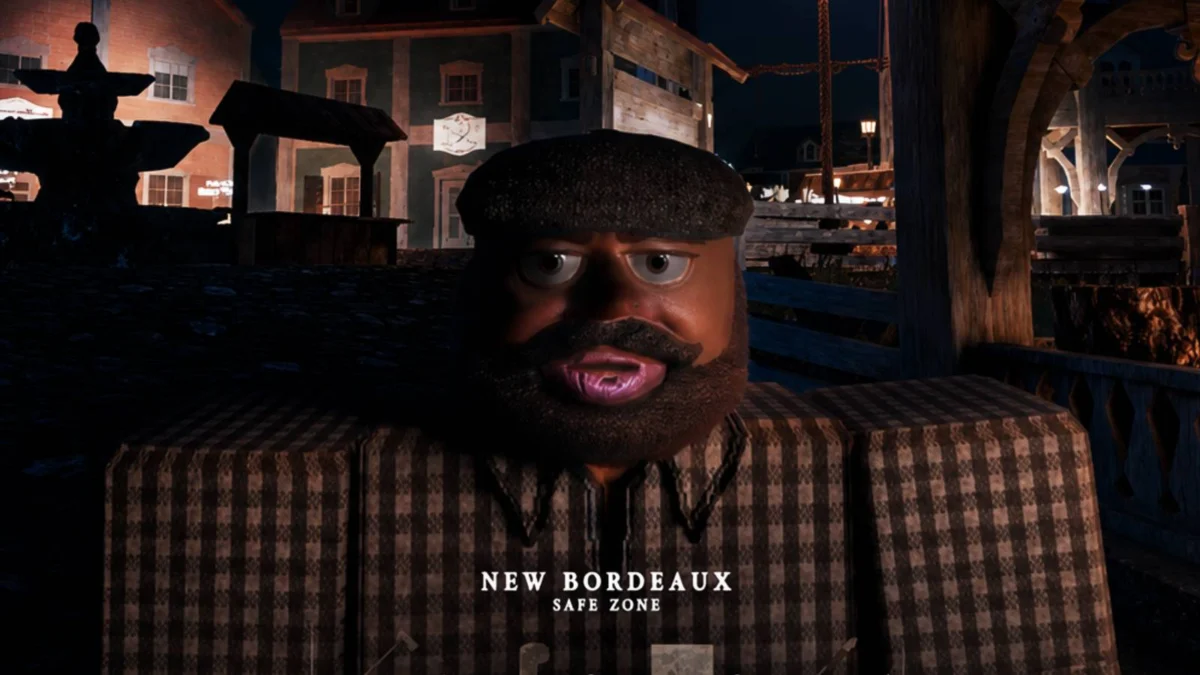
The boundaries between stylized block-based aesthetics and photorealistic rendering have officially blurred. In an experiment that has sent ripples of both fascination and existential dread through the gaming community, Roblox developer and Oaklands contributor "Hoofer" has successfully integrated Nvidia’s leaked DLSS 5 renderer into the Roblox engine. The result is a surreal juxtaposition: the platform’s iconic, rigid avatars now sport skin textures, depth-mapped eyes, and complex lighting that look disturbingly human.
This unauthorized fusion of neural rendering and user-generated content highlights a pivotal moment in gaming history, where AI-driven upscaling is no longer just about frame rates and resolution—it is about the fundamental transformation of digital identity.
A Chronology of the Leak and the Emergence of "Neural Modding"
To understand the weight of Hoofer’s experiment, one must look at the chaotic journey of DLSS 5. Announced by Nvidia in March 2026, the technology was touted as a breakthrough in neural rendering. Unlike its predecessors, which focused on temporal upscaling and frame generation to optimize performance, DLSS 5 promised a complete overhaul of game environments, materials, and character models through generative AI.
The technology was not slated for a consumer release until the fall of 2026. However, the tech industry is rarely a vault. In a major security oversight, unfinished DLSS 5 files were discovered embedded within the early-access build of NBA 2K27.
The Modding Wild West
The leak acted as a starter pistol for the PC modding community. Within days, developers and enthusiasts began "force-injecting" these files into titles that were never designed for such high-fidelity neural processing. The list of test subjects grew rapidly, spanning from the aged, wintry landscapes of Skyrim to the slick, modern architecture of Control and the high-fantasy aesthetic of Final Fantasy 7 Rebirth.
While these mods initially aimed to improve visual clarity, they quickly spiraled into creative experiments. Anime fans, capitalizing on the renderer’s ability to interpret 2D-style assets through a 3D lens, forced DLSS 5 onto characters from titles like Danganronpa. The resulting footage was described by many observers as "pure nightmare fuel"—characters with sharp, cartoonish proportions suddenly appearing with hyper-realistic pores, sweat, and lifelike iris reflections.
The Roblox Experiment: Where Blocks Meet Biology
On September 1, 2026, the experimental movement reached the Roblox ecosystem. Hoofer, a developer known for their work on the sandbox experience Oaklands, took the leaked files to the ultimate test: a platform defined by its intentionally simplistic, low-polygon geometry.
The footage shared by Hoofer is, by all accounts, a technical marvel that defies the inherent logic of the Roblox engine. In the clips, the familiar, blocky avatar bodies remain largely untouched—their movements are still governed by the platform’s classic physics—but their faces are transformed. The DLSS 5 neural renderer overlays these faces with high-fidelity textures, dynamic shadows, and intricate eye movements that feel entirely detached from the underlying character model.
"I added DLSS 5 to Roblox… it’s… ‘beautiful,’" Hoofer stated on social media, though the tone of the comment was widely interpreted as ironic. The juxtaposition of a square head with a photorealistic, perspiring forehead creates an immediate, visceral reaction in the viewer, placing the project squarely in the "uncanny valley."
Supporting Data: The Mechanics of Neural Rendering
At the core of this controversy is how DLSS 5 functions differently from traditional graphics APIs. Older versions of DLSS (Deep Learning Super Sampling) relied on motion vectors and temporal data to reconstruct high-resolution images from lower-resolution inputs. DLSS 5, conversely, utilizes a generative model trained on massive datasets of real-world physics, lighting, and human physiology.
The "Super Upsampler" Philosophy
When applied to a game like Roblox, the renderer is not simply sharpening pixels; it is "hallucinating" detail where none exists. When the renderer sees a flat, yellow-shaded Roblox face, it interprets the scene through its training data. It concludes that a "face" should have sub-surface scattering, natural skin tone variation, and highlights in the eyes.
This process is fundamentally different from traditional texture mapping. Because the AI is making real-time decisions about how light hits a surface, the lighting consistency across the avatar and the surrounding environment—which is also being upscaled—creates a cohesive, albeit jarring, visual experience. The environment, too, benefits, with textures gaining a level of grit and material complexity that makes a simple blocky structure look like a weathered, real-world object.
Official Responses and Industry Context
While the modding community explores the boundaries of what is possible, Roblox Corporation has remained focused on its own internal initiatives. In April 2026, the company officially unveiled "Roblox Reality."
Roblox Reality: The Corporate Counterpart
Roblox Reality is not merely a filter; it is an ambitious attempt to integrate high-fidelity generative AI directly into the platform’s cloud infrastructure. By utilizing a proprietary "Super Upsampler," the project aims to give developers the tools to layer photorealistic environments over existing experiences without requiring the massive compute power typically associated with high-end PC gaming.
Roblox aims for an early release of this technology by late 2026 or early 2027. The goal is to provide a "hybrid architecture" that democratizes photorealism, allowing a teenager in a bedroom to create a world that looks as visually arresting as a high-budget console title.
However, the divergence between Hoofer’s unofficial experiment and Roblox’s upcoming tech is significant. Roblox Reality is being designed to harmonize with the platform’s art style, whereas the DLSS 5 injection acts as a brute-force overlay that forces a "realistic" aesthetic onto a world that was never designed for it.
The Broader Implications: Art vs. Reality
The backlash that greeted the original reveal of DLSS 5 is now being re-examined in the light of these user-generated experiments. The primary critique is that realism is not synonymous with quality.
The Death of Stylization?
For decades, games like Roblox, Minecraft, and Team Fortress 2 have relied on a "timeless" art style. These designs prioritize readability, charm, and iconic silhouettes over the pursuit of graphical fidelity. Critics argue that forcing neural-rendered realism onto these games destroys the intentional artistic choices made by the creators. When a character’s face is rendered with photorealistic skin, the personality of the original avatar is often lost, replaced by a generic, uncanny human face.
The Ethics of Generative Modding
Furthermore, there are legal and ethical questions regarding the use of leaked proprietary code. Nvidia has been aggressive in protecting its intellectual property, and the use of DLSS 5 in third-party, unofficial environments creates a gray area for modders. Can a creator "own" the look of a game if that look is generated by an unauthorized AI model?
As we look toward 2027, the industry is bracing for a shift. If players can force photorealism onto any game they choose, the concept of a "developer-intended aesthetic" may become a relic of the past. Players will soon have the agency to decide exactly how their games look, regardless of the original design intent.
Conclusion: The Future of Virtual Immersion
The viral success of the Roblox DLSS 5 footage is a harbinger of the next decade of gaming. We are moving toward a future where the hardware and software in our devices act as a "reality filter," capable of interpreting and modifying visual data in real-time.
While the results seen in Oaklands and other Roblox experiences are currently unsettling, they represent the early, experimental stages of a massive technological transition. Whether this trend leads to a new standard of immersion or a loss of artistic identity remains to be seen. For now, we are left to watch as our favorite digital playgrounds are slowly, and sometimes eerily, reconstructed in the image of the real world.