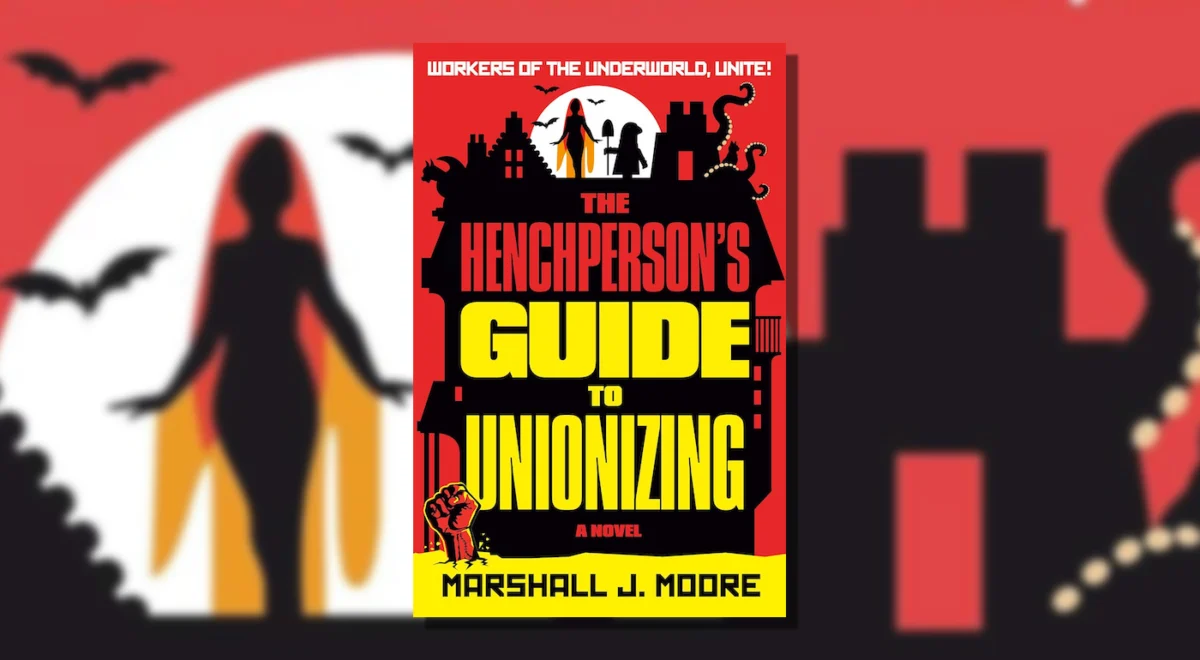
In the annals of gothic literature, the spotlight has traditionally rested on the architects of madness: the mad scientists, the brooding vampires, and the power-hungry necromancers. But behind every castle-dwelling genius stands a weary, underappreciated assistant tasked with the heavy lifting—quite literally. Marshall J. Moore’s highly anticipated new novel, The Henchperson’s Guide to Unionizing, arriving from Bantam on September 22nd, shifts the focus from the lab coat to the lab assistant, offering a hilarious, subversive, and surprisingly poignant look at the perils of working for a supervillain.
The Premise: When Villains Are Forced to Roommate
The narrative centers on Igor, a long-suffering lab assistant who spends his nights performing the gruesome clerical work of scientific discovery: grave robbing, anatomical grafting, and damage control for his employer, “the Doctor.” The central conflict is triggered by a recurring occupational hazard—the classic, pitchfork-wielding mob.
Forced to abandon their latest laboratory, the duo seeks refuge in the isolated Ravenwald Manor. However, the manor is far from empty. They find themselves forced into an uneasy, multi-party cohabitation agreement with an established vampiric Count, his disenchanted bride, Cornelia, and an enigmatic witch accompanied by her familiar, a feline named Grimalkin.
As the story unfolds, the “hench-class”—Igor, Cornelia, and Grimalkin—begin to realize that their shared experience of exploitation far outweighs their masters’ ideological differences. When they stumble upon a plot that threatens to bring about global armageddon, this unlikely trio must organize, strategize, and effectively "unionize" to stop their employers from destroying the world—all while avoiding the prying eyes of the suspicious villagers below.
A Chronology of Chaos: The Making of an Experiment
The opening chapter of the novel, which provides a glimpse into the frenetic atmosphere of the laboratory, serves as a masterclass in gothic comedy. Igor’s world is defined by a rigid, if macabre, routine. The "Subject"—a six-foot-tall, mismatched mosaic of stolen limbs—is the pinnacle of the Doctor’s current ambition.
The chronology of the evening is as follows:
- Late Evening: Igor finishes the delicate needlework on the Subject, ensuring the grafts are as seamless as possible despite his own physical limitations.
- The Storm: A classic atmospheric event sets the stage for the experiment. Igor and the Doctor engage in a tense, high-stakes dialogue regarding the necessity of a brain.
- The Discovery: Igor observes a line of torches snaking up the mountain, signaling the arrival of an angry mob.
- The Procurement: In a race against time, Igor navigates the castle’s dungeon-turned-storage-cellar, selecting a “tax collector’s” brain from the inventory.
- The Confrontation: The Doctor, in a display of singular focus, refuses to abandon his work, even as the village arrives to set the keep ablaze.
- The Escape: Igor initiates a frantic, solo evacuation of the laboratory’s essential equipment, only to realize the fire has outpaced their departure.
Supporting Data: The Anatomy of a Henchman
Moore’s writing excels in the granular details of the hench-experience. Through Igor’s internal monologue, the reader learns that the life of an assistant is not merely one of fear, but of professional pride. Igor takes genuine satisfaction in his ability to label organ jars and manage the logistics of a quick escape.
His struggle is universal. Whether it is the indignity of a limping gait that draws his master’s ire, or the constant need to compensate for the Doctor’s lack of practical foresight, Igor represents the "essential worker" in a world of ego-driven elites. The technical aspects of the laboratory—the "briny alchemical solutions," the "arcane schematics," and the "conical electrical conductors"—provide a grounding in the genre’s tropes while simultaneously mocking them through the lens of a weary middle-manager.

Official Responses and Literary Significance
Advance reviews for The Henchperson’s Guide to Unionizing suggest that Moore has tapped into a burgeoning sub-genre of "villain-adjacent" fiction. By positioning the narrative as a guide to unionizing, Moore invites readers to look at power dynamics through a fractured, humorous lens.
"The book is less about the monster on the slab and more about the monster in the office," noted one early literary analyst. "Moore captures the unique frustration of being the person who actually knows how the machinery works, while the person in charge is too busy monologuing to notice the castle is on fire."
The humor is balanced by the genuine danger the characters face. The threat of the villagers—the "plebeians and luddites," as the Doctor calls them—is treated as a constant, looming force of nature. This contrast between the high-fantasy stakes of "The Great Work" and the mundane, blue-collar struggles of the assistants provides the novel with its core tension.
Implications for the Gothic Genre
The arrival of The Henchperson’s Guide to Unionizing signifies a broader shift in fantasy literature. Readers are increasingly drawn to stories that humanize the background characters of established myths. By giving Igor a voice, a sense of humor, and a moral compass, Moore challenges the traditional binary of "good vs. evil."
In this story, the "evil" is not the magic or the science; it is the lack of consideration for those who perform the labor. The implication is clear: even in a world of vampires, witches, and reanimated corpses, the fundamental principles of labor rights remain the same.
Why This Book Matters
- Workplace Satire: It provides a mirror to modern corporate culture, where employees often feel like they are managing the "madness" of disconnected leadership.
- Character Agency: It empowers the "minions," shifting them from cannon fodder to the protagonists of their own liberation.
- Genre Blending: It successfully marries the dark, moody aesthetic of Mary Shelley’s Frankenstein with the dry, observational wit of contemporary workplace sitcoms.
As September 22nd approaches, anticipation continues to build. Whether you are a fan of traditional gothic horror or simply someone who has ever felt like your boss was asking for the impossible, The Henchperson’s Guide to Unionizing promises to be a riotous, thoughtful, and essential addition to the autumn reading list.
Igor’s journey—from the damp, dark basements of a ruined castle to the front lines of an uprising against his own master—serves as a reminder that every revolution, whether against an evil doctor or a difficult manager, starts with a single step. Or, in Igor’s case, a determined, uneven shuffle toward a better future.
The Henchperson’s Guide to Unionizing by Marshall J. Moore is published by Bantam and will be available in bookstores and online on September 22nd.