In the landscape of modern celebrity culture, magazine photoshoots are often predictable, highly curated affairs. They typically involve a A-list star standing against a minimalist backdrop, wearing the season’s latest couture, and offering a series of practiced, camera-ready smiles. Willem Dafoe, however, has never been one to follow the script.
At 71, the legendary actor has once again sent the internet into a frenzy, not through a blockbuster film trailer or a major award win, but through a series of startling, avant-garde photographs that challenge the very definition of a celebrity portrait. Appearing in the latest issue of A Rabbit’s Foot (Issue 16), Dafoe has proven that his capacity for performance extends far beyond the silver screen, turning a simple studio session in Rome into a masterclass in kinetic expression.
The Rome Sessions: A Study in "The Chameleon"
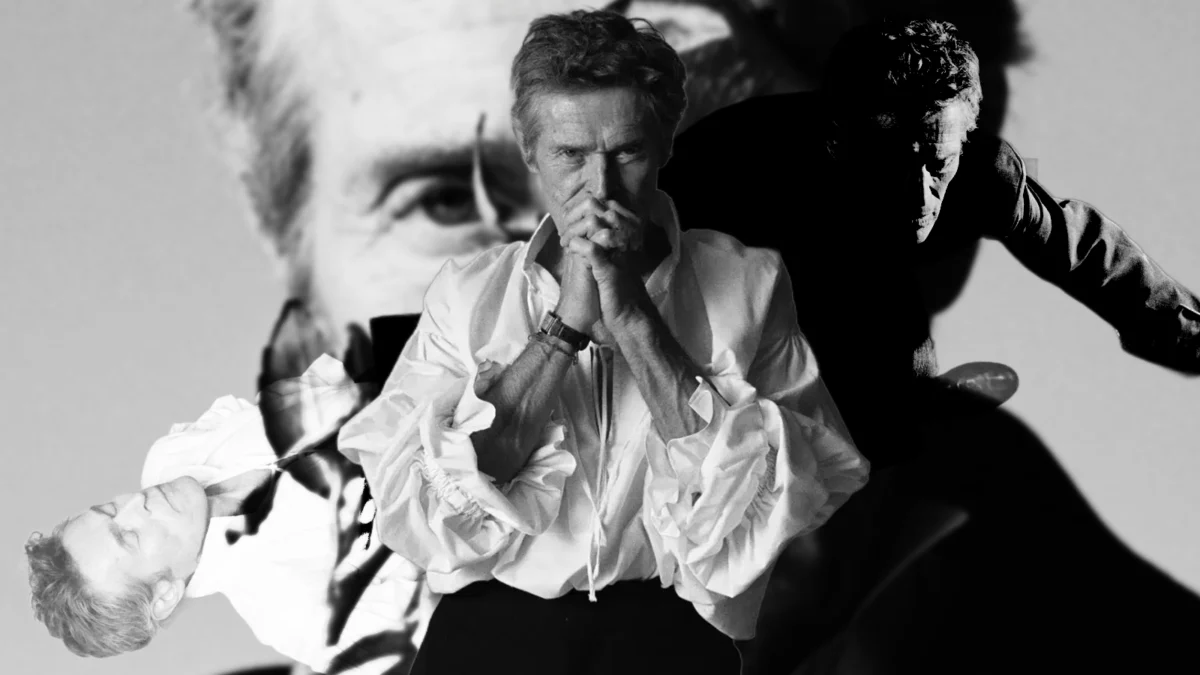
Titled "The Chameleon," the editorial feature—shot by the visionary photographer Daniel Sannwald—captures Dafoe in states of physical contortion that would challenge a gymnast half his age. The images depict the actor folding his body into intricate, yoga-inspired shapes, stretching languidly across cold studio floors, balancing precariously on mid-century furniture, and staring with a piercing, unnerving intensity while clutching a flickering candle.
The imagery is raw, unsettling, and undeniably magnetic. Sannwald’s lens captures a version of Dafoe that feels liberated from the constraints of "movie star" vanity. There is no attempt to look "pretty" or "cool" in the traditional sense; instead, there is a total commitment to the abstract, resulting in a visual narrative that feels more like a piece of performance art than a standard fashion spread.
A Chronology of Non-Conformity
To those familiar with Dafoe’s long-standing relationship with the camera, these latest images come as little surprise. The actor has developed a reputation for turning photoshoots into full-body experiments, a trend that has steadily built his status as a recurring icon of the "meme economy."
The timeline of Dafoe’s "un-posed" legacy is extensive:
- The Early Years: Even in his early editorial work, Dafoe displayed a penchant for the dramatic, often favoring heavy shadow and intense facial expressions over traditional glamour.
- The GQ Italia Resurgence: Years ago, a series of photographs from GQ Italia began circulating on social media platforms. These images, characterized by Dafoe’s stark, almost alien facial structure and unusual posture, became the gold standard for reaction memes, cementing his place in the digital zeitgeist.
- The Collectible DRY Phenomenon (June 2026): Just last year, an editorial for Collectible DRY Issue 31 went viral, with fans marveling at the actor’s commitment to physical oddity. The images saw him interacting with his environment in ways that defied the conventional boundaries of portraiture.
- The "Final Fantasy" Incident: In a bizarre intersection of gaming and celebrity culture, internet sleuths previously became convinced they had spotted the actor playing Final Fantasy 7: Crisis Core via a reflection in a Steam Deck screen. While never fully confirmed, the incident highlighted the public’s obsession with finding the "real" Willem Dafoe in every corner of the digital world.
- The A Rabbit’s Foot Feature (Current): The present moment marks the culmination of this trajectory, where Dafoe has fully embraced his reputation as a man who is, as the internet puts it, "allergic to a normal pose."
The "Aura" Factor: Why the Internet Loves Dafoe
The reaction to the latest shoot has been immediate and overwhelming. Across X (formerly Twitter) and Reddit, users have dissected the images with the same fervor usually reserved for major film releases. One viral post, which garnered thousands of interactions, simply stated: "New Willem Dafoe poses just dropped!!!"
The discourse surrounding the images reveals a deep-seated cultural appreciation for Dafoe’s "aura." One Reddit user noted, "Allergic to a normal pose but a magnet for aura," a sentiment that perfectly captures why these images resonate. In an era of highly polished, AI-assisted celebrity imagery, Dafoe’s willingness to be "weird"—to prioritize movement and expression over vanity—feels profoundly authentic.
Fans have pointed out that he appears to be practicing actual yoga poses, with many joking about his impressive "forward fold." Others have suggested that photographers have simply learned that the best way to work with Dafoe is to "let him loose in a room and watch what happens." This hands-off approach appears to be the secret ingredient, allowing the actor’s idiosyncratic creative energy to dictate the flow of the shoot.
Official Responses: The Actor’s Perspective
Perhaps the most fascinating aspect of this phenomenon is that Dafoe is entirely aware of his own eccentricity. During the A Rabbit’s Foot interview, the actor reflected on his process. Observers in the studio noted that during the shoot, Dafoe took it upon himself to dismantle and re-stack a prop table while music played, treating the furniture as a collaborator rather than a background element.
When asked about his approach, Dafoe offered a candid, if slightly bemused, explanation: "Sometimes, I don’t know why I do these things. But if I’m going to do it, I may as well do it right."
This philosophy of "doing it right"—which for Dafoe means total immersion—is the hallmark of his entire career. Whether he is portraying a tortured artist, a villainous goblin, or a man on a farm in Italy, he approaches every task with a level of rigor that borders on the obsessive. In the context of a magazine shoot, "doing it right" means refusing to be a static object and instead becoming an active participant in the creation of the image.
Implications for Modern Celebrity and Editorial Photography
The viral success of Dafoe’s latest photoshoots carries significant implications for the future of celebrity media. It suggests a growing fatigue among audiences for the "curated aesthetic." As social media platforms prioritize personality and spontaneity, the polished, untouchable celebrity portrait is increasingly viewed as sterile or boring.
Dafoe represents a shift toward the "authentic eccentric." By leaning into his natural, somewhat uncanny intensity, he has carved out a brand that is entirely his own. He is not selling a lifestyle; he is selling a performance. This approach has allowed him to remain relevant to younger generations—Gen Z and Millennials—who value the "meme-ability" of a star as much as their filmography.
Furthermore, the collaboration between high-fashion photography and unconventional performance art points to a potential evolution in editorial standards. Photographers are beginning to realize that the most compelling images come from letting the subject take the lead, even if that lead takes them into strange, contorted, or uncomfortable territory.
Conclusion: The Great Obligation
Beyond the memes and the viral social media threads, the A Rabbit’s Foot feature serves as a reminder of Dafoe’s profound versatility. The wider interview provides a window into a life that is as rich and varied as his career, touching on his quiet existence on a farm outside Rome, his dedication to his work as a theater director for the Venice Biennale, and the anticipation surrounding his upcoming reunion with director Robert Eggers for the film Nosferatu (referenced in the piece as Werwulf).
Willem Dafoe has reached a stage in his career where he no longer needs to prove his talent. He has already secured his place in cinema history. What he chooses to do now is a matter of curiosity and play. By refusing to conform to the expectations of a "normal" photoshoot, he has done something far more important: he has remained undeniably, uniquely, and perpetually interesting. As long as he continues to view the world—and the camera—as a stage, the internet will be waiting, ready to turn every contortion into a piece of digital history.