

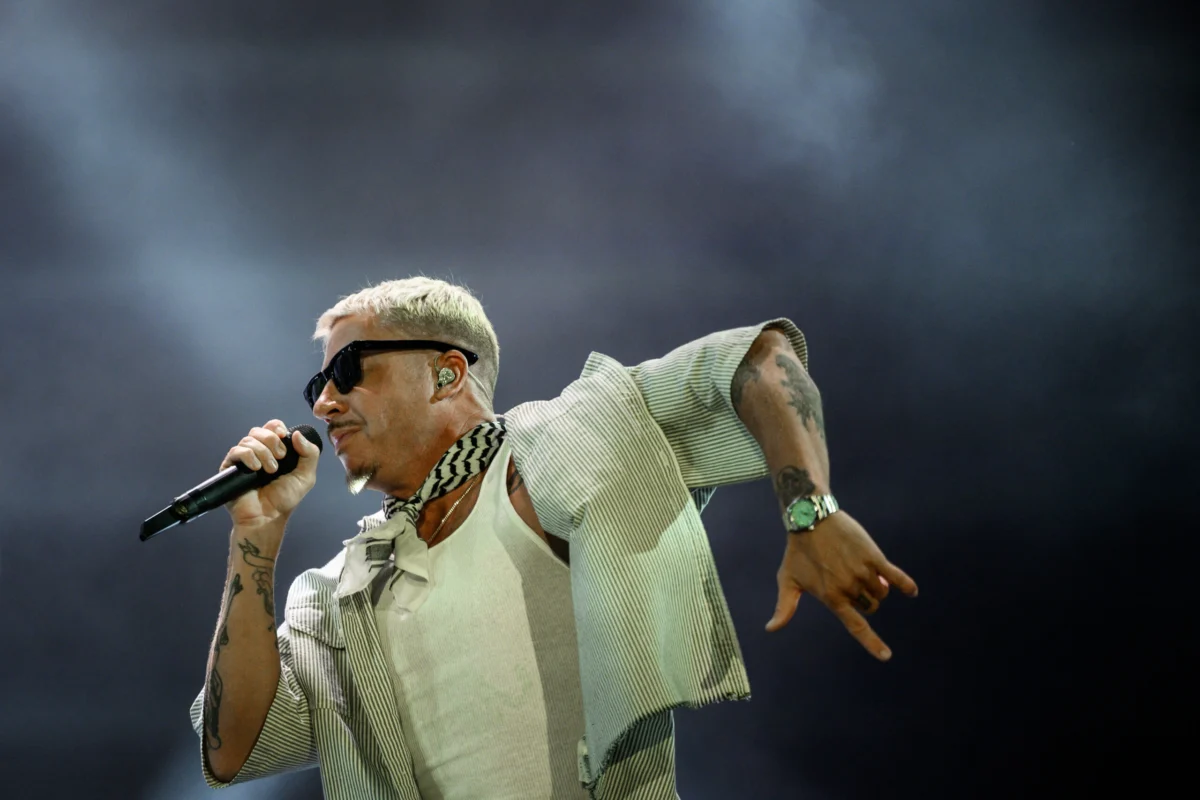
The intersection of music and political discourse has long been a flashpoint in American culture, but few recent performances have ignited as much public debate as the opening sets delivered by Macklemore during Ed Sheeran’s "Mathematics" (Loop) tour stop at MetLife Stadium in New Jersey. Over the course of two consecutive nights, the Grammy-winning rapper utilized his platform to advocate for Palestinian liberation, triggering a polarized reaction from concertgoers, organized advocacy groups, and the broader music industry.
The Incidents: A Call for Freedom in East Rutherford
On Friday night, as the capacity crowd gathered at MetLife Stadium, Macklemore, acting as the tour’s opening act, transitioned from his musical performance into a poignant moment of political speech. Addressing the massive audience, the rapper clearly articulated the phrase “Free Palestine.”
Following the statement, Macklemore delivered a short address to the crowd, emphasizing his desire for the residents of Gaza and the occupied West Bank to know that they have not been forgotten by the international community. "I believe that every human being walking on this earth deserves exactly the same freedom," he asserted, a sentiment that echoed through the stadium. He doubled down on this message during Saturday night’s performance, maintaining his stance despite the brewing controversy.
Beyond the conflict in the Middle East, Macklemore also took aim at U.S. domestic policy, specifically criticizing U.S. Immigration and Customs Enforcement (ICE). The inclusion of these topics in a mainstream pop concert environment served as a stark departure from the typical stage banter expected at stadium tours, setting the stage for an intense fallout.
Chronology of the Controversy
The tension began immediately following the Friday night show, as videos of the speech circulated rapidly on social media platforms like X (formerly Twitter) and Instagram.
- Friday Evening: The initial performance at MetLife Stadium saw Macklemore introduce his political commentary, drawing both cheers and audible murmurs of dissent from the audience.
- Saturday Morning: As footage of the speech went viral, the Israeli American Council (IAC) moved to formalize its opposition. By mid-day, the organization launched an online petition calling for the rapper’s removal from the remaining dates of Ed Sheeran’s tour.
- Saturday Evening: Despite the mounting pressure and public outcry, Macklemore addressed the audience in a similar fashion during his second performance, reaffirming his commitment to his message.
- Sunday and Beyond: The discourse shifted to social media, where the debate became deeply entrenched, with concertgoers arguing over the appropriateness of political speech at commercial entertainment events.
The Official Response: The IAC Petition
The reaction from the Israeli American Council was swift and categorical. Their petition, which sought to mobilize fans and industry stakeholders, framed the concert as an inappropriate venue for political activism.
“This was an Ed Sheeran concert — not a political rally, not a protest, and not an activist event,” the petition stated. The document explicitly avoided attacking Macklemore’s right to personal opinion, focusing instead on the perceived misuse of a global platform. “The issue is not whether Macklemore has the right to hold political views. The question is where the line should be drawn when an opening act uses a global concert platform to advance a one-sided political agenda.”
The petition, while not publicly disclosing its total signature count, served as a lightning rod for the grievances of those who felt blindsided by the rapper’s commentary. It argued that the concert environment creates a captive audience that did not consent to being subjected to, or potentially funding, specific political agendas.
Musical Advocacy: The "Hind’s Hall" Context
Macklemore’s actions at MetLife Stadium did not occur in a vacuum. Earlier in 2024, the rapper released the track "Hind’s Hall," a song that directly criticizes Israel’s military actions in Gaza and highlights the struggles of Palestinian civilians. The song, which pays tribute to the student protests that erupted on university campuses across the United States, was not just a musical statement but a financial one; Macklemore committed all proceeds from the track to humanitarian efforts managed by the UNRWA (United Nations Relief and Works Agency for Palestine Refugees).
His performance at the MetLife shows was, in effect, a live extension of the themes he had already established in his recent discography. By bringing these issues to a stadium-sized audience, Macklemore signaled a pivot toward a more overtly activist career path, regardless of the potential professional consequences.
Public Polarization: A Nation Divided
The reaction from the public has been deeply divided, mirroring the broader geopolitical polarization surrounding the Israel-Hamas war.
Critics’ Perspectives:
Many concertgoers expressed significant frustration, claiming that they had purchased tickets for an evening of music, not political indoctrination. Some attendees reported walking out of the venue in protest, describing the atmosphere as uncomfortable. A recurring accusation leveled against the rapper on social media was that his rhetoric veered into antisemitism. Critics argued that by focusing exclusively on the actions of Israel while omitting the context of the October 7 attacks, the performance fostered a hostile environment for Jewish fans.
Supporters’ Perspectives:
Conversely, many supporters praised the rapper for his courage. Proponents of his actions argued that art has historically served as a vital vehicle for social change and human rights advocacy. One social media user captured this sentiment, writing, "Music has always been a vital platform for human rights advocacy, not just mindless escape." For this camp, Macklemore was using his immense reach to shed light on a humanitarian crisis that they believe is under-discussed in mainstream corporate media.
The Implications for Live Entertainment
The incident raises profound questions about the future of live performance and the boundaries of artistic freedom.
- The "Audience Expectation" Clause: Promoters and tour managers are now forced to grapple with the risks associated with booking artists known for political activism. Should performers have absolute freedom to express their views, or does the commercial nature of a concert necessitate a "neutral" environment?
- The Role of the Headliner: Ed Sheeran, who has remained publicly neutral regarding the controversy, now faces questions about the responsibility of headliners for the conduct of their opening acts. In an era of viral social media, the actions of a supporting artist can quickly overshadow the main event.
- The Impact on Future Sponsorships: Political controversy can lead to the withdrawal of corporate sponsors and partners. As organizations like the IAC gain traction in mobilizing public opinion, artists may find that their political stances have direct, tangible impacts on their ability to secure large-scale touring opportunities.
Conclusion
The events at MetLife Stadium serve as a microcosm of the intense friction currently defining American cultural life. Macklemore’s decision to use his platform to speak on the humanitarian crisis in Gaza and the West Bank has ignited a debate that shows no signs of abating.
Whether one views his actions as a necessary exercise of conscience or an inappropriate disruption of a professional commitment, the incident highlights the diminishing distinction between the personal, the political, and the commercial. As the music industry continues to navigate this volatile landscape, the question remains: Can the concert stage remain a "neutral" space, or is it destined to become one of the primary arenas where the world’s most divisive conflicts are debated? For now, Macklemore has made his position clear, and in doing so, he has ensured that his tour with Ed Sheeran will be remembered as much for the speech as for the songs.










