Asep Darmawan
In the rapidly evolving landscape of personal audio, a significant shift has taken place. For years, the industry was dominated by manufacturers chasing the "V-shape" sound signature—a tuning that emphasizes boosted bass and sparkling treble to create an immediate, exciting impact. However, the tides have turned. Influenced by the landmark 2012 Harman research, which suggested that the majority of listeners perceive "neutral" as synonymous with "high fidelity," a new wave of budget and mid-range headphones has emerged. These devices prioritize balanced, uncoloured audio reproduction, effectively democratizing professional-grade sound for the everyday enthusiast.
Yet, as we climb the ladder into the rarefied air of high-end, kilobuck-tier audio, the "neutral" mandate seems to evaporate. Enter the HiFiMan HE1000 Stealth: a piece of hardware that represents the antithesis of the industry’s current trend toward clinical accuracy. Rather than bowing to the demand for total neutrality, HiFiMan has doubled down on a specialized, character-driven experience. The result is a device that feels less like a consumer electronic and more like a piece of modern art—divisive, deliberate, and undeniably bold.

The Evolution of the HE1000: A Chronology of Flagship Design
To understand the HE1000 Stealth, one must look back at the lineage of the series. HiFiMan first introduced the HE1000 in 2015, a $3,000 behemoth that set a new benchmark for planar magnetic technology. At the time, the open-back design and the sheer scale of its driver were revolutionary, promising a level of transparency that few dynamic driver headphones could hope to achieve.
Over the years, the "Stealth" moniker—referring to the company’s proprietary Stealth Magnet technology, which allows sound waves to pass through the magnets without generating interference—has been integrated across their product line. The 2023 iteration of the HE1000 represents the pinnacle of this refinement. While the internal technology has seen significant evolution, the external aesthetic has remained a nostalgic nod to its origins, featuring the signature CNC-machined aluminium frame, wood-veneer trim, and expansive, teardrop-shaped ear cups that have become synonymous with the HiFiMan brand.

Technical Specifications and Design Philosophy
At the heart of the HE1000 Stealth lies a massive 100mm planar magnetic driver. This surface area is critical to its performance, enabling the headphone to reproduce a wide frequency range with minimal distortion.
- Price: $949 / £949
- Release Date: December 2022
- Driver Technology: 100mm Planar Magnetic, Open-Back
- Impedance: 32Ω
- Sensitivity: 93dB/mW
- Construction: CNC-machined aluminium frame, wood-veneer trim, real leather headband
- Weight: 458g
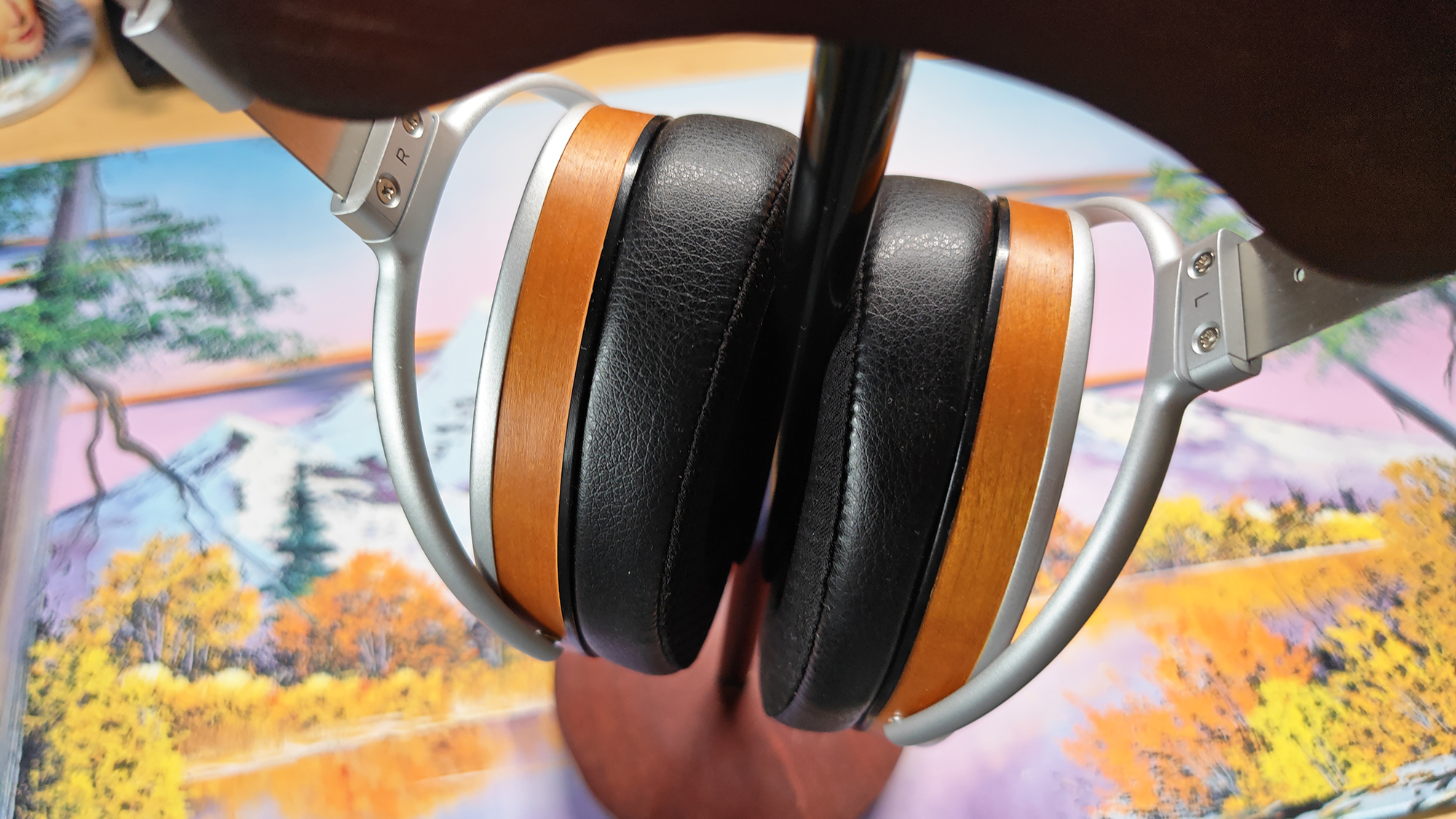
The construction is an exercise in "retro-modernism." The use of a real suede leather headband and hybrid micro-fibre/synthetic leather ear pads provides exceptional comfort for long-term listening sessions. However, the use of a wood-printed vinyl veneer rather than genuine wood trim is a point of contention at this price point, though it does little to diminish the premium tactile feel of the device.

The Sound Profile: An Engineered Illusion
When evaluating the HE1000, one must accept that this is not a tool for clinical monitoring. The headphone is tuned with a deliberate "dip" in the upper midrange frequencies, roughly between 1.25kHz and 2.5kHz.
The Spatial Effect
This specific dip is the "secret sauce" of the HiFiMan house sound. By recessing these frequencies, the headphone psychoacoustically pushes vocals and lead instruments back into the soundstage, creating an expansive, "grand" sense of space. While some purists argue this compromises the intimacy of a vocal performance, the effect is undeniably immersive. It allows complex tracks to breathe, offering a level of separation and airiness that is virtually unmatched in its class.

Bass and Treble Dynamics
The bass response is a masterclass in control. Unlike closed-back headphones that rely on physical pressure to create "slam," the HE1000 offers a textured, articulate, and well-extended sub-bass. While it does not deliver the visceral mid-bass punch of some competitors, its linearity ensures that the low end never bleeds into the mids.
The treble, however, is where the "specialist" nature of the headphone becomes most apparent. There are noticeable peaks in the 6.5kHz–7.3kHz range and again near 9kHz. For most, this serves to add a "sparkle" or "texture" to the music, highlighting micro-details in high-hats and string instruments. For those sensitive to treble, however, these peaks can occasionally verge on fatiguing.

Supporting Data and Real-World Testing
To properly assess the capabilities of the HE1000, the unit was tested using a high-fidelity chain: the Luxsin X8 DAC/Amp, paired with a low-capacitance, balanced litz cable from Custom Cans. This setup provided the necessary headroom to drive the 32Ω load effectively.
In critical listening sessions involving over 600 tracks, the HE1000 showcased its versatility. While tracks with intense high-frequency transients—such as certain electronic or pop recordings—occasionally highlighted the treble peaks, the vast majority of orchestral, jazz, and acoustic recordings were rendered with a sense of "correctness" and balance that defied the technical "coloration" mentioned earlier. The takeaway is clear: the HE1000 is not meant to be neutral, but it is meant to be cohesive.

Official Perspectives and Market Implications
The audio industry currently faces a schism. On one side are the manufacturers who view the Harman target curve as the ultimate objective, producing gear that prioritizes objective, measured perfection. On the other are brands like HiFiMan, who view high-end audio as an experience-led category.
The implications for the consumer are significant. If you are a professional mixer or mastering engineer, the HE1000 is likely not the tool for your studio; you would be better served by a more neutral, reference-tuned set like the HEDD D1. However, for the listener whose primary goal is enjoyment—the individual who wants to hear their music presented in a "grand" format—the HE1000 offers something that pure neutrality cannot: a sense of occasion.

The market has responded positively to this "specialist" approach. Despite the influx of budget-friendly, neutral gear, the demand for high-end, "colored" headphones remains robust. This suggests that as audio technology matures, enthusiasts are beginning to value variety in their sonic palette. We are moving toward a world where one can own a neutral set for technical analysis and a "character" set—like the HE1000—for the pure joy of musical immersion.
The Verdict: A Luxury Choice
Is the HiFiMan HE1000 Stealth worth its $949 price tag? To answer this, one must look past the spec sheet. If you value a clinical, "truthful" reproduction of a recording, there are more accurate headphones on the market. But if you value the emotional impact of music—if you want your headphones to sculpt the sound into something larger, more textured, and more engaging—then the HE1000 is a compelling, if not essential, purchase.
It is a testament to HiFiMan’s confidence that they have ignored the industry’s push toward a homogenous sound. By refusing to chase the "neutral" trend, they have instead solidified the HE1000 as a definitive "end game" set for a specific subset of listeners. It is not for everyone, but for those who find their preferred sonic signature in its expansive, bright, and detailed presentation, it is, quite simply, the best seat in the house.


 Nana Muazin
 Basiran