Pevita Pearce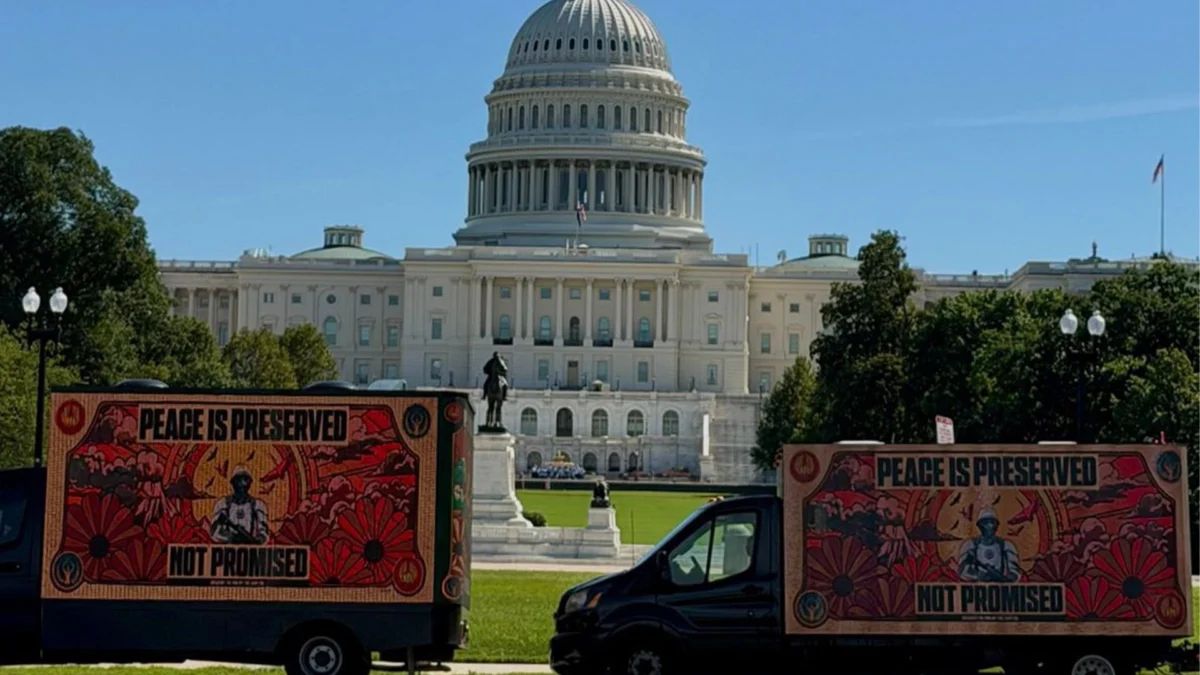
In the landscape of modern film promotion, the barrier between high-concept fiction and the tangible, lived-in world has never been thinner. For the upcoming installment of the blockbuster franchise, The Hunger Games: Sunrise on the Reaping, Lionsgate has opted for a guerrilla marketing strategy that is as brilliant as it is profoundly unsettling. By placing propaganda-style billboards directly outside of the world’s most significant democratic institutions, the campaign has successfully blurred the lines between the fictional, authoritarian regime of Panem and the reality of global politics.
The campaign features imagery that feels lifted directly from the pages of Suzanne Collins’ novels—or, perhaps more accurately, from the annals of mid-20th-century totalitarian history. But as these billboards pop up outside the U.S. Capitol, NATO headquarters, and other bastions of global governance, they have ignited a conversation that goes far beyond mere movie hype. This is a masterclass in environmental marketing that asks a uncomfortable question: when our world starts to look like a dystopia, how does it feel to see the signs of one on our own doorsteps?
The Anatomy of the Campaign: Design as Indoctrination
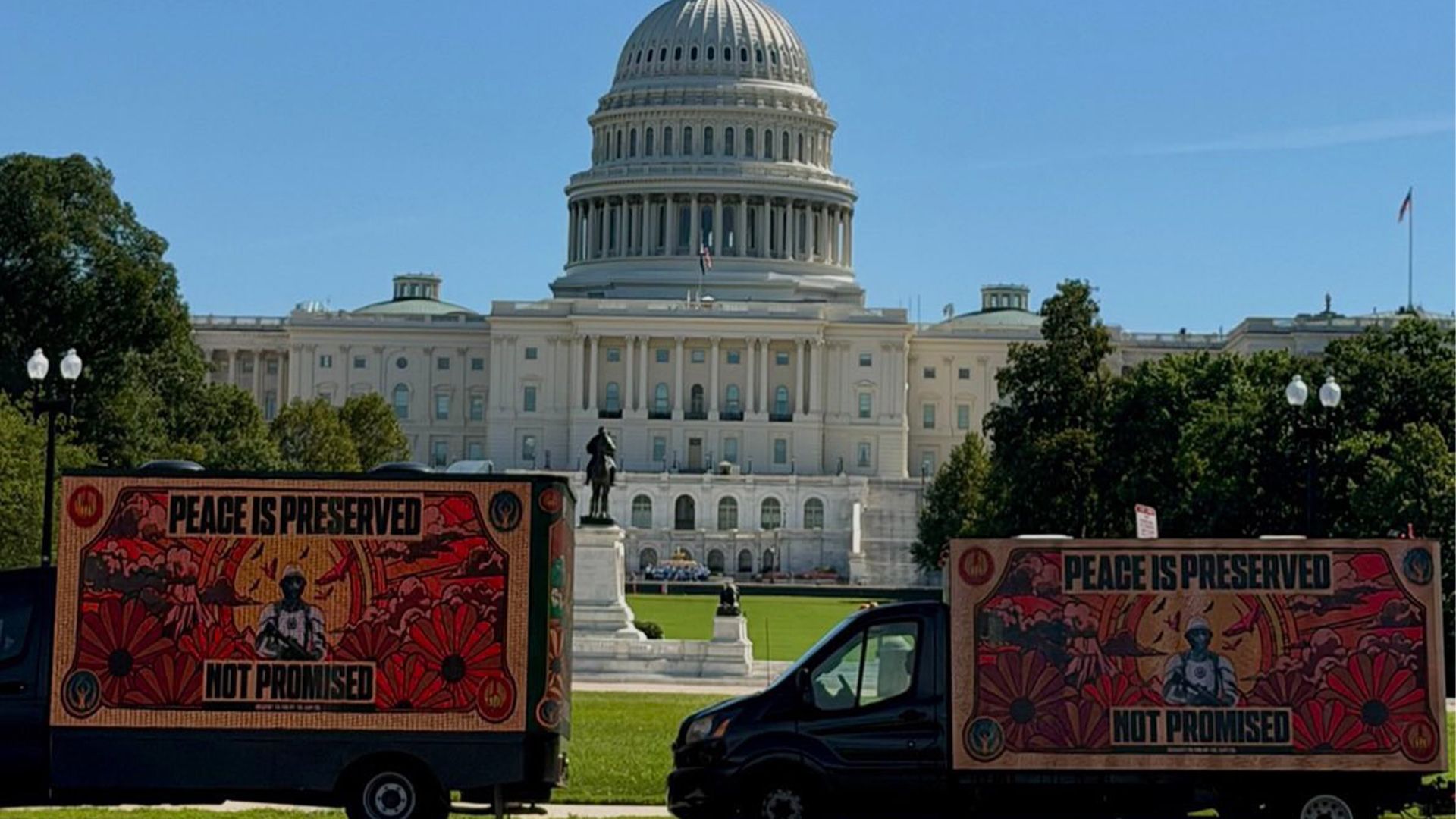
At the heart of the campaign is a visual identity that leans heavily into the aesthetic of Soviet-era propaganda and state-sponsored messaging. The posters depict a lone, stoic soldier—the enforcer of the Capitol’s will—set against a backdrop of soft, flowery imagery. This juxtaposition is deliberate; it is a visual metaphor for the Capitol’s sugar-coated brutality.
The centerpiece of the design is the chilling slogan: "Peace is preserved, not promised."
This phrase strikes a nerve because of its inherent duplicity. In the context of The Hunger Games, it is a threat disguised as a civic virtue. It suggests that the "peace" enjoyed by the citizens of the Capitol is a fragile thing, maintained only through the violent suppression of the districts. By placing these images in real-world spaces, Lionsgate has effectively "hijacked" the architecture of authority to sell a story about the fragility of freedom.
The design details are subtle but essential. The badges of the various districts are tucked into the corners, acting as a grim reminder of the hierarchy the film depicts. The inclusion of the "Brought to you by the Capitol" byline functions like a modern corporate disclaimer, yet in the context of the guerilla placement, it feels more like a territorial marking.
Chronology of the Provocation: A Global Rollout
The campaign began to surface in mid-September 2026, targeting locations that carry heavy symbolic weight. The timing was not incidental; by choosing sites of political power, the studio ensured that the "story" of the marketing campaign would be picked up by news outlets and social media users who were already primed to react to the juxtaposition of film promotion and political reality.
- The Initial Wave: The first reports emerged from Washington D.C., where the U.S. Capitol Building provided a stark, monumental backdrop for the posters. The irony was not lost on observers, who quickly took to social media to comment on the visual symmetry between the fictional seat of power in Panem and the real seat of power in the United States.
- The International Expansion: Shortly thereafter, mobile billboards were sighted in Brussels outside of the NATO Headquarters. This move shifted the narrative from a domestic U.S. issue to a global one, aligning the fictional Panem regime with international military alliances.
- Historical Anchors: The campaign then moved to Philadelphia’s Independence Hall—the very birthplace of American democracy—and the Democracy Monument in Thailand. Each location was selected for its symbolic importance to the concept of liberty, making the encroachment of "Capitol" messaging feel like a deliberate violation of those spaces.
Supporting Data: The Power of Contextual Advertising
Marketing experts suggest that the success of this campaign lies in "contextual resonance." Unlike a standard billboard on a highway, these ads derive their impact entirely from their surroundings. This is a tactic known as ambient advertising—a form of marketing that integrates into the environment to catch the audience off-guard.
According to industry data, ambient advertising campaigns that provoke an emotional response, particularly one of mild alarm or cognitive dissonance, see a 40% higher rate of social media engagement than traditional static displays. By turning the audience into "witnesses" rather than just "viewers," the campaign creates a feedback loop. When a passerby takes a photo of the poster outside the U.S. Capitol and shares it on X (formerly Twitter) or Instagram, they are not just sharing an ad—they are documenting a cultural phenomenon.
The campaign leverages the "Uncanny Valley" of politics. The posters are just familiar enough to look like government signage but just "off" enough to trigger a sense of unease. This forces the viewer to engage in a moment of critical analysis, which is the gold standard for modern brand engagement.
Official Responses and Public Discourse
Lionsgate has remained relatively quiet regarding the specific strategy behind the placement, letting the viral nature of the posts speak for itself. In an era where traditional advertising is often ignored or blocked, this "silence" from the studio is a strategic choice.
However, the public response has been a mix of admiration for the creative team and genuine discomfort. Political commentators have noted that the campaign is particularly effective because it arrives at a time of global political anxiety. When public trust in institutions is fluctuating, the sight of a fictional, oppressive regime’s propaganda on the lawn of a real government building feels less like a joke and more like a warning.
Social media sentiment has been overwhelmingly positive regarding the "creativity" of the campaign, yet many users have expressed that they found the installations "eerie" or "too real." This is precisely the reaction the studio intended. By making the audience feel something—even if that feeling is discomfort—the film becomes a part of the real-world conversation.
The Implications: Why Fiction Matters
The implications of this campaign for the future of film promotion are significant. We are seeing a move away from passive "trailer drops" toward immersive, world-building experiences that require the viewer to step outside their comfort zone.
However, there is a secondary implication here: the power of storytelling to reflect our own reality back at us. The Hunger Games has always been a political allegory, but by stepping off the screen and into our streets, the franchise is no longer just a movie; it is a mirror.
The choice to use slogans like "Peace is preserved, not promised" in front of real democratic monuments serves to highlight the fragile nature of our own rights. It forces us to acknowledge that the distance between a functioning democracy and an autocracy is often measured in the erosion of truth and the normalization of propaganda.
Looking Ahead: The Legacy of Sunrise on the Reaping
As the release of The Hunger Games: Sunrise on the Reaping approaches, it is clear that this marketing campaign has set a new high-water mark for the industry. It has proven that in an age of digital noise, physical, provocative, and highly contextual messaging remains the most powerful way to capture the public imagination.
Whether or not the film itself can live up to the standard set by its marketing remains to be seen. But for now, the streets of Washington, Brussels, and Philadelphia are playing host to a fascinating experiment in cultural influence. The "Capitol" may be fictional, but its reach, as evidenced by these billboards, is undeniably real.
For those who find the campaign terrifying, perhaps that is the point. The Hunger Games has never been a story meant to comfort; it is a story meant to wake us up. If these billboards have caused even a moment of pause—a moment of reflection on the state of our own institutions and the language used to justify their power—then the campaign has succeeded in its most important objective: it has made us think.
In the end, art often imitates life, but occasionally, marketing imitates art to force us to look at life more closely. As we navigate the complex political landscape of the 2020s, the "Capitol" billboards serve as a timely reminder that the boundaries of freedom are constantly being negotiated, and that the stories we tell ourselves about power and peace are the most important stories of all.
Whether you view these ads as a clever marketing stunt or a haunting critique of our times, one thing is certain: The Hunger Games has successfully reclaimed its place at the center of the cultural conversation, and it did so by turning our own reality into the stage.


 Nana Wu
 Suro Senen