Sagoh
Sagoh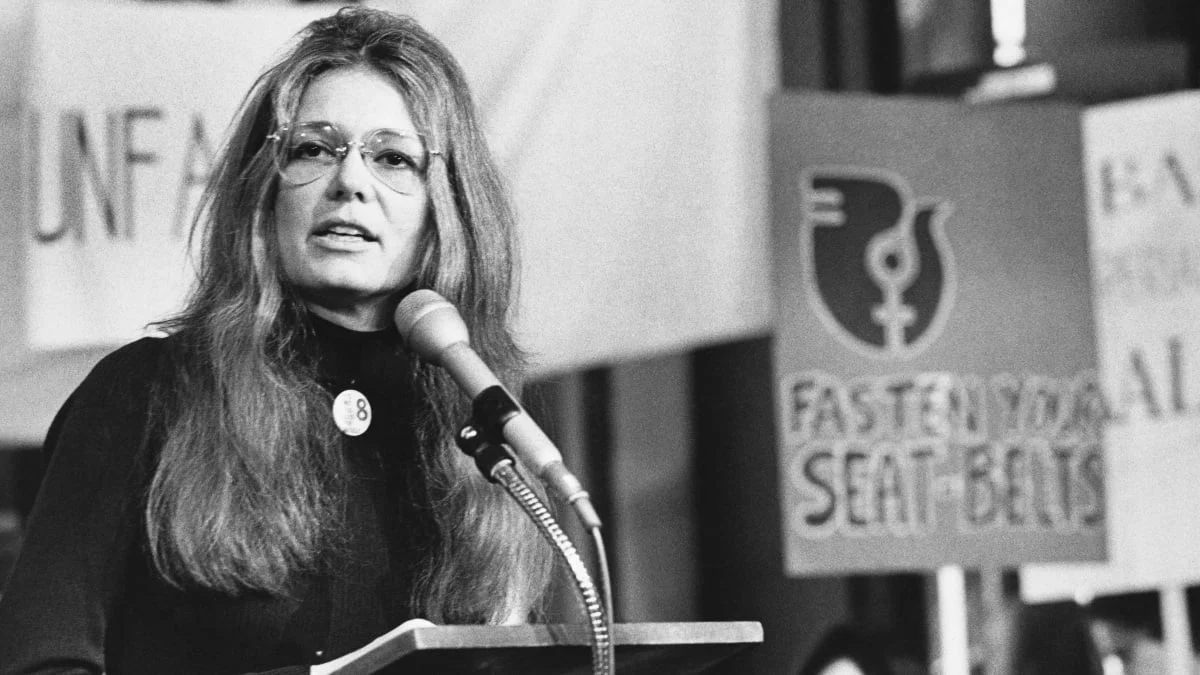
Gloria Steinem, the journalist, activist, and defining face of the American feminist movement, has died at the age of 92. Her passing, announced early Thursday via her official Instagram account, marks the conclusion of a life that spanned nearly a century of radical transformation in gender politics, reproductive rights, and the ongoing struggle for social equality.
Steinem died peacefully at her home in New York City, surrounded by loved ones. While no official cause of death was disclosed, the statement confirming her passing underscored that she remained an active, vital force for progress until the very end.
"Gloria’s near-century on earth were years well-lived," the statement read. "She continued working for equality until the very end. Gloria’s greatest gift was her ability to listen to others, to make others feel seen and heard. Her words, actions, and example gave people permission to be their truest selves."
A Life of Unyielding Advocacy
Born in 1934, Steinem’s journey was defined by a restless curiosity and an unshakeable commitment to structural justice. She emerged onto the national stage in the 1960s, quickly becoming a central figure in what historians categorize as "second-wave feminism."
Her career was never merely about observation; it was about infiltration and revelation. In 1963, she famously went undercover as a Playboy Bunny, a journalistic exposé that stripped away the glamour of the nightlife industry to reveal the systemic exploitation of women. This early work set the stage for a lifetime of challenging patriarchal norms.
In 1972, she co-founded Ms. magazine, a publication that provided a necessary, unfiltered platform for women’s voices, addressing issues that mainstream media largely ignored at the time—including domestic violence, workplace discrimination, and the necessity of reproductive autonomy. Her leadership throughout the 1970s and 80s turned her into a household name and a target for those who sought to maintain the status quo.
In 2013, her legacy of advocacy was formally recognized when President Barack Obama awarded her the Presidential Medal of Freedom, the nation’s highest civilian honor. By that point, she had become more than just an activist; she was an icon whose influence transcended political boundaries.
The "Talking Circles": A Legacy of Connection
One of the most poignant aspects of Steinem’s later years was her commitment to the "Talking Circles"—a tradition she hosted in her own living room. Rather than retreating into private life, she spent her final years fostering intimate, intergenerational dialogue.
These gatherings were not merely social; they were strategic. As she once noted, the tradition was designed to outlive her. Amanda Litman, president of Run For Something, reflected on these sessions, describing the experience of sitting with a woman who had fought for the rights of the past while simultaneously mentoring the activists of the future.
"The two talking circles I went to at her home—the first in August 2024… when we talked about the possibility of electing the first woman president—were experiences I’ll never forget," Litman wrote. These circles represented the core of Steinem’s philosophy: that change is not only about top-down policy, but the power of community-driven, grassroots conversation.
Global Tributes: A Chorus of Voices
The news of her passing triggered an immediate outpouring of grief and gratitude from across the cultural, political, and literary spectrums. The tributes reflect the sheer breadth of her impact, which touched everyone from Hollywood producers to legislative leaders.
Voices from Literature and Media
Writer Roxane Gay captured the sentiment of many, writing, "Gloria was one of a kind. Genuine, generous, curious, thoughtful. She lived a staggering life and her passing is a staggering loss tempered only by the ferocity of her legacy."
TV producer Shonda Rhimes echoed this, noting, "She was fierce and kind and full of grace. What a loss for the world."
Political and Social Leadership
Former Speaker of the House Nancy Pelosi labeled Steinem a "fearless trailblazer" who fundamentally transformed the American political landscape. Similarly, Stacey Abrams highlighted the human side of the icon, noting, "Meeting heroes always risks disappointment, but knowing Gloria was an honor, where her humor and kindness were matched by a relentless belief that we could be better."
International journalist Christiane Amanpour summarized the global scale of her influence, stating, "Gloria Steinem will go down in history as one of the most important activists of all time, leading a movement for the equality of half the world: its women."
A Call to Action
Perhaps most significantly, those who spoke out did not just mourn her—they pledged to continue her work. Comedian Amy Sedaris wrote, "She was our leader. We have to be more like her. Carry her fight."
Sandra Bernhard, reflecting on their conversations, issued a rallying cry for the current political moment: "Let’s honor her life & work & re-dedicate it to reclaiming our reproductive rights!"
The Broader Implications for the Feminist Movement
The loss of Steinem comes at a precarious moment for the movements she helped build. As reproductive rights and gender parity face renewed legislative threats, the absence of her guiding voice is felt acutely. However, her death has also served as a catalyst for a new generation to rediscover her work.
Authors like Tia Levings have urged those who were raised to view Steinem as a polarizing or "evil" figure to look past the rhetoric and engage with the reality of her contributions. Her death is forcing a re-examination of her body of work, reminding a younger generation that the rights they enjoy today were not inevitable—they were fought for, often against immense opposition.
A Final Request: Lighting the Path Forward
In keeping with her belief in communal action, the statement announcing her death provided specific instructions for those wishing to honor her memory.
"Gloria loved the tradition of lighting signal fires on hills to light the way to the other side of the mountain," the statement noted. "Lighting your own candle for Gloria makes you part of this global and celestial community circle."
In lieu of flowers, the family and her estate have requested that supporters donate to Gloria’s Foundation. The foundation, which supports fellowships and social justice projects, remains the primary vehicle for the "Talking Circles" that were so dear to her.
As the world processes the loss of one of the 20th century’s most vital intellects, the overarching message remains one of persistence. Steinem’s life was defined by the belief that the "other side of the mountain"—a world of true equity—was reachable, provided that enough people were willing to hold the torches for one another.
The signal fires she lit are still burning, and as her contemporaries and successors have made clear in their tributes, the responsibility of keeping them bright now rests with a new generation.
For those wishing to contribute to the ongoing efforts of Gloria’s Foundation, donations can be made through their official portal, supporting the preservation of the Talking Circles and the advancement of social justice fellowships.


 Asep Darmawan
 Lina Irawan