Layla Zulfa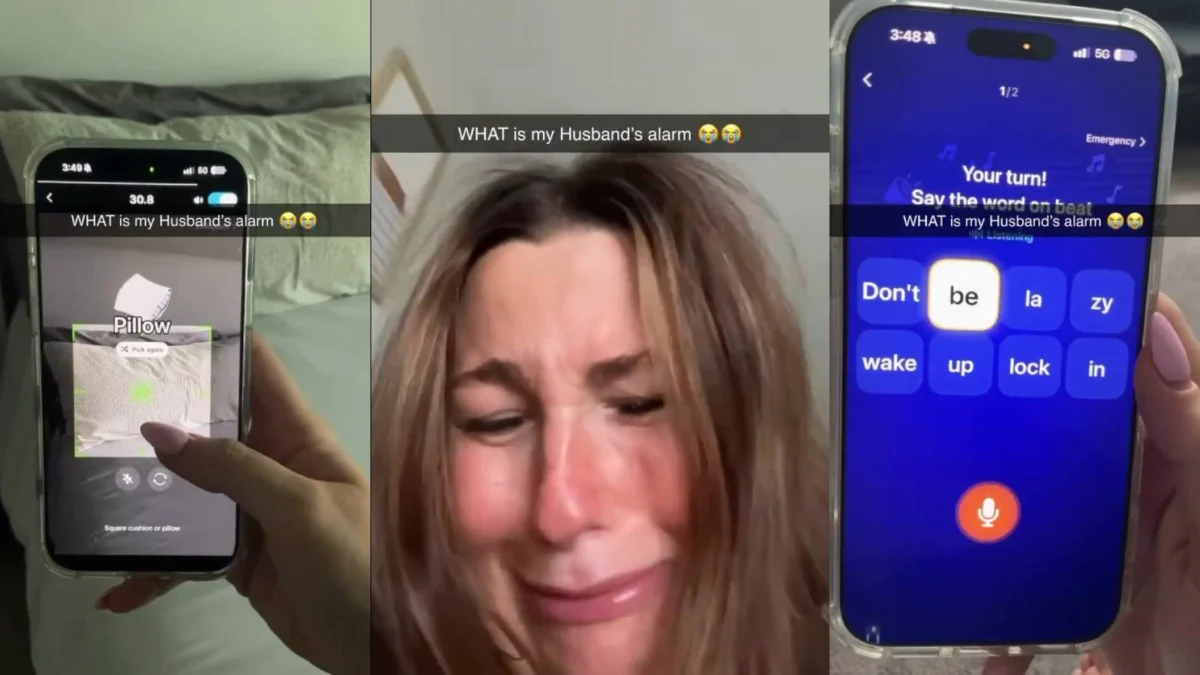
In the quiet hours of the morning, most people rely on the gentle nudge of a smartphone alarm—a brief, dismissible chime that allows for one, maybe two, precious "snooze" sessions. However, for a growing segment of the population, the standard alarm is an invitation to oversleep, leading to a frantic, late-running day. Enter Alarmy, the mobile application that has traded the comfort of the snooze button for the relentless demands of a digital drill sergeant.
Recently, the app has surged back into the public consciousness after entrepreneur Roman Khaves shared a viral video on X (formerly Twitter). The footage showcases a user trapped in a relentless cycle of tasks required to silence a blaring alarm. The reaction online was immediate and visceral, with many viewers labeling the experience "digital torture" rather than a morning routine. Yet, beneath the memes and the horror stories lies a massive, highly engaged user base that swears by this "punishment-based" approach to sleep management.
The Anatomy of the Viral "Wake-Up Mission"
At its core, Alarmy is a masterclass in behavioral psychology applied to user interface design. While a standard alarm asks only for a single tap, Alarmy requires the user to engage their cognitive and physical faculties before the auditory assault ceases.
The app, which boasts over 50 million downloads on the Google Play Store and maintains a staggering 4.6-star rating from over two million reviews, offers a tiered system of "missions." These are not mere suggestions; they are prerequisites for silence.
The Taxonomy of Missions:
- The Intellectual Barrier: Users can set math problems that range from basic arithmetic to complex equations. The logic is simple: you cannot solve a multi-step algebra problem while in a deep state of REM sleep, forcing the brain to boot up its executive functions.
- The Kinetic Challenge: For those who need physical movement, the app utilizes the phone’s gyroscope to demand a specific number of shakes or even forced squats.
- The Spatial Requirement: Perhaps the most effective feature is the "Barcode/QR Code" or "Photo" mission. Users must register a specific object—such as a toothbrush, a kitchen appliance, or a book on a desk in another room—and physically walk to that location to scan or photograph it. By the time the user has left their bed and navigated their home, the battle against the snooze button is largely won.
- The Persistence Check: For the most chronic snoozers, the "Wake Up Check" feature monitors the user after the mission is completed. If the user fails to show signs of movement or activity shortly after the alarm stops, the app triggers a follow-up, ensuring the "post-alarm drift" does not lead back to slumber.
A Chronology of the "Brutal" Awakening
The concept of Alarmy did not emerge overnight. It evolved as a response to the "snooze culture" that has plagued modern office life.
2013-2015: The Early Adoption Phase
Alarmy launched with a simple premise: "Sleep If U Can." Early versions focused primarily on the photo mission, targeting students and professionals who struggled to make it to early morning appointments. The app quickly gained a reputation in productivity circles as a "last resort" for those with severe morning inertia.
2018-2022: Feature Expansion and Optimization
As the app matured, the developers began integrating advanced Android APIs. They introduced the ability to prevent users from force-closing the app or powering down their devices while the alarm is active. By leveraging Android’s Accessibility Service API, Alarmy ensures that the dismissal screen remains the foreground task, effectively "locking" the phone until the mission is complete.
2026: The Social Media Renaissance
The September 2026 update, combined with the viral visibility provided by figures like Roman Khaves, has propelled Alarmy into a new phase of growth. The discourse has shifted from "this is a tool for heavy sleepers" to a broader debate about the ethics of "aggressive" technology. Is this efficiency, or is it a sign of a society so burned out that we require mechanical coercion to function?
Supporting Data: Why It Works
The success of Alarmy is not accidental; it is rooted in the neuroscience of sleep inertia. Sleep inertia is the physiological state of impaired performance and reduced vigilance that occurs immediately after waking up. It can last anywhere from 15 to 60 minutes.
During this period, the prefrontal cortex—the part of the brain responsible for decision-making and impulse control—is effectively offline. This is why we often hit the snooze button without remembering doing so. Alarmy bypasses this by forcing the user to engage the prefrontal cortex through active tasks. By the time the user has walked to the kitchen to photograph a coffee pot, they have bypassed the "fog" of sleep inertia through sheer physical exertion and cognitive engagement.
Data from the Google Play Store reflects this utility:
- Scale: Over 50 million global installations.
- Sentiment: A 4.6-star rating indicates that while the app is "brutal," users perceive the value of being on time as higher than the discomfort of the wake-up process.
- Retention: The high volume of reviews suggests that the app is not merely downloaded once and deleted, but kept as a long-term fixture of the user’s morning lifestyle.
Official Stance and Technical Safeguards
The developers of Alarmy maintain that their goal is not to punish, but to empower. In their communications, they frame the app as a "life-changing" tool for those who have lost jobs or missed critical opportunities due to oversleeping.
Technically, the app is a powerhouse of Android integration. To prevent users from simply deleting the app while groggy, Alarmy provides options to disable the "uninstall" button or the "power off" functionality while an alarm is ringing. This is achieved through sophisticated background service management. While some privacy advocates have raised questions regarding the use of the Accessibility Service API, the developers argue that it is necessary to provide a reliable, "un-snoozeable" experience.
Furthermore, the app’s monetization strategy—free to download with ads and optional premium features—has kept the barrier to entry low. Recent updates in late 2026 have focused on refining the "motivational" aspect, allowing users to type out personalized goals as their alarm task, turning the "punishment" into an affirmation.
The Implications: Is Our Morning Routine Broken?
The viral success of Alarmy raises deeper questions about the intersection of technology and human health. Critics argue that forcing the brain into high-intensity activity seconds after waking is a "brutal" way to start the day. They suggest that if an individual requires an app to prevent them from falling back asleep, the problem may not be the alarm—it may be chronic sleep deprivation or a misalignment with one’s circadian rhythm.
Conversely, supporters argue that in a fast-paced, high-stakes global economy, Alarmy is the ultimate productivity hack. If the choice is between losing one’s job due to chronic tardiness or spending 60 seconds doing squats to turn off an alarm, many will choose the latter without hesitation.
Ethical Considerations
- The "Burnout" Factor: Does a high-stress morning start lead to higher cortisol levels throughout the day?
- Dependency: Does the reliance on an app to "force" wakefulness prevent users from developing healthy natural sleep hygiene?
- Accessibility: For those with physical limitations, are the "squat" or "walk" missions exclusionary? (The app does provide non-physical options, but the marketing emphasizes the most extreme versions.)
Conclusion: A Necessary Evil?
Alarmy represents a unique moment in the evolution of consumer software. It is an application that thrives by being deliberately difficult. It acknowledges that human willpower is a finite resource, especially in the early morning, and replaces it with code that refuses to take "no" for an answer.
Whether one views Alarmy as a sadistic digital alarm or a vital tool for the modern professional, its continued growth is undeniable. As long as the pressure to be productive at 7:00 AM remains, there will be millions willing to endure the "torture" of a math-solving, squat-requiring, barcode-scanning morning alarm. For these users, the true nightmare isn’t the alarm itself—it’s the thought of being late.


 Iffa Jayyana
 Rifan Muazin