Rifan Muazin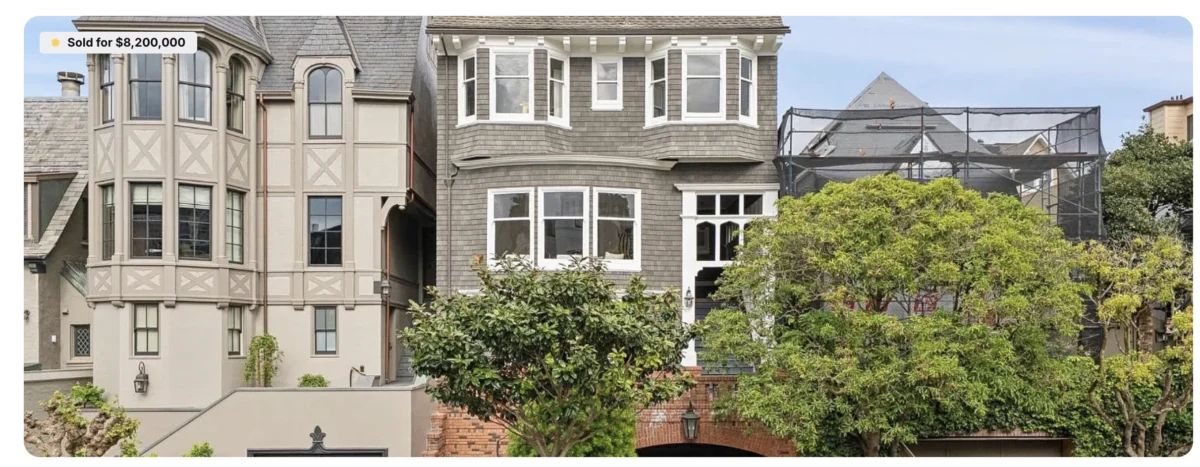
San Francisco’s real estate market has long been the subject of national ridicule, a perennial punchline for its sky-high costs and labyrinthine zoning laws. However, a seismic shift is currently underway that is rendering previous notions of "unaffordable" obsolete. The city’s high-end property sector is currently experiencing a record-shattering surge, driven by a concentrated infusion of liquidity from the artificial intelligence boom.
While the rest of the country watches with a mix of fascination and horror, San Francisco is undergoing a fundamental re-rating of what a luxury home is worth. We are no longer talking about incremental price increases; we are witnessing a complete decoupling of traditional market logic, where homes are selling for nearly double their asking prices within days, signaling that for a growing class of tech elites, the sky is no longer the limit—it is merely the starting point.
The Anatomy of the Frenzy: Recent Record-Breaking Sales
The evidence of this market volatility is best viewed through the lens of recent transactions in the city’s most prestigious enclaves. These sales suggest that supply is severely constrained while the demand from a specific, cash-rich demographic is insatiable.
The Cow Hollow Milestone
In the coveted neighborhood of Cow Hollow, a six-bedroom, 5,700-square-foot residence serves as a stark case study. Listed just two weeks ago with an aggressive asking price of $7.95 million, the property commanded a final sale price of $15 million. To put this in perspective, the sellers purchased the home for $7.8 million in the summer of 2020—a period when the pandemic-induced "urban exodus" supposedly signaled the death of the major coastal city. In under six years, the sellers nearly doubled their investment, a return that defies historical appreciation curves.
The Presidio Heights Paradox
If the Cow Hollow sale was shocking, the activity in Presidio Heights—an even more exclusive enclave—borderlines on the irrational. A 4,100-square-foot home, listed in late April for $4.4 million, traded hands just one week later for $8.2 million. The sale sparked a firestorm of commentary on social media, with industry insiders questioning the value proposition of such properties.
Venture capitalist Nichole Wischoff, who toured the home before its sale, offered a scathing critique of the current market state. "Mediocre house, good location," Wischoff remarked on X, noting that the property’s primary view was of a dilapidated, fire-damaged neighboring structure. "Someone just bought this for $8.2M. If you like to see cash lit on fire, come tour real estate in SF." Wischoff’s commentary highlights a growing sentiment among the city’s professional class: the market has transitioned from a search for value to a desperate scramble for entry.
Beyond the Ultra-Luxury: The Bernal Heights Effect
Perhaps the most telling sign that this is not merely a localized phenomenon for the ultra-wealthy is the activity in more "middle-tier" luxury neighborhoods like Bernal Heights. A 2,300-square-foot home in the neighborhood recently sold for $4 million—a full million dollars over its asking price.
The story behind this sale is particularly instructive: the owners had previously tried and failed to sell the property for $2.95 million just two years ago. The fact that the home eventually sold for $1.05 million more than its previous asking price, and a million over its current listing, suggests that the "frenzy" has permeated the broader market. Across various sectors of the San Francisco housing landscape, buyers are engaging in aggressive bidding wars, effectively resetting the floor for property values citywide.
Supporting Data: A Market in Two Universes
The anecdotes, while startling, are merely the tip of the iceberg. Data provided by Redfin reveals a bifurcated market that effectively operates in two different realities.
In March, luxury home sales in San Francisco surged 22% year-over-year. The velocity of these sales is equally staggering; the median time on market for luxury properties plummeted to just 12 days, down from 28 days during the same period last year. Currently, nearly 65% of all luxury listings are going under contract within a two-week window.
Conversely, the non-luxury sector—homes that do not fall into the top tier of the market—has seen growth of less than 4%, with prices remaining largely stagnant. This confirms that the current "super-cycle" is not a reflection of the general economy or typical housing demand, but rather a direct result of capital concentration among a specific subset of high-net-worth individuals.
The Invisible Engine: The AI Liquidity Wave
What is the catalyst for this sudden surge in purchasing power? The answer lies in the city’s tech economy, specifically the AI sector. San Francisco serves as the global headquarters for the most valuable private companies in the artificial intelligence space.
In recent years, giants like OpenAI and Anthropic have facilitated secondary market transactions, allowing employees to offload portions of their equity. This has injected massive amounts of liquid cash into the hands of a population that is largely rooted in the city and, consequently, looking to deploy that capital into real estate.
When employees at these companies receive windfalls, they aren’t necessarily looking for investment portfolios or diversified assets; they are looking for homes. This influx of liquidity is hitting a housing stock that is historically supply-constrained, creating a textbook economic bottleneck.
The Future: A Tsunami of Unlocked Wealth
If the current market appears overheated, industry observers suggest that the most significant disruption is still on the horizon. A cluster of tech giants—including SpaceX, OpenAI, and Anthropic—have yet to conduct their Initial Public Offerings (IPOs).
Conventional wisdom suggests that these companies will eventually go public, potentially triggering one of the largest wealth-creation events in Silicon Valley history. When these companies list, thousands of employees holding long-vested equity will see their paper wealth converted into liquid capital.
If this happens, the current $15 million sales could look like "opening bids" rather than ceiling prices. The implications for the city’s social fabric are profound. As the barrier to entry for homeownership in San Francisco continues to skyrocket, the city risks becoming a closed ecosystem reserved exclusively for the owners and top-tier employees of the world’s most powerful AI firms.
Implications for the Future of San Francisco
The long-term implications of this market shift are as much sociological as they are economic. San Francisco has spent decades attempting to grapple with its reputation for being inaccessible. However, the current reality suggests that the city is no longer just "expensive"—it is becoming exclusionary in a way that defies traditional urban economic models.
The Erosion of the Middle Tier
As the luxury market pulls away from the rest, the gap between those who can afford to buy and those who are priced out is widening. This limits the city’s demographic diversity, as service workers, educators, and even mid-level professionals find it increasingly impossible to justify the cost of living.
The Urban Punchline
For years, San Francisco was the punchline of every joke regarding housing. Now, that punchline is turning into a cautionary tale. If $15 million becomes the standard for a family home, the city will effectively complete its transformation into a corporate-tech enclave. While this brings massive tax revenues and economic prestige, it also presents significant risks. Should the tech sector face a correction, or should the "AI bubble" show signs of cooling, the city’s over-leveraged real estate market could face a volatile correction.
As we look toward 2026, the question is not whether the market will continue to climb, but how much further it can ascend before it reaches a breaking point. For now, the city’s high-end real estate market remains a testament to the sheer force of the AI gold rush—a phenomenon that has fundamentally rewritten the rules of property ownership in the Bay Area.
Disclaimer: When you purchase through links in our articles, we may earn a small commission. This doesn’t affect our editorial independence.


 Suro Senen
 Nana Wu