

The highly anticipated rollout of Microsoft’s Windows 11 has been met with a mixture of excitement and frustration. While millions of users have transitioned to the new operating system, a subset of the PC enthusiast community—specifically those operating on AMD Ryzen hardware—has discovered that the "upgrade" comes with a significant performance penalty.
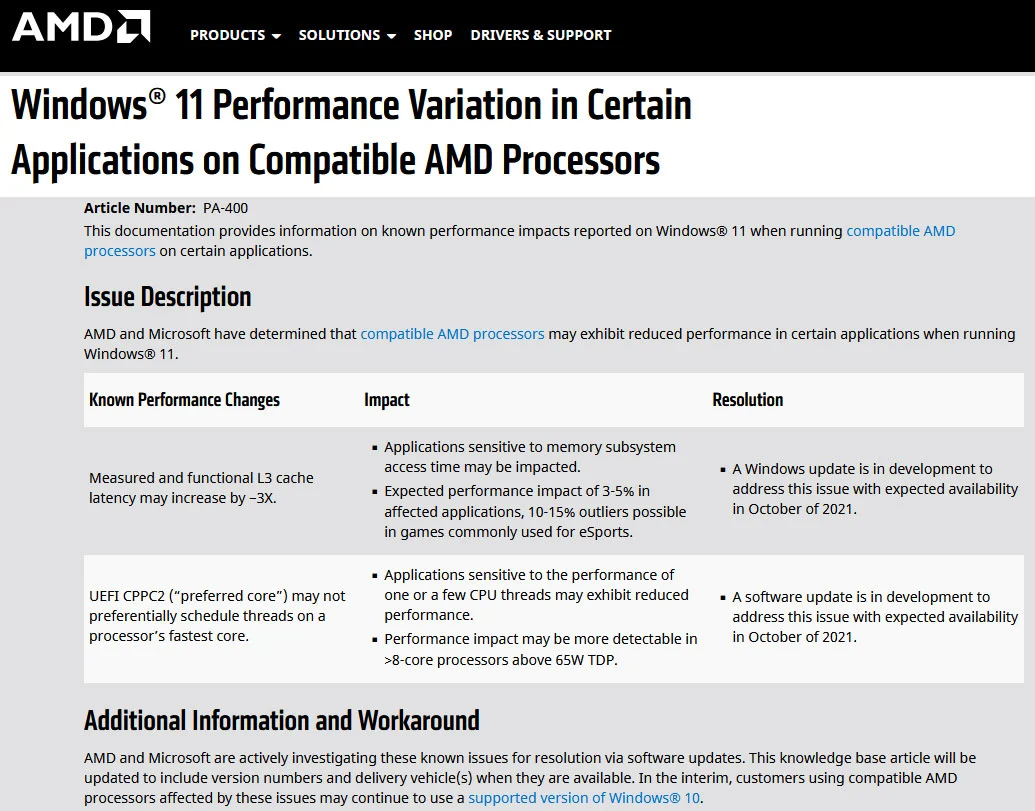
Following reports of system sluggishness and unexpected frame rate drops, AMD has officially confirmed that its processors are experiencing compatibility issues with Windows 11. These technical hurdles, primarily stemming from how the operating system handles L3 cache latency and CPU core scheduling, have prompted a rapid response from both the chipmaker and Microsoft. As users wait for an imminent software patch, the tech community is left to grapple with the implications of an OS launch that, for many, feels prematurely released.
The Core of the Problem: Main Facts
At the heart of the current conflict are two distinct technical anomalies affecting AMD’s architecture within the Windows 11 environment.
The first and most critical issue involves the L3 cache latency. Under normal operating conditions, the L3 cache acts as a high-speed buffer that minimizes the time the CPU spends waiting for data from the system RAM. Following the Windows 11 update, users have reported that this latency effectively triples. Because the L3 cache is essential for data-heavy operations, this increase acts as a bottleneck, forcing the processor to stall while waiting for instructions to clear.
The second issue pertains to AMD’s "preferred core" technology, officially known as UEFI CPPC2 (Collaborative Processor Performance Control). In an ideal environment, the operating system identifies the fastest cores on a processor and assigns the most demanding, single-threaded tasks to them to maximize performance. In Windows 11, this scheduling mechanism is malfunctioning. Instead of prioritizing high-performance cores, the OS is distributing workloads inefficiently, leading to a palpable drop in responsiveness, particularly on high-core-count chips.
A Timeline of the Conflict
The emergence of these issues followed a specific trajectory, beginning shortly after the global availability of Windows 11.
- October 4, 2021: Windows 11 officially begins its staggered global rollout. Within hours, early adopters—particularly competitive gamers and content creators using AMD Ryzen 5000 series processors—begin reporting anomalies on forums such as Reddit and the official Microsoft Feedback Hub.
- October 6, 2021: Anecdotal evidence mounts as independent tech reviewers and performance testers replicate the findings. Synthetic benchmarks, such as those within the AIDA64 suite, confirm a stark increase in memory latency.
- October 7, 2021: AMD acknowledges the issue publicly, publishing a dedicated support document (FAQ PA-400). The company confirms it is working in tandem with Microsoft to develop a resolution.
- October 8–10, 2021: The industry fallout continues as news outlets report that eSports titles are seeing frame rate drops of up to 15%.
- Mid-October 2021 (Current Status): Both AMD and Microsoft have committed to a software-based resolution, slated for release via Windows Update before the end of the month.
Analyzing the Performance Data
To understand the severity of the situation, one must look at the empirical data collected by hardware analysts.
The L3 Cache Impact
The L3 cache latency issue has a disproportionate effect on memory-sensitive applications. According to AMD’s internal testing and corroborating reports from the field, general applications are seeing a performance degradation of approximately 3% to 5%. While this might sound marginal for a word processor or a web browser, it represents a significant regression for high-end workstations.
The impact is far more pronounced in the gaming sector. Competitive eSports titles—games like Counter-Strike: Global Offensive, Valorant, or Dota 2—often rely heavily on CPU instructions and low memory latency to maintain high frame rates. In these specific environments, users have documented performance dips ranging from 10% to 15%. For gamers who have invested in high-refresh-rate monitors (144Hz, 240Hz, or higher), this drop is not just a statistical anomaly; it is a noticeable degradation in fluidity and competitive edge.
The CPPC2 Scheduling Bug
The "preferred core" issue is more difficult to quantify due to its intermittent nature. AMD states that this bug is most likely to affect processors with more than eight cores and a TDP (Thermal Design Power) exceeding 65W.
The logic is simple: the more cores a CPU has, the wider the performance gap between the "fastest" cores and the "standard" cores. When the OS fails to identify the fastest silicon, it inadvertently assigns intensive tasks to slower cores. This results in the system failing to reach its expected boost clocks during burst workloads, leading to a "hit-or-miss" performance profile that leaves users wondering why their expensive hardware feels slower than it did under Windows 10.
Official Responses and Remediation
AMD has been transparent about its collaboration with Microsoft, signaling that the fix will not require user-side hardware modifications.
The Path to Resolution
Crucially, AMD has confirmed that the fix will be delivered via a Windows Update. This is a significant relief for the average consumer, as it implies the resolution will be handled entirely at the software/kernel level. Users will not need to flash their BIOS, update motherboard chipset drivers, or perform clean installs of their operating systems.
"We are aware of the performance variations and are working with Microsoft to resolve this," an AMD spokesperson stated in their technical briefing. "A software update is expected to address these concerns by the end of October."
The "Nuclear Option"
For those who cannot afford to wait, AMD has offered a stark alternative: rolling back to Windows 10. While this is technically effective, it is a drastic step for users who have already migrated their workflows, files, and applications to the new environment. The process of rolling back, while facilitated by Windows’ built-in "Go Back" feature, carries the inherent risks of data corruption or software configuration loss, making it a strategy of last resort.
Implications for the Tech Industry
The Windows 11-AMD debacle raises broader questions about the quality control processes inherent in modern software-hardware integration.
The Cost of Innovation
Windows 11 represents a significant shift in how Microsoft manages threads and background processes. By changing the scheduler to accommodate the hybrid architecture of Intel’s upcoming Alder Lake processors, Microsoft may have inadvertently introduced regressions for the architecture of its long-term partner, AMD. This underscores the complexity of modern operating systems; they are no longer just interfaces, but deeply integrated pieces of firmware that dictate how hardware behaves.
User Trust and the "Early Adopter" Tax
The "early adopter" tax is a known phenomenon, but it is rarely felt as acutely as it is here. Users who upgraded to Windows 11 on the day of its release—expecting improvements in security and UI design—have essentially become unwilling beta testers. This situation highlights the importance of enterprise-grade validation and the necessity of waiting for stability reports before performing major OS upgrades on mission-critical machines.
The Future of OS Optimization
Looking ahead, the collaboration between Microsoft and AMD will serve as a test case for how quickly major entities can patch deep-seated system bugs. The fact that this will be resolved via a simple Windows Update is a testament to the maturation of remote software deployment. However, it also serves as a warning: as silicon architecture becomes more complex, the margin for error in OS scheduling algorithms narrows, leaving less room for the kind of performance regressions we are seeing today.
Conclusion: How to Proceed
For affected users, the guidance remains clear: patience is the most practical solution. The performance degradation, while frustrating, is not catastrophic in terms of system stability. Your hardware is not failing, and your components are not being permanently damaged.
In the coming weeks, users should keep a close eye on the Windows Update menu. Once the patch is deployed, a standard system reboot should restore the expected performance levels. Until then, those who rely on high-performance gaming or memory-intensive rendering should consider temporarily reverting to Windows 10 or limiting their expectations for frame rates and task completion times.
The Windows 11 launch has proven that even the most powerful hardware is only as capable as the software that manages it. As AMD and Microsoft work to bridge this gap, the incident serves as a poignant reminder that in the world of computing, the best performance often comes to those who wait for the dust to settle.









No comments yet. Be the first to join the conversation!