

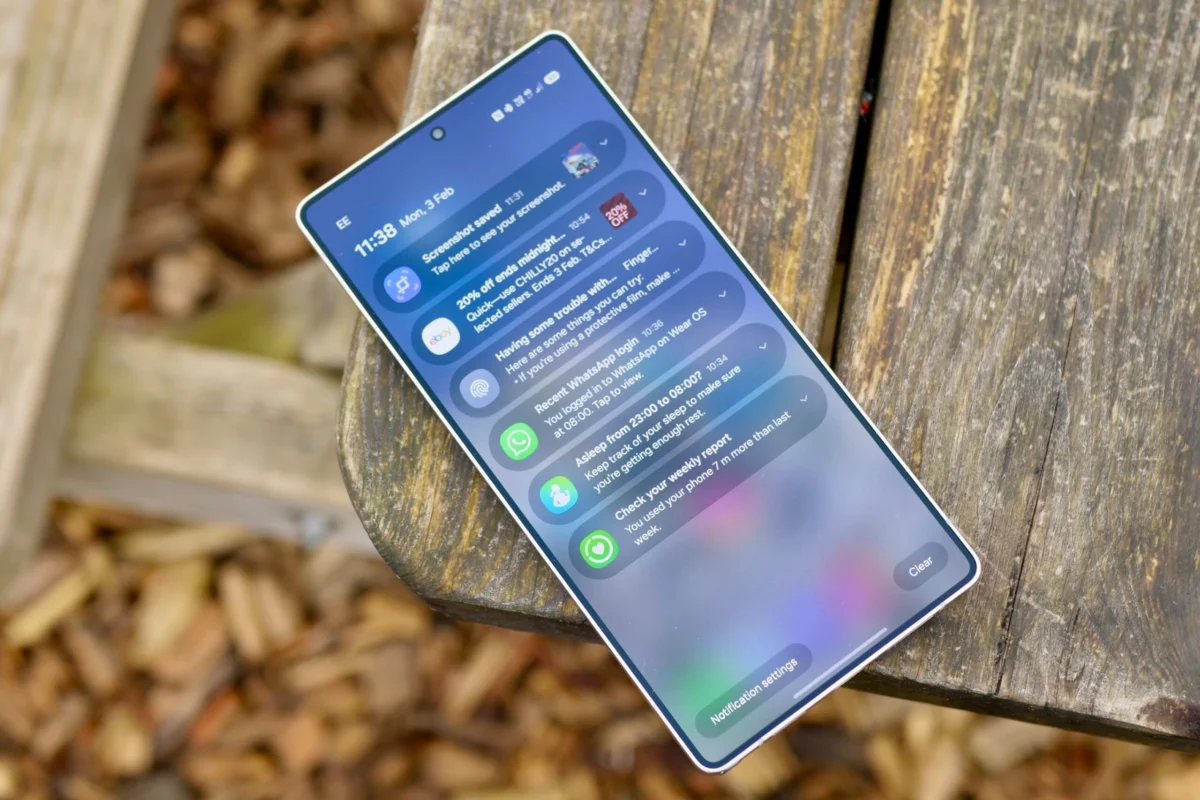
The promise of long-term software support has long been the cornerstone of Samsung’s flagship marketing strategy. With the launch of the Galaxy S25 series, the company boasted an industry-leading commitment to seven years of updates, painting a future where your device would not only remain secure but stay on the cutting edge of innovation. However, as the stable version of One UI 8.5 begins to roll out to Galaxy S25 users—following its debut on the Galaxy S26 earlier this year—that promise is being met with a wave of skepticism and frustration.
For many power users, the update is not the feature-rich upgrade they were promised. Instead, it feels like a deliberate exercise in "feature gating," leaving owners of the still-potent Galaxy S25 series wondering if their seven-year support window will be defined by meaningful progress or mere maintenance patches.
Main Facts: A Case of Missing Pieces
Samsung’s One UI 8.5 update is, by all technical accounts, a substantial release. It introduces legitimate quality-of-life improvements, including an upgraded Photo Assist suite, refined Quick Share capabilities, and the introduction of Audio Broadcast and Storage Share features. Yet, the conversation surrounding the update is entirely dominated by what is absent.

According to community feedback and early adopters who have dissected the build, at least nine major features exclusive to the Galaxy S26 have been withheld from the Galaxy S25. The most prominent of these are "Now Nudge" and the highly anticipated 24MP camera mode.
"Now Nudge" represents the next evolution of Galaxy AI, offering contextual, on-screen assistance that predicts user needs—such as suggesting calendar entries or facilitating seamless contact sharing based on real-time screen data. Meanwhile, the 24MP camera mode, tucked away in the Camera Assistant app, promised a middle ground for users who find the standard 12MP output insufficient but the massive 200MP files too cumbersome. The exclusion of these features is particularly galling because neither appears to require the specialized NPU (Neural Processing Unit) architecture exclusive to the S26’s chipset.
A Chronology of the Disconnect
To understand the frustration, one must look at the timeline of Samsung’s software deployment:

- February 2025: Samsung officially launches the Galaxy S26 series, showcasing One UI 8.5 as the flagship software experience, heavily emphasizing AI-driven efficiency tools.
- March–April 2025: Early testers and enthusiasts on forums like the Samsung Korean Community begin to compare the S26 software against the S25’s beta builds. Questions about feature parity begin to surface.
- May 2025: The stable release of One UI 8.5 begins its global rollout for the Galaxy S25 series.
- Late May 2025: As users install the update, the realization sets in: the vast majority of the "marquee" features highlighted during the S26 launch are missing. The community response is swift and negative, with users compiling lists of missing functionality.
- Present Day: The debate has shifted from "Why are these features missing?" to "Does Samsung’s update policy include feature parity, or are we just receiving basic Android OS patches?"
Supporting Data: What’s Off the Table?
The list of omissions provided by the user community is extensive, suggesting a systematic approach to segmenting the software experience between the S25 and S26 generations. Beyond the headline omissions of Now Nudge and the 24MP camera mode, users have reported the following gaps:
- Notification Highlights: A smart filtering system designed to prioritize essential alerts.
- Fingerprint "Improve Accuracy": A security-focused calibration tool.
- Finder Shortcut: The removal of the dedicated home screen shortcut for the system-wide search tool.
- Browser Ask AI: A specialized AI integration within the Samsung Internet browser.
- My Files Summaries: AI-powered document condensation within the file manager.
- 30x+ Remastering: Advanced computational photography enhancements for long-range zoom shots.
- Horizontal Lock in Super Steady: A video stability feature that keeps the horizon level regardless of device rotation.
Hardware apologists argue that these features rely on the superior NPU performance of the S26. However, the Galaxy S25 is powered by the Snapdragon 8 Elite—a chipset that remains at the top of the performance hierarchy. To the average consumer, the distinction between the S25’s silicon and the S26’s internal architecture is negligible, making the software wall feel entirely arbitrary.
The Question of Feature Gatekeeping
On the Samsung Korean Community forums, the prevailing sentiment is that of "feature gatekeeping." Users are increasingly viewing these omissions as a marketing tactic designed to incentivize upgrades to the S26 rather than a genuine hardware limitation.

This creates a paradox for Samsung: they want to sell their devices on the strength of long-term support, yet they are creating an environment where the "supported" devices feel obsolete within 15 months of release. When a user buys a $1,200 flagship, they expect that device to remain the "best" version of itself for as long as possible. When software updates feel like they are intentionally hollowed out to preserve the value proposition of a newer model, the perceived value of the original purchase diminishes rapidly.
Implications for the "Seven-Year Promise"
The most significant long-term implication of this situation is the erosion of trust regarding Samsung’s update commitments. When Samsung announced its seven-year support policy, it was framed as a counter to the "planned obsolescence" narrative. If that seven-year window only guarantees security patches and minor Android version bumps—without the inclusion of the new software features that define the user experience—the promise loses its luster.
If a Galaxy S25 user finds that they are locked out of AI, camera, and UI improvements by the time they reach year two of their ownership, the "seven-year" figure becomes a hollow number.

Looking Ahead to One UI 9
There is a glimmer of hope among the community that these missing features may eventually migrate to the S25 via the upcoming One UI 9 update. However, history suggests that manufacturers are often hesitant to backport features once a marketing cycle has passed.
Samsung currently faces a critical juncture. They must decide whether to continue the path of segmenting their software based on model year—which may protect their bottom line in the short term by driving S26 sales—or to lean into the promise of their update commitment. If the latter, they would do well to bring the S25 experience closer to the S26, validating the investment of their most loyal customers.
As it stands, the Galaxy S25 owner is left in a state of purgatory: holding a piece of hardware that is technically capable of handling the latest software, yet functionally restricted by a corporate policy that prioritizes the new over the existing. Until Samsung clarifies what the seven-year promise truly entails, the gap between the S25 and S26 will remain a symbol of the growing divide between corporate strategy and user expectation.

For now, users are learning a hard lesson in the mobile industry: a software update is not always an upgrade. Sometimes, it is merely a reminder of what you are missing.












No comments yet. Be the first to join the conversation!