

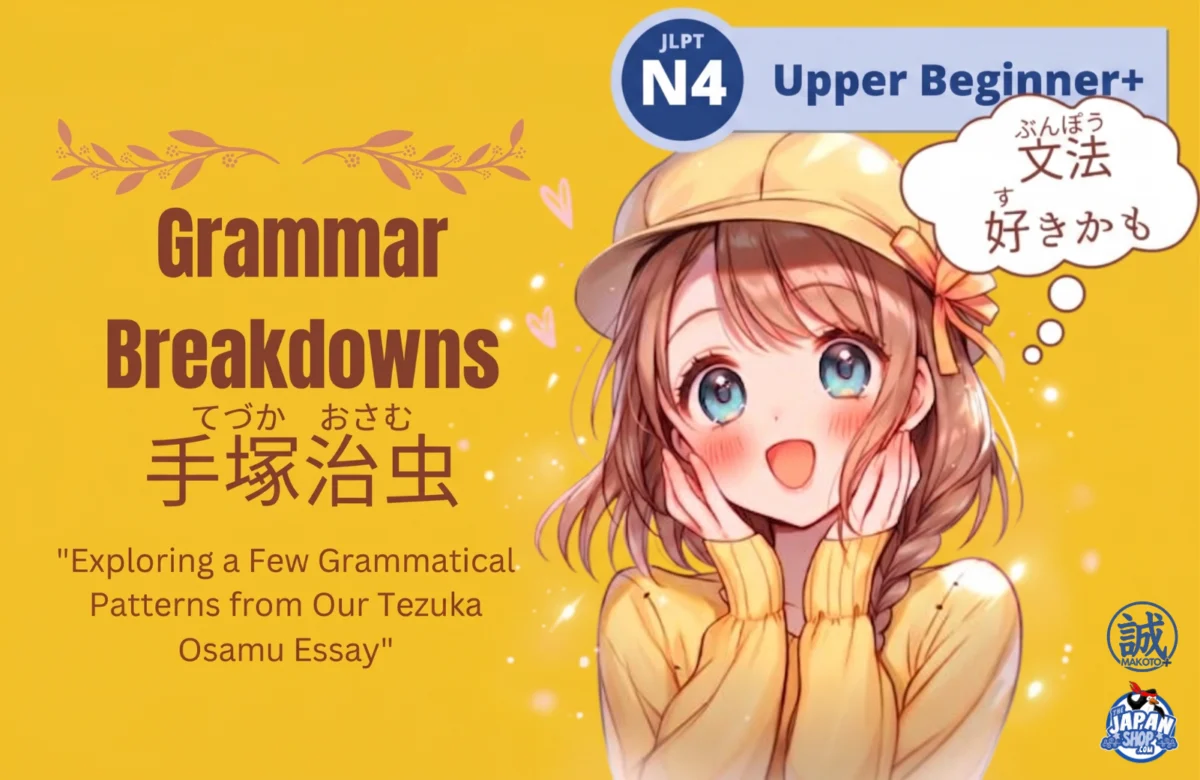
Learning a foreign language is often described as a journey of discovery, but for students of Japanese, the path is frequently cluttered with dense textbooks and abstract exercises. Bridging the gap between rote memorization and true fluency requires context—a narrative anchor that transforms vocabulary and grammar from static data points into living, breathing communication. A new pedagogical resource, the Biographies of Great Japanese Figures digital bundle, aims to do just that by pairing linguistic instruction with the historical narratives of Japan’s most influential minds.
Main Facts: The Intersection of History and Language
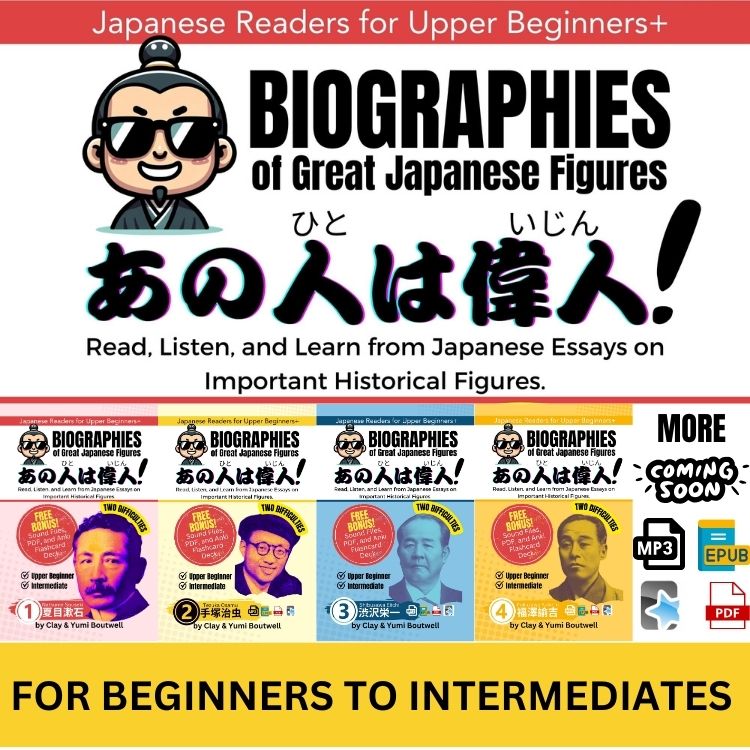
The Biographies of Great Japanese Figures bundle represents a strategic shift in Japanese language education. Rather than relying on isolated sentences, the curriculum utilizes full-scale biographies of luminaries such as Osamu Tezuka—the visionary often hailed as the "godfather of manga."
The core philosophy of this resource is dual-tiered exposure. Each biography is presented in two distinct versions:
- The Beginner Version: Crafted for those at the JLPT N5 and N4 levels, utilizing controlled vocabulary and fundamental grammatical structures.
- The Intermediate Version: Written in natural, idiomatic Japanese designed to challenge and refine the reader’s comprehension.
By analyzing the same historical subject through two linguistic lenses, students are encouraged to bridge the gap between their current proficiency and the next level of fluency. Each section is preceded by a comprehensive breakdown of vocabulary and grammar, ensuring that the learner is not merely reading, but actively deconstructing the mechanics of the language.
Chronology: A Structural Evolution in Study
The transition from a beginner student to an intermediate learner is rarely linear. It is often a process of internalizing patterns through repeated exposure. The curriculum is structured to support this evolution through a systematic introduction of grammatical functions.
The Mechanism of Change: ~ようになっている (To become able to)
A focal point of the curriculum is the construction Verb [plain form] + ようになっている. This specific phrasing captures the nuance of a state that has changed over time—a result of dedication, practice, or environmental adaptation. Whether describing the evolution of a historical figure’s career or a personal habit, the construction is essential for expressing long-term development. By anchoring this grammar point within a biography, the student sees how language describes the trajectory of a person’s life, not just a momentary action.
The Subject of Perception: The Particle が (ga)
Beyond complex verb phrases, the curriculum delves into the granular mechanics of the Japanese particle system. The particle が (ga) is often a point of confusion for English speakers, who frequently conflate it with the topic marker は (wa). The Biographies bundle clarifies this by positioning が as the subject marker, essential for identifying exactly who or what is performing an action or occupying a specific state. Through specific examples—such as expressing a liking for insects—the curriculum demonstrates that が acts as a sharp lens, focusing the listener’s attention on the specific subject of the clause.

Sustained Action: The Compound Verb ~つづける (To continue)
To capture the essence of perseverance, the curriculum introduces the compound verb ~つづける (tsuzukeru). By combining the masu-stem of a verb (such as "to work") with the auxiliary つづける, the learner acquires the ability to describe endurance and consistency. This is particularly poignant in the context of biographies, where the narrative often centers on the relentless drive of figures like Tezuka.
The Medium of Action: The Particle で (de)
Finally, the curriculum addresses the particle で (de), which denotes the means or location of an action. Whether it is a broadcast occurring "on television" or an event taking place in a specific setting, で provides the spatial and instrumental context necessary to ground a narrative in reality.
Supporting Data: Why Biographical Learning Works
Research in Second Language Acquisition (SLA) suggests that "content-based instruction" (CBI) significantly improves retention rates. When language learners are presented with meaningful content—such as historical biographies—the brain is more likely to store linguistic information in long-term memory.
The Biographies bundle utilizes this by providing:
- Contextual Scaffolding: By reading a beginner version of a text, the learner builds a mental framework. When they encounter the same information in an intermediate version, their cognitive load is reduced, allowing them to focus on more complex syntax and nuanced vocabulary.
- Integrated Grammar/Vocab Lists: Rather than flipping between a grammar guide and a reading text, the learner finds the "key" to the text immediately before the content. This minimizes the "search cost" for information, keeping the reader in the "flow state" longer.
- Naturalistic Exposure: By engaging with the intermediate essay, students are exposed to the rhythm and cadence of natural Japanese, preparing them for real-world interactions that textbooks often fail to simulate.
Official Perspectives: The Philosophy of the Authors
The creators of the Biographies of Great Japanese Figures bundle emphasize that their goal is to provide a "rigorous yet accessible" path to fluency. According to the designers, the most common pitfall for language learners is the "intermediate plateau," where progress feels stalled because the material is either too simplistic or impossibly dense.
"By using these biographies as a base, we aren’t just teaching grammar; we are teaching history, culture, and the evolution of a life," say the creators. "When a student understands how a figure like Tezuka ‘came to be’—using the ようになっている structure—they are learning how to narrate their own progress in the language as well."
Implications for Future Study
The success of this pedagogical model implies a potential shift in how language resources are marketed and developed. The reliance on digital bundles allows for a "layered" approach that physical, singular textbooks cannot easily replicate.
Bridging the Proficiency Gap
For the self-taught student, this resource acts as a bridge. The integration of JLPT-focused grammar (N5/N4) within the context of a biography ensures that while the student is learning history, they are simultaneously preparing for standardized examinations. This dual-purpose approach is highly efficient for those who have limited time to study.
Cultural Literacy as a Language Tool
Furthermore, this curriculum addresses a common critique of language learning: the lack of cultural literacy. A student may know the grammar for "I like," but without understanding the figures that shaped Japanese popular culture, their ability to engage in meaningful conversation is limited. By learning about figures like Tezuka, the student gains the vocabulary and the context to engage in deeper, more sophisticated discussions with native speakers.
The Role of Technology in Language Acquisition
The digital nature of the Biographies bundle is also a key factor. By providing downloadable, accessible content, the resource adapts to the modern learner’s lifestyle. Whether on a smartphone during a commute or a desktop during a dedicated study session, the content remains consistent. The use of clear, actionable headings and direct translations ensures that the learner is never lost in the translation process.
Conclusion
The study of Japanese is often viewed as a steep mountain to climb. However, when the ascent is marked by stories of individuals who changed the world, the climb becomes not just a chore, but an intellectual reward. The Biographies of Great Japanese Figures bundle provides a robust framework for this journey. By integrating complex grammatical structures like ようになっている, つづける, and the strategic use of particles like が and で into the lives of historical figures, this resource transforms the abstract into the concrete.
For any student looking to break through the intermediate plateau and achieve a more natural, context-aware command of Japanese, this approach offers a clear, structured, and deeply engaging path forward. The union of historical narrative and linguistic precision is not just a study aid—it is a blueprint for mastery.












No comments yet. Be the first to join the conversation!