

In the landscape of modern role-playing games, few titles have captured the public imagination quite like Disco Elysium, a game that redefined the boundaries of narrative agency and political commentary. Now, a new studio, Longdue Games—comprising several veterans who contributed to that very legacy—is looking to push the genre into uncharted territory. Their upcoming project, Hopetown, has officially moved out of pre-production, signaling a significant escalation in both scope and ambition. With a team that has expanded from a modest trio of part-time visionaries to a robust workforce of nearly 20 full-time developers, the project is rapidly crystallizing into one of the most anticipated indie titles currently in development.
The Setting: Entre and the Weight of Words
Hopetown is set on the island of Entre, a locale designed to serve as a microcosm for complex social, political, and cultural tension. Unlike the high-fantasy realms or sprawling sci-fi universes that dominate the RPG market, Entre is characterized by a grounded, urban atmosphere.
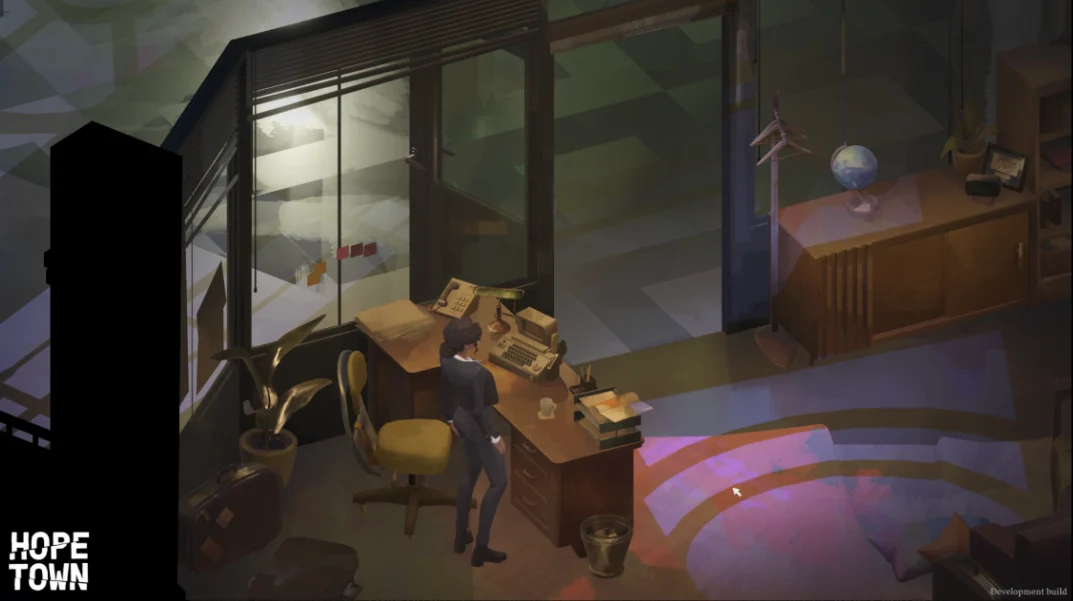
The game’s aesthetic, as revealed in the first official in-game screenshot, leans heavily into a painterly, atmospheric style. The visuals evoke a sense of melancholy and meticulous detail, mirroring the intellectual weight of the game’s primary mechanic: journalism. Players assume the role of a reporter embedded within "The Newshouse," a central newspaper organization that acts as both the player’s place of employment and the primary battlefield for the game’s narrative conflicts.
The Newshouse is more than just a setting; it is a character in its own right. Players must navigate the bureaucratic pressures of the publication, the scrutiny of their superiors—specifically a character known as "The Editor," who oversees and critiques the player’s output—and the volatile social climate of Entre.

Chronology: From Concept to Production
The trajectory of Hopetown represents a deliberate, methodical approach to game design. Initially conceived during a period of pre-production by a small group of creators, the project spent its early months refining its core philosophy: that a game should be about the act of creation itself, rather than just the act of observation.
- The Inception Phase: The team, drawing from their experiences in the industry, focused on building a narrative engine capable of supporting deep, branch-heavy dialogue.
- The Scaling Phase: With the concept solidified, Longdue Games transitioned into a more formal production cycle. The expansion of the team to 20 full-time staff members marks a critical milestone, allowing for the integration of more complex environmental assets and a more reactive world state.
- The Reveal Phase: The recent release of the first in-game screenshot and accompanying concept art of the Newshouse headquarters marks the studio’s shift toward public-facing development. This transition suggests that while a release window has not yet been set, the foundation of the game—the engine, the art style, and the core writing systems—is now firmly in place.
The Mechanics of Journalism: A New RPG Paradigm
What sets Hopetown apart from its peers is its rejection of the "hero-protagonist" archetype. In most RPGs, players influence the world through combat, magic, or social charm. In Hopetown, the primary weapon is the pen.
The Editorial System
The game’s core loop revolves around the articles the player writes. These are not merely flavor text or passive quest requirements; they are active instruments of change. When the player files a report on a political development or a social controversy in Entre, the content, tone, and angle of that article ripple outward into the game world.
- World-Altering Consequences: A biased report might trigger civil unrest or change the public’s perception of a key faction. Conversely, a deeply investigative piece might expose corruption, forcing the game’s antagonists to shift their strategies.
- Relationship Management: The Editor is not merely a gatekeeper; they represent the professional constraints the player must work within. Navigating this relationship is essential, as the player’s job security, access to information, and personal safety depend on their ability to manage the expectations of their superiors while maintaining their own journalistic integrity.
Roleplaying as a Writer
Longdue Games has explicitly stated that Hopetown is focused on the experience of "roleplaying as a writer." This means that players must grapple with the moral dilemmas inherent in the trade: the pressure to meet deadlines, the ethical implications of publishing sensitive information, and the personal cost of being a truth-seeker in a society that may prefer silence. The dialogue systems are designed to reflect the nuance of human interaction, where the choices made in a conversation can be just as impactful as the headlines eventually printed in the Newshouse.

Supporting Data: Why the Industry is Watching
The interest in Hopetown is not purely speculative. The "Disco Elysium" pedigree of the developers brings with it a specific set of expectations regarding writing quality, philosophical depth, and art direction.
In the current industry climate, where "prestige" indie games are increasingly bridging the gap between art and interactive entertainment, Hopetown occupies a unique space. By focusing on a professional role—the journalist—the game taps into a zeitgeist of media literacy and the importance of objective, or perhaps subjective, truth.
Furthermore, the growth of the studio from three to 20 full-time members indicates a healthy, sustainable development cycle. It suggests that the team has secured the necessary resources to flesh out the island of Entre with the density required to make the player’s choices feel meaningful. A world that reacts dynamically to the player’s written work requires a level of reactive programming that is difficult to achieve, but the team’s commitment to this specific vision is a positive sign for the project’s quality.
Implications: A Shift in Narrative RPGs
The implications of Hopetown succeeding could be profound for the future of the genre. If the studio proves that a narrative RPG can thrive by focusing on the mechanics of writing and political observation rather than traditional combat or skill-tree progression, it could pave the way for a new sub-genre of "professional simulation" RPGs.

This approach shifts the burden of gameplay from "reflexes" to "critical thinking." Players are not tested on how fast they can click, but on how effectively they can synthesize information, analyze their environment, and decide which truths are worth telling. In an age where digital misinformation is a global concern, a game that gamifies the responsibilities and hazards of journalism feels particularly timely.
Official Outlook and Future Developments
While Longdue Games has remained tight-lipped regarding a concrete release date, the game is currently confirmed for PC and is available for wishlisting on Steam. The studio has indicated that they intend to maintain a transparent development process, with future updates likely to focus on the various districts of Entre and the specific societal conflicts that will define the player’s experience.
For fans of narrative-heavy titles, the release of the latest screenshots serves as a promising indicator. The attention to detail in the architecture, the specific character designs of the editorial team, and the commitment to a grounded, realistic, yet deeply stylized vision suggest that Hopetown is a project with a clear sense of identity.
As the team at Longdue Games continues to build out the streets, scandals, and stories of Entre, one thing remains clear: Hopetown is positioning itself to be a significant addition to the RPG canon. Whether the player chooses to be a crusading journalist, a careful chronicler of history, or a compromised cog in the machine, the power to define the narrative of the island rests squarely on their shoulders.

For those interested in following the development, the Steam wishlist is currently the best way to stay informed as the studio nears the next phase of its production schedule. The island of Entre is waiting, and its story is yet to be written—by you.










No comments yet. Be the first to join the conversation!