Asro
Asro
In the contemporary digital landscape, a corporate blog is no longer a "nice-to-have" add-on; it is the cornerstone of brand authority, SEO performance, and audience trust. However, the golden age of "publish and they will come" has long since passed. As search engine algorithms evolve and generative AI floods the internet with high-velocity content, marketers are finding that their traditional blogging playbooks are yielding diminishing returns.
To navigate this shifting terrain, industry leaders turn to the annual benchmark research conducted by Orbit Media. Their 11th Annual Blogger Survey, a definitive resource for content practitioners, offers a sobering yet optimistic look at the state of blogging. By analyzing the habits and outcomes of over 1,000 professional bloggers, the report provides a roadmap for those looking to pivot from quantity-based content to high-impact strategy.
The Reality of Time: The "Four-Hour" Threshold
One of the most persistent questions in the marketing community involves the impact of generative AI on productivity. With tools capable of drafting articles in seconds, one might expect a dramatic reduction in the time spent on content creation. Yet, the data suggests otherwise.

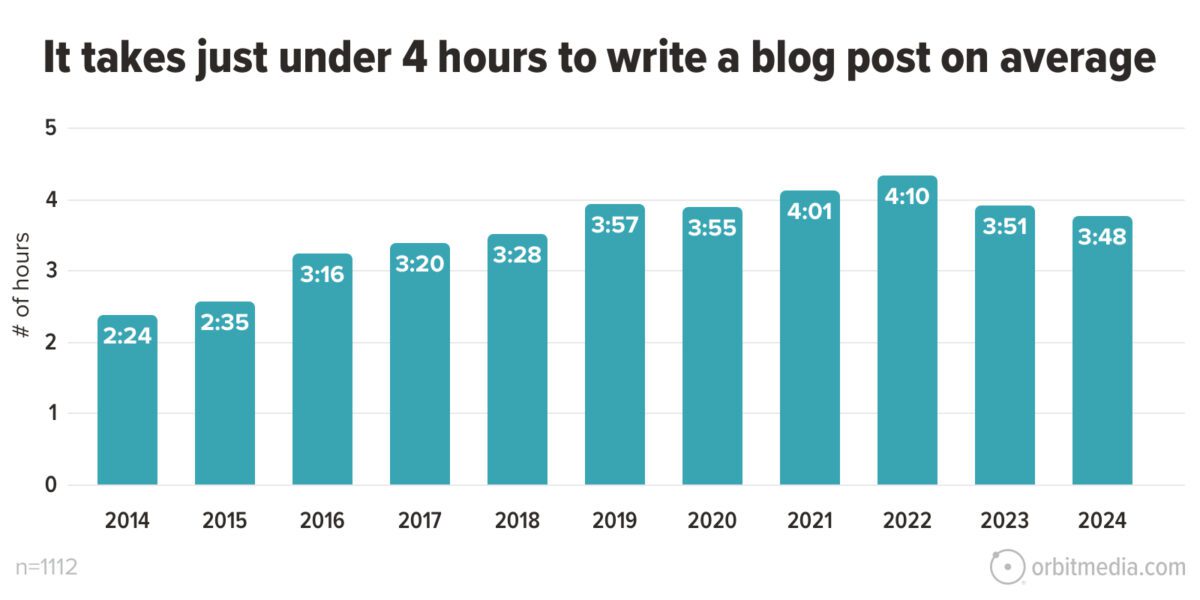
According to the latest survey, the average blog post now takes three hours and 48 minutes to write. This figure is a mere three minutes less than the previous year, highlighting a crucial reality: while AI can assist in brainstorming and drafting, it cannot replace the strategic, human-centric effort required to produce high-quality, authoritative content that actually performs.
The correlation between time investment and results remains stark. Bloggers who consistently spend four or more hours on a single post and produce long-form content (2,000+ words) are significantly more likely to report "strong results." In short, the "shortcut" offered by AI is not a substitute for the depth and nuance that audiences demand.
Strategic Cadence and the "Social Feed" Mentality
If quality is the driver of performance, where does that leave frequency? The data suggests that bi-weekly posting is the minimum threshold for maintaining strong performance. However, frequency must be balanced with the expectation of a "feed-like" experience.
Top-performing blogs are increasingly treating their content feeds with the same rigor as social media platforms. Social networks have invested billions in user experience (UX) and engagement metrics; savvy content marketers are now adopting these same principles—prioritizing readability, visual flow, and clear, actionable value. When a blog functions like a well-curated social feed, it transforms from a passive repository of articles into an active, community-building engine.
The AI Paradox: Adoption vs. Effectiveness
Perhaps the most surprising finding in the 11th annual report is the decoupling of AI usage and performance. While adoption has surged from near-zero in 2022 to 80% in 2024, there is no direct, statistically significant correlation between heavy AI usage and improved marketing outcomes.
The reason is simple: AI creates content, but it does not create a strategy. It lacks the brand-specific insights, expert validation, and creative "spark" that differentiate a thought-leadership piece from generic, machine-generated noise. For content leaders, the implication is clear: use AI to clear the "blank page" hurdle, but invest the bulk of your resources in human editing, strategic direction, and subject matter expertise.

Expert Q&A: Insights from Andy Crestodina
To peel back the layers of this research, we spoke with Andy Crestodina, CMO and co-founder of Orbit Media, to discuss the implications for real-world marketing programs.
Q: What research findings were the most surprising to you personally?
Andy Crestodina: "The data is telling us, year after year, that big efforts drive big outcomes. It’s not necessarily surprising that effort pays off, but the side-by-side comparison between low-effort and high-effort programs is stark. What is surprising is how many brands persist with the same low-effort, low-cadence models—no original research, no collaboration, no multimedia—and still expect different results. If you aren’t putting in the work, you should expect low returns."
Q: Podcasters seem to be reporting the strongest results. Why is that?
Andy Crestodina: "It’s about the ecosystem. While the sample size for podcasters is smaller, they consistently show higher performance because they are inherently doing things differently. They aren’t just typing at a keyboard; they are collaborating with guests, leveraging audio, and building deeper relationships. The ‘record button’ is a forcing function for networking and expert interaction, which naturally elevates the quality of the entire content program."

Q: Traffic is down across the board. How should we measure success?
Andy Crestodina: "Traffic is the most visible metric, but it is often the least important. We have to stop obsessing over vanity metrics. The true value of content lies in the outcomes that are harder to measure: word-of-mouth, top-of-mind awareness, and bottom-of-funnel conversion. When traffic from search is declining—which it is for almost everyone—you must lean into direct engagement. This is why I am currently advocating for LinkedIn newsletters. You have to go where the audience is, even if it means building on ‘rented land.’"
The Shift in Measurement: From Traffic to Impact
The traditional reliance on traffic as the sole indicator of success is becoming a liability. As search engine results pages (SERPs) become increasingly dominated by "zero-click" searches and AI-generated summaries, the volume of organic traffic is naturally declining.
Content leaders must shift their focus to metrics that truly move the needle:

- Conversion Rates: How many readers move from a blog post to a lead magnet or demo request?
- Lead Quality: Is the content attracting the right prospects, rather than just the highest number of eyeballs?
- Content Repurposing Value: Can this one asset be transformed into five social posts, a video snippet, and an email newsletter segment?
- Brand Sentiment: Is the content reinforcing the brand’s authority in the marketplace?
As Crestodina notes, "The most important outcomes of marketing are often the hardest to measure: word-of-mouth and top-of-mind status."
Recommendations for the Year Ahead
For organizations looking to realign their strategy for 2025, the path forward is built on three pillars:
- Prioritize "Deep" Content: Dedicate more time to original research, data-backed reports, and expert interviews. These assets are difficult to replicate via AI and carry significantly more authority.
- Diversify Distribution: Do not rely solely on your website. Platforms like LinkedIn are prioritizing long-form newsletters. If your audience is there, your content should be there, too.
- Human-in-the-Loop AI: Use AI to optimize your workflow, but maintain a high bar for human oversight. Ensure every piece of content undergoes a rigorous review for brand voice, accuracy, and unique insights.
Conclusion: Quality is the Only Sustainable Strategy
The 11th Annual Blogger Survey serves as a necessary correction for the marketing industry. It confirms that while the tools of the trade have changed, the fundamentals of successful communication have not. Success in blogging requires a commitment to depth, a willingness to engage in original research, and the courage to stop chasing vanity traffic metrics.

In an era of content abundance, the brands that thrive will be those that treat their blogs not as a chore to be completed, but as a strategic asset to be nurtured. The data is clear: the path to success isn’t hidden in a new algorithm or a faster AI prompt. It is hidden in the work. By doubling down on quality and focusing on high-value outcomes, content marketers can cut through the noise and build a library of content that serves their audience—and their bottom line—for years to come.


 Nana Wu
 Nana
Nana