


In a monumental shift for the gaming industry, Pearl Abyss—the South Korean powerhouse behind the global hit Crimson Desert—has announced the sale of CCP Games, the visionary studio behind the legendary sci-fi MMORPG Eve Online, back to its original management team. The move marks the end of an eight-year era of corporate ownership, signaling a return to autonomy for one of the most storied developers in the industry.
The transaction, valued at approximately $120 million, sees CCP Games CEO Hilmar Veigar Pétursson reclaiming ownership of the company. This divestment comes at a time of shifting priorities for Pearl Abyss, which has seen its own fortunes soar following the explosive success of its recent title, Crimson Desert.
The Anatomy of the Deal: A Significant Valuation Gap
The financial details of the deal underscore a significant recalibration in how the industry values legacy MMO developers. Pearl Abyss initially acquired CCP Games in 2018 for a total package worth $425 million—comprised of $225 million in upfront cash and an additional $200 million tied to performance-based milestones.
The current sale price of $120 million—consisting of $100 million in cash and $20 million in "token acquisition rights"—represents a stark decrease from the original acquisition valuation. Industry analysts suggest that the inclusion of the $20 million in "tokens" likely pertains to the studio’s ongoing blockchain-integrated project, Eve Frontier. Having secured $40 million in 2023 from venture capital firms like Andreessen Horowitz to fuel this venture, CCP’s pivot toward decentralized gaming appears to be a core component of its future financial roadmap, one that Pearl Abyss was seemingly less interested in holding long-term.
Chronology: From Acquisition to Rebranding
To understand the weight of this decision, one must look back at the arc of the relationship between the two companies.
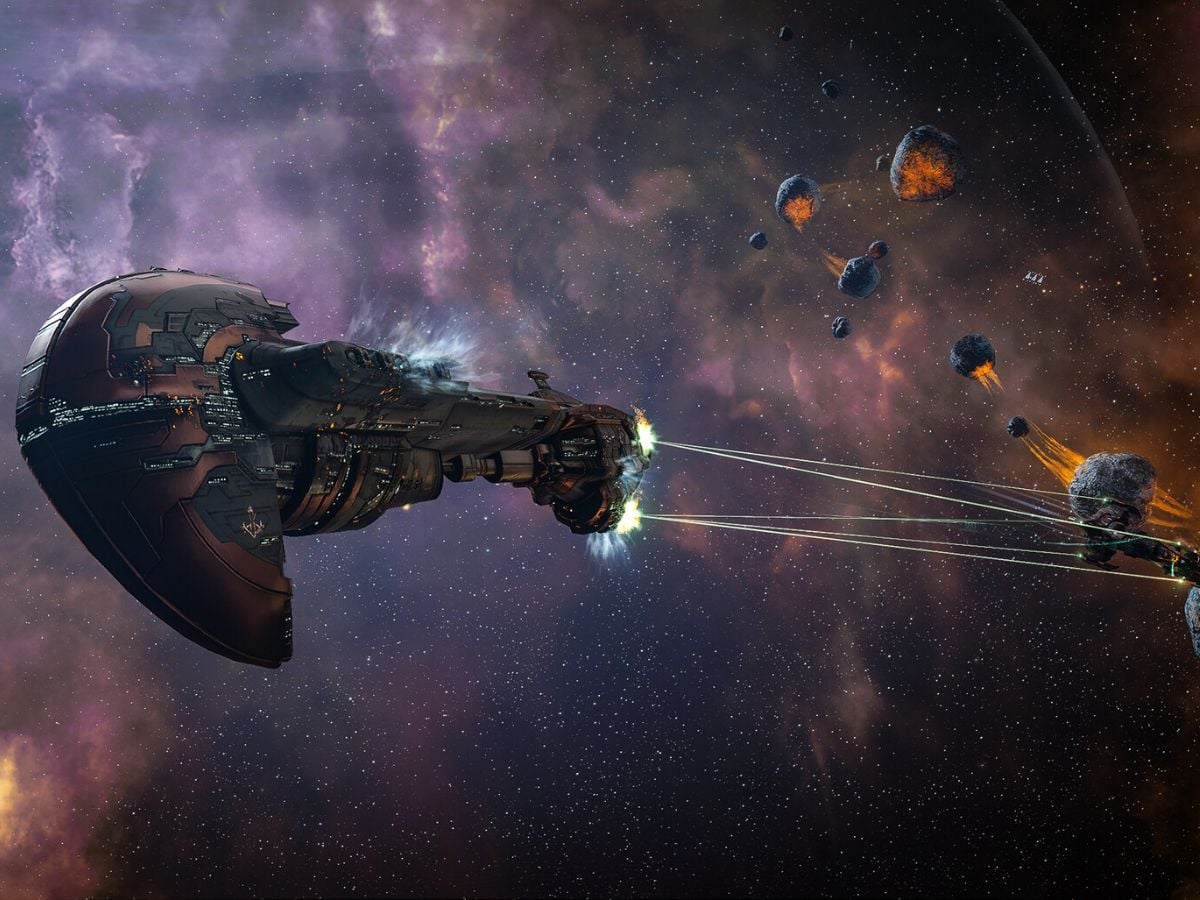
- 2018: Pearl Abyss acquires CCP Games for $425 million, aiming to bolster its portfolio with the deep, player-driven narrative mechanics of the Eve universe.
- 2019–2022: The companies operate under a collaborative framework, with CCP Games continuing to iterate on Eve Online while exploring new technologies.
- 2023: CCP Games secures $40 million in external funding for Eve Frontier, signaling a shift toward Web3 and blockchain-integrated survival mechanics.
- 2025: Crimson Desert achieves massive commercial success, selling over 5 million copies, which fundamentally alters Pearl Abyss’s internal resource allocation.
- May 2026: On the 23rd anniversary of Eve Online, the companies announce the management buyout. CCP Games announces its rebranding to "Fenris Creations," marking its transition back to an independent entity.
Strategic Realignment: Why Pearl Abyss Let Go
The decision to sell was not sudden, but rather the result of a rigorous internal review. Pearl Abyss representatives, speaking to the Korean outlet Inven Global, characterized the sale as an "objective" decision. The company noted that after exploring various mid-to-long-term growth strategies, the leadership concluded that separating the two entities was the most prudent path forward for both parties.
"While the acquisition was a sound strategic decision at the time to secure global IP and diversify our portfolio," the spokesperson stated, "the global gaming business environment and our company’s strategic priorities have shifted significantly since then."
For Pearl Abyss, the success of Crimson Desert has effectively shifted the company’s focus toward its own proprietary engine and internal development cycles. With Crimson Desert moving units at a rate that has redefined the company’s revenue streams—supplemented by the enduring, if aging, success of Black Desert—the necessity of holding onto an independent subsidiary like CCP has diminished.
CCP Games Reborn: The "Fenris Creations" Era
As part of the finalization of the sale, the developer formerly known as CCP Games has officially rebranded as "Fenris Creations." The name, deeply rooted in Norse mythology, serves as a symbolic bridge between the studio’s Icelandic heritage and its future as an independent entity.
In a statement released via the official Eve Online social media channels, the team emphasized that the change is one of "ownership and governance only." For the millions of "Capsuleers" populating the New Eden cluster, the transition is intended to be seamless. Development plans for Eve Online, including upcoming expansions and community initiatives, remain unaffected.
"We enter this new chapter with gratitude to Pearl Abyss for their partnership and support since 2018," the statement read, "and with respect for what this chapter helped make possible."
Implications for the Industry
The return of CCP Games to independence carries significant implications for the broader gaming market.
1. The Decentralized Future
By retaining "token acquisition rights" and moving forward with Eve Frontier, Fenris Creations is doubling down on the premise that blockchain and player-driven economies are the future of the genre. The studio’s ability to secure venture capital independently suggests that investors still have high confidence in their ability to manage complex, persistent-world economies.
2. The Limits of M&A
The sale serves as a cautionary tale regarding the "synergy" promised by massive studio acquisitions. When the parent company’s core business experiences a transformative hit—as seen with Crimson Desert—secondary acquisitions can quickly become baggage. Pearl Abyss’s willingness to sell at a lower valuation indicates a preference for agility and focus over the maintenance of a sprawling, multi-studio conglomerate.
3. The Resilience of Niche MMOs
Eve Online continues to command a fiercely loyal player base, with reports indicating that it historically contributed a third of Pearl Abyss’s total revenue. The fact that management felt comfortable enough to buy the studio back suggests that the revenue model of the game is not only stable but sufficiently robust to sustain a standalone, mid-to-large-tier development studio.

Conclusion: A New Horizon
As the dust settles on this $120 million transaction, both companies appear to have found a path that suits their current needs. Pearl Abyss is leaner, focused on the runaway success of its new flagship, while Fenris Creations is once again the master of its own destiny.
For the gaming industry, the story of this divestment is a reminder that the lifecycle of a developer is rarely a straight line. Whether under the banner of a massive Korean publisher or standing on its own as a boutique studio, the team behind Eve Online has proven one thing consistently over the last 23 years: they are exceptionally skilled at surviving, adapting, and—most importantly—creating worlds that endure. As Fenris Creations steps into the future, the eyes of the MMO community remain fixed on the stars of New Eden.










No comments yet. Be the first to join the conversation!