

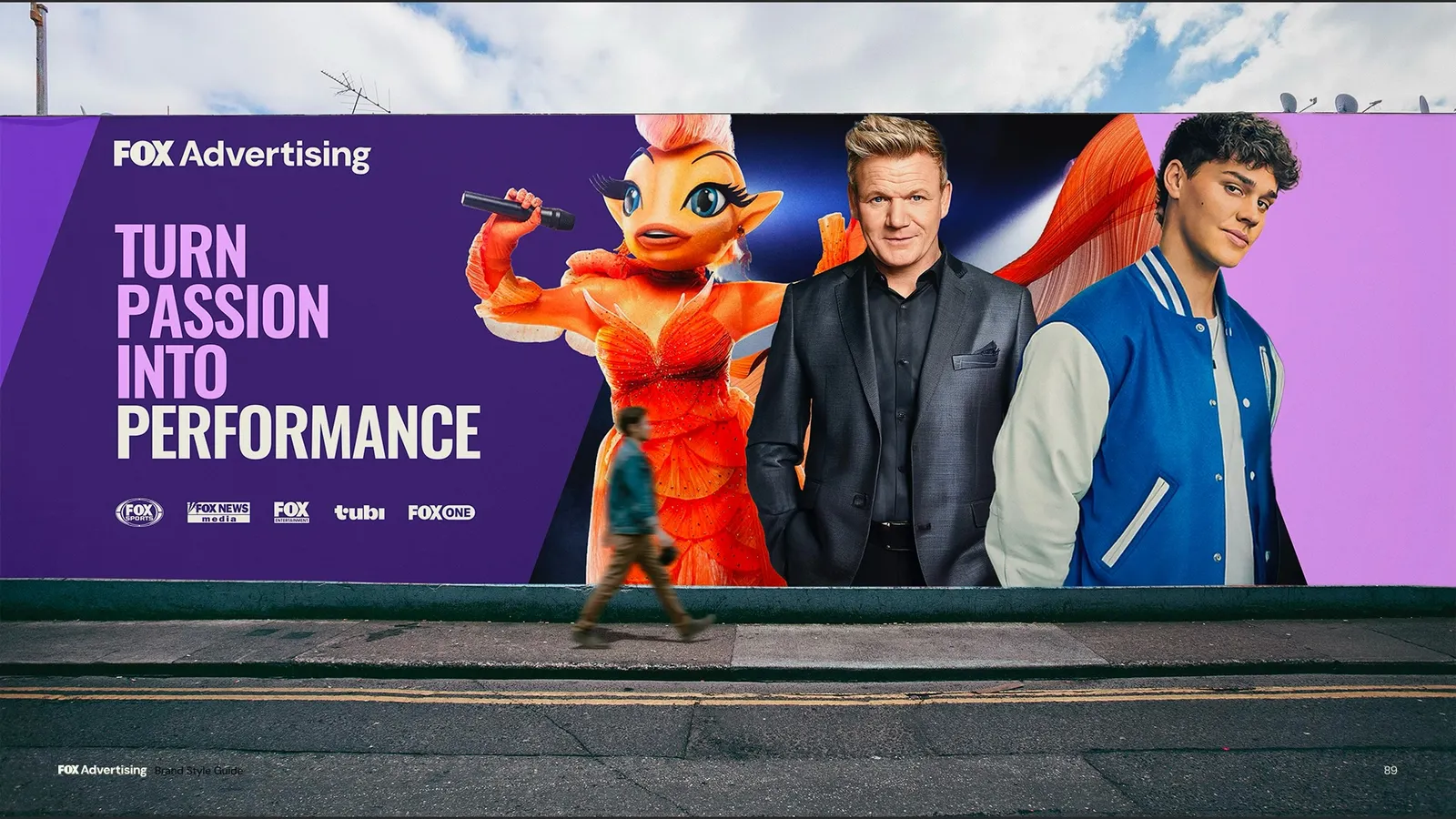
In a strategic maneuver designed to sharpen its competitive edge within a volatile and increasingly fragmented media landscape, Fox Advertising has officially launched a new, unified brand platform and visual identity. The initiative seeks to coalesce the company’s diverse portfolio—encompassing Fox Sports, Fox News, Fox Entertainment, Tubi, and the streaming platform Fox One—under a singular, cohesive narrative. Anchored by the new tagline, "Turn Passion into Performance," the move represents a departure from siloed marketing, aiming to present a streamlined, high-impact value proposition to advertisers ahead of the critical May 11 upfront presentations.
Main Facts: A Unified Strategic Vision
The rebranding effort, executed in collaboration with the creative agency Sibling Rivalry, marks a pivotal moment for Fox Advertising. By integrating its distinct verticals under a single umbrella, the company is attempting to articulate the unique synergy between its highly engaged audiences and the tangible outcomes it provides to brand partners.
At the core of this transition is the realization that while Fox’s individual brands are titans in their respective categories, the overarching "Fox Advertising" brand lacked a commensurate level of narrative strength. The new platform is designed to rectify this by emphasizing the "premium and contemporary" nature of the network’s ecosystem, utilizing a visual language that prioritizes emotion, movement, and energy over cold, technical data points.
This repositioning is not merely cosmetic. It will serve as the foundational bedrock for Fox’s upcoming upfronts, permeating every facet of its B2B outreach, including trade marketing, sales materials, digital channels, and direct client communications.
Chronology: Building the Modern Fox
To understand the necessity of this rebrand, one must look at the evolution of Fox following its major corporate restructuring in 2019. After Disney’s acquisition of 21st Century Fox, the "new" Fox was built with a leaner, more focused objective: to dominate in live content, sports, and news.
- 2019: The formation of the independent Fox Corporation establishes a streamlined media company, deliberately positioning itself away from the bloated models of its legacy competitors.
- 2023–2024: Fox Advertising leadership, including the appointment of Puja Vohra as CMO and EVP of Advertising Sales, begins identifying a disconnect between the company’s market-leading performance and its portfolio-level messaging.
- Late 2024–Early 2025: Fox initiates a creative partnership with Sibling Rivalry to audit the brand’s identity, moving away from technical jargon and toward a philosophy centered on audience engagement.
- Q3 2025: Tubi achieves its first quarter of profitability, providing further momentum for the brand’s streaming-forward narrative.
- May 2025: The official rollout of the new identity precedes the crucial May 11 upfront presentations, setting the stage for a new era of advertiser engagement.
Supporting Data: Why the "Lean" Model Wins
Fox’s argument for this rebranding is backed by significant performance metrics that demonstrate its resilience in a crowded market. Unlike many of its competitors who are struggling to pivot legacy models toward streaming, Fox maintains that its structure was built with these modern requirements in mind from the start.
Market Dominance by the Numbers
- Fox News: Continues to operate with the force of a broadcast network, currently commanding a staggering 46% share of all news impressions.
- Fox Sports: A perennial powerhouse, the network has held the number one spot in live sports viewership for six of the last seven years. With the FIFA World Cup 2026 on the horizon, its sports-heavy portfolio remains a primary driver of advertiser interest.
- Tubi: The streaming platform has crossed the threshold of 100 million active users, cementing itself as a critical pillar of the Fox portfolio and proving that ad-supported streaming (FAST) is not just a trend, but a profitable, scalable business model.
Puja Vohra emphasizes that these numbers are the result of strategic discipline. "There’s not a lot of waste," Vohra noted. "We don’t have the bulk and the bloat of many of our media competitors. The company has made several strategic choices over the years that have made us this lean, mean fighting machine."
Official Responses: Crafting the Narrative
The philosophy behind the rebrand, according to the leadership at Fox and Sibling Rivalry, is rooted in the "passionate" nature of the consumer.
Puja Vohra, CMO and EVP of Advertising Sales
Vohra, who brought experience from Paramount, NBCUniversal, and Warner Media to her role at Fox, views the current media landscape as a validation of Fox’s early strategic choices. "Fox was built with [live sports and streaming] from the ground up. That is not news to us. It’s not the flavor of the month. Fox has always deliberately built the portfolio around putting the needs of the advertiser first."
Regarding the challenge of aligning disparate brands, Vohra stated: "The cohesive narrative that brings all of these under one umbrella [was] probably not at the same level as the strength of our brands. One really important goal has been how we show up in the marketplace against our competitive set when we talk about ourselves as a portfolio."
Bo Bishop, Executive Director for Creative Strategy at Sibling Rivalry
For the agency tasked with the redesign, the mandate was to avoid "safe" or "milquetoast" creative choices. Bishop explained that the goal was to honor Fox’s legacy of being bold and provocative.
"Fox is never about doing things that are safe," Bishop said. "How can we make something that lives alongside this legacy of confident, bold, compelling, energetic entertainment and content? We couldn’t just create a bland holding company for this stuff to live under. It had to have its own personality and energy, but also have the ability to lift up the verticals, to unite them all and to not step on them."
Bishop also noted that the move to prioritize "fandom" over "technology" was a deliberate shift. "The behavior is ultra-passionate, ultra-engaged fandoms, that when you link them all together, it gives advertisers this amazing access to these audiences at scale."
Implications: The Future of the Upfront
The rebranding arrives at a critical juncture in the media industry. As traditional cable bundles decline and the "streaming wars" reach a saturation point, advertisers are becoming increasingly wary of inefficiency.
A New Standard for Ad-Supported Media
By positioning itself as a "lean" portfolio, Fox is essentially challenging its rivals—such as Disney, NBCUniversal, and the rising tech-giant entrants like Amazon and Netflix—to prove their value. The implication is that while others are still grappling with the transition from legacy cable to digital, Fox is already operating at the equilibrium point where audience passion meets measurable performance.
The Role of "Fandom" as Currency
The shift from talking about "ad-tech" and "data tools" to "passionate audiences" is a significant tactical pivot. By framing its viewers as active participants—people who watch, share, and purchase—Fox is attempting to reclaim the narrative that content, not just targeting algorithms, is the ultimate driver of advertising success.
As the industry heads into the May 11 upfronts, Fox’s message is clear: they aren’t just selling ad inventory; they are selling access to the most dedicated, high-intent audiences in television.
Long-term Brand Health
This rebranding also signals a maturation of the Fox brand. For a company that has historically relied on the strength of its individual channels, creating a "portfolio identity" suggests a long-term plan to ensure that the Fox name remains synonymous with high-value, high-impact media, regardless of the platform—be it traditional cable or a streaming app.
The success of this strategy will be judged by the degree to which advertisers embrace this "performance" narrative during the upcoming sales season. If the reaction to the new identity is positive, it may set a new standard for how media conglomerates present their diverse assets, moving away from the rigid, platform-specific sales models of the past toward a more fluid, audience-centric approach that mirrors the way modern viewers actually consume content.
In conclusion, Fox Advertising’s evolution is a calculated bet on the power of human engagement. By stripping away the "bloat" and focusing on the raw energy of its viewers, the company is positioning itself not just to survive the transition of the media industry, but to dictate the terms of its future.












No comments yet. Be the first to join the conversation!