

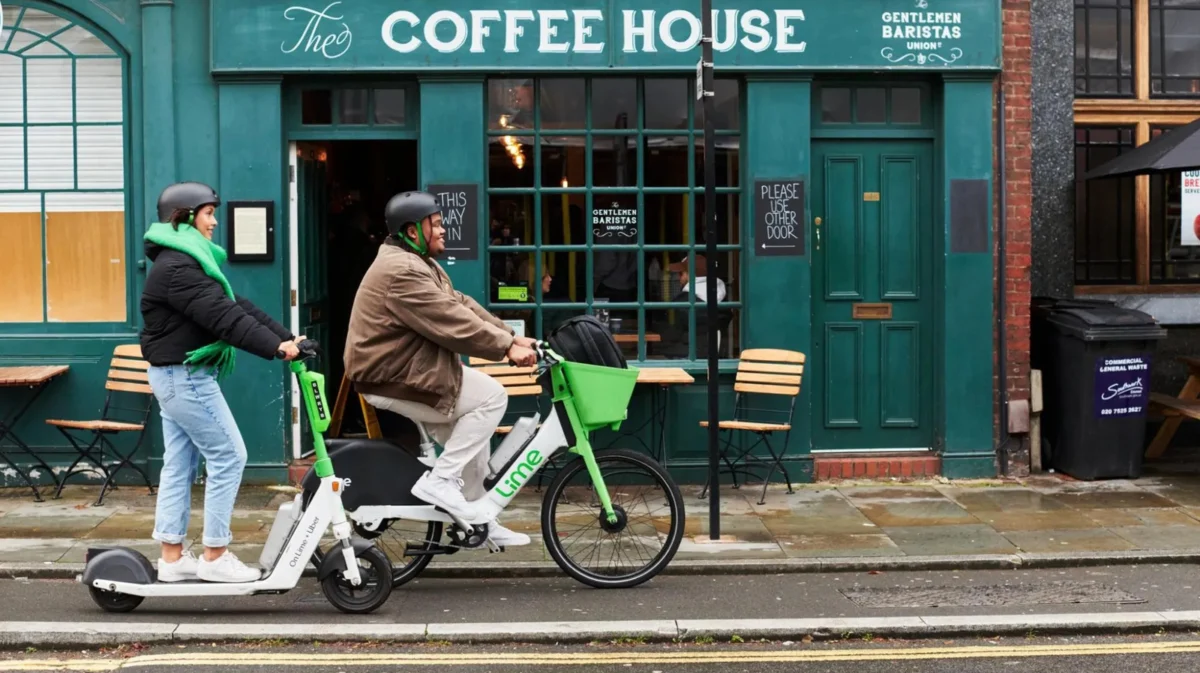
The micromobility sector, once defined by a "growth at all costs" mentality and the chaotic proliferation of electric scooters on city sidewalks, is entering a new era of corporate maturity. Neutron Holdings, the parent company of the ubiquitous green-hued rental brand Lime, has officially filed for an initial public offering (IPO) with the U.S. Securities and Exchange Commission (SEC). This move marks a pivotal transition for the company, which has spent nearly a decade transforming from a venture-backed startup into a global transportation infrastructure player.
While the filing signals a milestone, it also underscores the enduring struggle for profitability in a sector plagued by high operational costs, regulatory hurdles, and intense market competition. As Lime prepares to invite public shareholders into its business model, the spotlight is firmly on whether the company can translate its massive scale into a sustainable, bottom-line profit.
Chronology: From Sidewalk Disruptor to IPO Candidate
To understand Lime’s current trajectory, one must look back at the company’s meteoric rise and the evolution of the micromobility market.
2017: The Genesis
Founded in 2017, Lime (originally LimeBike) emerged during the height of the "dockless revolution." The company began by deploying thousands of pedal-assist bicycles across American college campuses and urban centers. The premise was simple: use an app to unlock a bike, ride to your destination, and leave it anywhere.
2018–2020: The Expansion and Uber Partnership
As the company pivoted heavily toward electric scooters—which proved to be a more efficient revenue generator—it secured significant capital from high-profile investors. Most notably, Uber solidified its interest in the micromobility space by leading funding rounds into Lime, integrating the scooter rental service directly into the Uber app. This period was characterized by aggressive market expansion, often resulting in "scooter wars" where companies flooded cities with hardware to capture market share.
2021: First Whispers of Public Ambitions
By 2021, the market was beginning to consolidate. Lime raised $523 million in a funding round that year, signaling its intent to go public. However, the macro-economic environment, coupled with the volatility of the tech sector, forced a delay in those plans.
2022–2025: Scaling to Billion-Trip Status
The company focused on operational efficiency, shifting from a "blitz-scaling" strategy to a more disciplined approach to city management. By the end of 2025, CEO Wayne Ting announced a monumental milestone: Lime had surpassed one billion trips globally. Operating in approximately 230 cities across 29 countries, the company had successfully positioned itself as a critical piece of the "last-mile" urban transportation puzzle.
2026: The Formal Filing
In early 2026, the company filed its S-1 registration with the SEC, finally taking the steps to list its common stock on a major exchange.
Supporting Data: Revenue Growth vs. The Profitability Gap
The IPO documents provide a granular look at the financial health of the micromobility giant. The numbers tell a story of impressive top-line growth, but they also reveal the stubborn reality of the "unit economics" challenge that has haunted the industry.
Revenue Trajectory
- 2023: $521 million in revenue.
- 2024: $686.6 million in revenue.
- 2025: $886.7 million in revenue.
The compound annual growth rate (CAGR) of Lime’s revenue is undeniably strong, reflecting a consistent increase in both fleet size and user adoption. The company has successfully diversified its offerings, integrating both e-bikes and e-scooters to cater to different user needs and regulatory environments.
The Bottom Line
Despite this revenue momentum, the path to net profitability remains obstructed:
- 2025 Net Loss: $59.3 million.
- Q1 2026 Net Loss: $61.3 million.
The losses in the first quarter of 2026 alone are alarming, as they represent a significant portion of the total losses incurred throughout the entirety of 2025. This suggests that while Lime is scaling, its operating costs—which include charging, maintenance, logistics, and the inevitable replacement of hardware—are scaling in lockstep, or perhaps even outpacing revenue growth in the short term.
Official Responses and Strategic Outlook
In the letter from the CEO included in the IPO filing, Wayne Ting emphasized the company’s role in modern urban planning. "We are not just a rental company," Ting wrote. "We are an extension of public transit."
Addressing the "Chaos"
The company has been under fire for years regarding the "e-bike chaos"—the tendency for users to dump vehicles in the middle of pedestrian pathways. In response, Lime has recently committed to a $25 million "action plan" aimed at improving parking infrastructure, deploying "geofencing" technology to ensure vehicles are parked in designated zones, and increasing the number of local operations staff.
Risk Factors for Potential Investors
The SEC filing includes standard but sobering risk disclosures. Lime explicitly warns that the company has a "history of net losses" and that it may fail to "achieve or maintain profitability in the future." This disclosure is not merely boilerplate legal text; it is a direct nod to the industry’s graveyard of failed ventures. Investors are cautioned that the cost of hardware, the intensity of regulatory scrutiny, and the volatility of fuel/energy prices could all derail the company’s profitability goals.
Implications: The Micromobility Sector at a Crossroads
The decision by Lime to go public is being viewed as a "litmus test" for the entire micromobility industry.
The Ghost of Bird
The elephant in the room is the fate of Bird, a primary competitor that went public with much fanfare, only to see its stock collapse and ultimately file for bankruptcy in 2023. Bird’s failure served as a cautionary tale: it proved that scale without a path to positive cash flow is unsustainable. Investors will be looking closely at Lime to see if its unit economics are fundamentally stronger than those of its fallen peers.
Regulatory Tightening
Cities are no longer the "wild west" for scooter companies. Governments have implemented strict tender processes, limiting the number of vehicles on the streets and requiring companies to pay significant fees for the privilege of operating. Lime has managed to navigate these regulations better than most, often forming partnerships with municipal transit authorities. The implication here is that Lime is moving toward a B2G (business-to-government) model as much as a B2C (business-to-consumer) model.
The Future of Urban Mobility
If Lime succeeds in its IPO and sustains its growth, it will solidify the status of electric micromobility as a permanent fixture in the modern city. However, if the company struggles to turn these massive revenue figures into actual profit, it may signal that the "shared scooter" model is not a standalone business, but rather a service that must be heavily subsidized by public funds or bundled into a larger, more diversified transportation conglomerate.
Conclusion
As Lime prepares for its market debut, the company finds itself at a defining moment. It has the scale, the global footprint, and the brand recognition to succeed. Yet, the financials from early 2026 highlight that the company is still chasing the elusive goal of profitability. Investors are being offered a stake in a company that has changed how the world moves, but the price of that seat will depend entirely on whether Lime can finally prove that the green scooters are as profitable as they are ubiquitous.
The public market will be a much harsher judge than the venture capitalists of 2017. For Lime, the next few quarters will not just be about hitting revenue targets—they will be about proving that the micromobility revolution is a viable, enduring business model.












No comments yet. Be the first to join the conversation!