Sagoh
Sagoh
In the vast, often sterile expanse of modern science fiction, a peculiar phenomenon has taken root. While the Star Trek franchise—the undisputed titan of the genre—has spent the last decade reinventing itself through a dense, high-budget streaming renaissance, many of its most ardent disciples have turned their gaze toward a scrappy, ostensibly comedic upstart: Seth MacFarlane’s The Orville.
What began as a broadcast television curiosity on Fox has blossomed into a critical darling, earning the highest praise from those who value the "Roddenberry ethos" above all else. Among its most vocal proponents is Andy Weir, the acclaimed author of The Martian and Project Hail Mary, who has famously lauded the series as the finest Star Trek show currently in existence.
The Structural DNA of a Homage
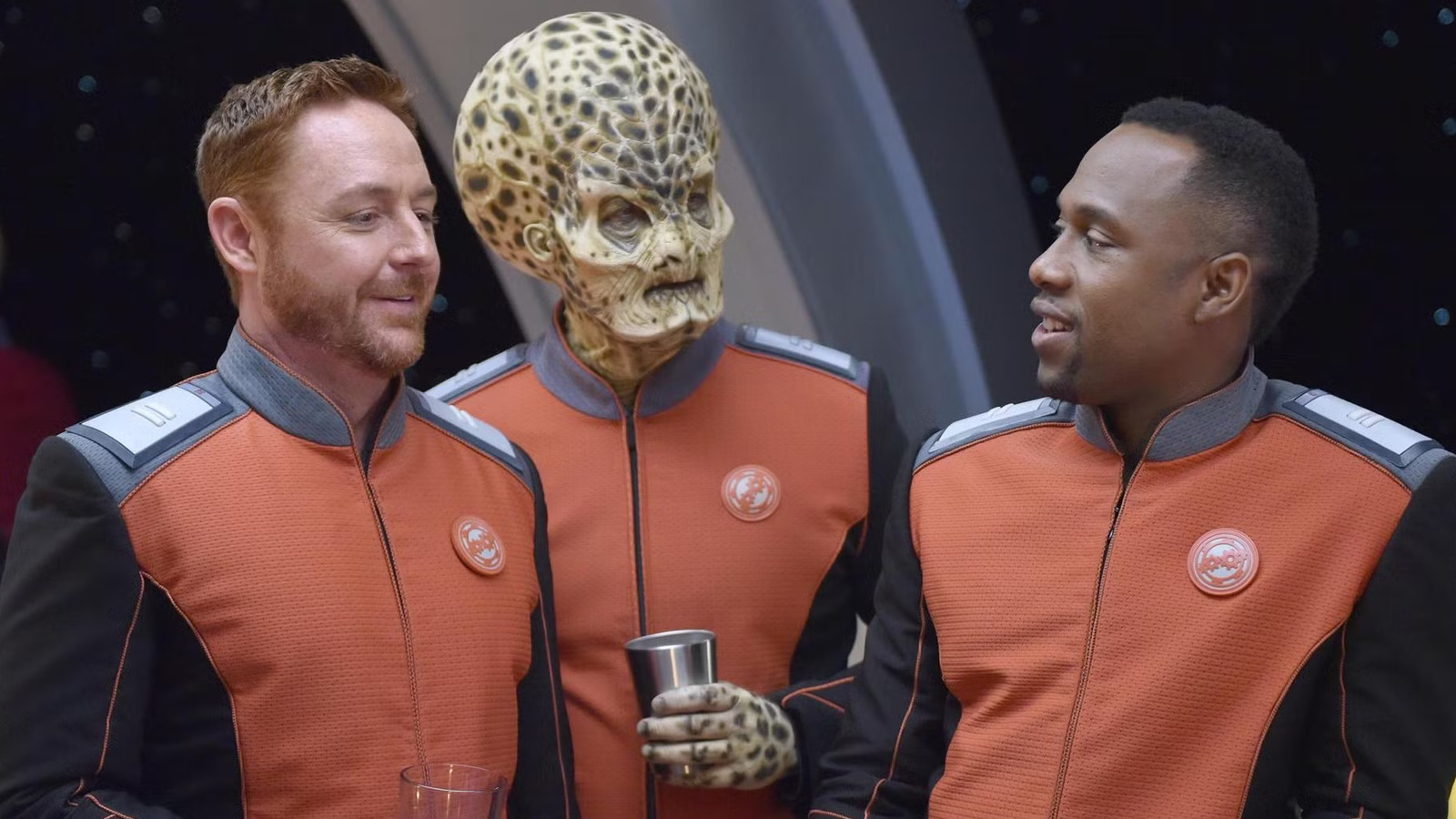
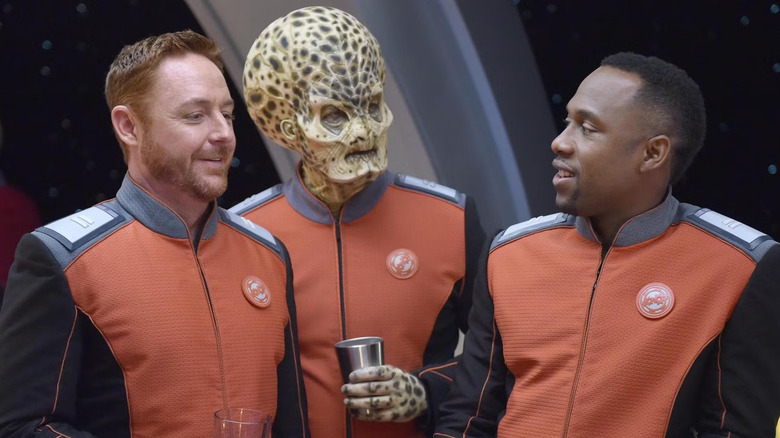
To understand the adoration for The Orville, one must first acknowledge its pedigree. The show is not merely inspired by Star Trek: The Next Generation; it is a loving, meticulously crafted mirror of it. The USS Orville (ECV-197) serves as a functional successor to the USS Enterprise-D, operating within the framework of the Planetary Union, a direct analog to the United Federation of Planets.
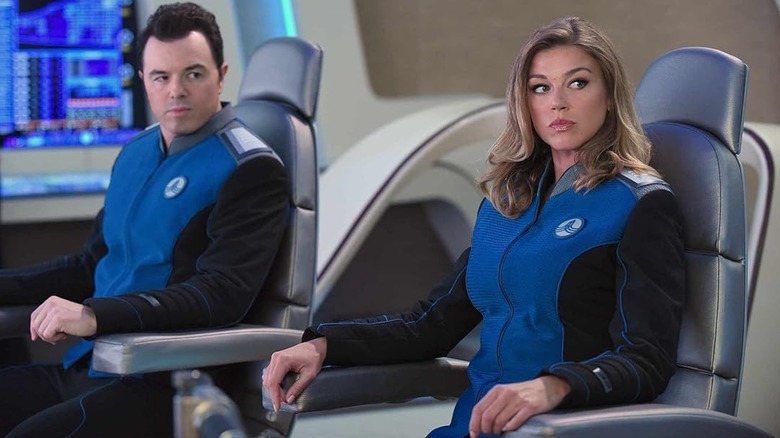
The visual and narrative language is deliberate. We see the color-coded uniforms, the bridge-centric command structure, and the "Planet of the Week" procedural format that defined 1990s television. Even the interpersonal dynamics feel familiar, albeit with a modern, sardonic twist. Captain Ed Mercer (Seth MacFarlane) and his first officer, Kelly Grayson (Adrianne Palicki), navigate the complexities of command while managing the lingering friction of their past marriage—a relationship dynamic that mirrors the professional tension of the best Star Trek pairings, albeit with more emotional baggage.
The crossover between the two worlds extends beyond the script. The production has become a sanctuary for Star Trek veterans. Actors like Marina Sirtis, Robert Picardo, Tim Russ, and John Billingsley have graced the deck of the Orville, while Penny Johnson Jerald transitioned from the gritty station of Deep Space Nine to a full-time bridge officer role. Behind the camera, Jonathan Frakes—the legendary Commander Riker—has stepped into the director’s chair for The Orville, cementing the show’s status as an unofficial, yet undeniable, branch of the Star Trek family tree.
A Chronology of the Modern Trek Divide
The "Trek vs. Orville" debate reached a fever pitch in 2022. At that time, the Paramount+ landscape was saturated with a "peak TV" slate of content: Star Trek: Discovery, Picard, Lower Decks, Prodigy, and the nascent Strange New Worlds.
As the streaming era progressed, a vocal segment of the fanbase began to express profound dissatisfaction. Critics argued that the Alex Kurtzman-led era of Star Trek had traded the franchise’s foundational optimism for a darker, more cynical aesthetic. These newer iterations often favored high-stakes, galaxy-ending threats, gritty violence, and complex, often fragmented serialized storytelling.
It was within this climate that Andy Weir took to social media. In a candid assessment of the genre, he addressed MacFarlane directly: "I’m sure you’ve heard it a million times, but I’ll add to the pile: ‘The Orville’ is the best ‘Star Trek’ show out there right now."
This sentiment resonated deeply. For many, The Orville succeeded where the newer Trek shows faltered because it understood that Star Trek was never truly about the phasers or the warp cores; it was about the curiosity of the human spirit.
The Philosophical Divergence: Optimism vs. Grittiness
While The Orville is often categorized as a comedy—thanks in no small part to MacFarlane’s history with Family Guy—the humor is frequently a Trojan horse for genuine humanistic inquiry.
The core of the show remains tethered to the ideals of Gene Roddenberry: the belief that through tolerance, intelligence, and diplomatic courage, humanity (and its allies) can overcome any obstacle. Episodes often focus on the friction between cultures, the morality of artificial intelligence, and the challenges of coexistence.
In contrast, the "New Trek" era frequently leaned into action-heavy, revenge-driven narratives. The lighting was moody, the stakes were personal, and the sense of wonder—that hallmark of early Trek—often felt suppressed by the weight of modern prestige television tropes. The Orville managed to capture the "utopian" promise of the 24th century, allowing characters to debate ethics in the mess hall without the immediate pressure of a season-long conspiracy looming over them.
Science and Accuracy: The Weir Standard
For an author like Andy Weir, whose career is built upon the pillars of "hard" science and technical plausibility, The Orville offers something rare: genuine respect for physics.
Weir’s appreciation for the show is not merely nostalgic; it is rooted in its attention to detail. In a specific commendation, Weir highlighted the show’s handling of time travel:
"I have to give mad props to ‘The Orville’ for their recent handling of time travel. They used actual Einsteinian physics to go forward in time via time dilation, and they even show the stars blue-shifting in front and red-shifting behind as they traveled near lightspeed."
This level of scientific rigor is often overlooked in space operas, where "warp speed" is typically treated as a magical plot device. By acknowledging the reality of time dilation and light-shifting, The Orville demonstrated a level of intellectual honesty that appealed to the "science nerd" demographic—the very same audience that helped build the original Star Trek fandom in the 1960s.
Conversely, modern Star Trek shows often treat scientific terminology as "technobabble"—words used to sound intelligent without being grounded in actual physical theory. When characters in Discovery or Strange New Worlds discuss math, it often feels like a costume, whereas The Orville uses science to inform its universe’s internal logic.
Implications for the Future of Sci-Fi
As the current landscape of Star Trek shifts once again—with Strange New Worlds continuing its run and the anticipation for Starfleet Academy building—the industry is at a crossroads.
The Orville serves as a vital case study. It proves that there is a massive, underserved audience hungry for procedural, optimistic, and scientifically literate space exploration. Even with the uncertainty of a fourth season—delayed largely by Seth MacFarlane’s sprawling schedule and creative commitments—the show’s impact is undeniable.
The legacy of The Orville is not just that it is a "better" Star Trek; it is that it successfully identified a void in the cultural consciousness and filled it with heart. By prioritizing episodic storytelling and clear-eyed optimism, it has secured its place in the pantheon of great science fiction.
Whether or not the USS Orville returns for another season, it has already achieved the ultimate goal of any space-faring vessel: it took us to the stars, reminded us of our better selves, and taught us that in the vastness of the universe, the most important discovery is, and always will be, each other.


 Pevita Pearce