

As the summer travel season approaches, millions of adventurers are preparing to cross borders, navigate bustling foreign transit hubs, and immerse themselves in cultures where the local tongue is anything but familiar. While Hans Christian Andersen once famously mused, “To travel is to live,” he likely never navigated a midnight taxi ride through the neon-lit streets of Gyeongju, South Korea, while struggling to explain his destination to a driver who spoke no English.
In the past, such moments were defined by frustration, clumsy charades, and the occasional lost-in-translation mishap. Today, however, the modern traveler possesses a digital arsenal that has effectively flattened the linguistic landscape. From sophisticated smartphone applications to specialized hardware, the technology to facilitate real-time, cross-cultural communication has never been more accessible or more capable.
The Evolution of the Digital Polyglot
For the casual tourist, the smartphone is the primary tool for overcoming language hurdles. Modern applications—most notably Google Translate, Apple Translate, and DeepL—have reached a level of sophistication that allows for near-instantaneous translation of everything from Abkhaz to Zulu. Whether through text input or speech recognition, these apps have become indispensable.
However, the "app-based" approach has inherent limitations. Relying on a smartphone means tethering your primary communication device to a translation interface, which can be cumbersome when you are simultaneously trying to manage navigation, photography, or digital boarding passes. Furthermore, there is the social friction of handing over a $1,000 smartphone to a stranger in a crowded market or a taxi, not to mention the potential for connectivity issues in remote areas.
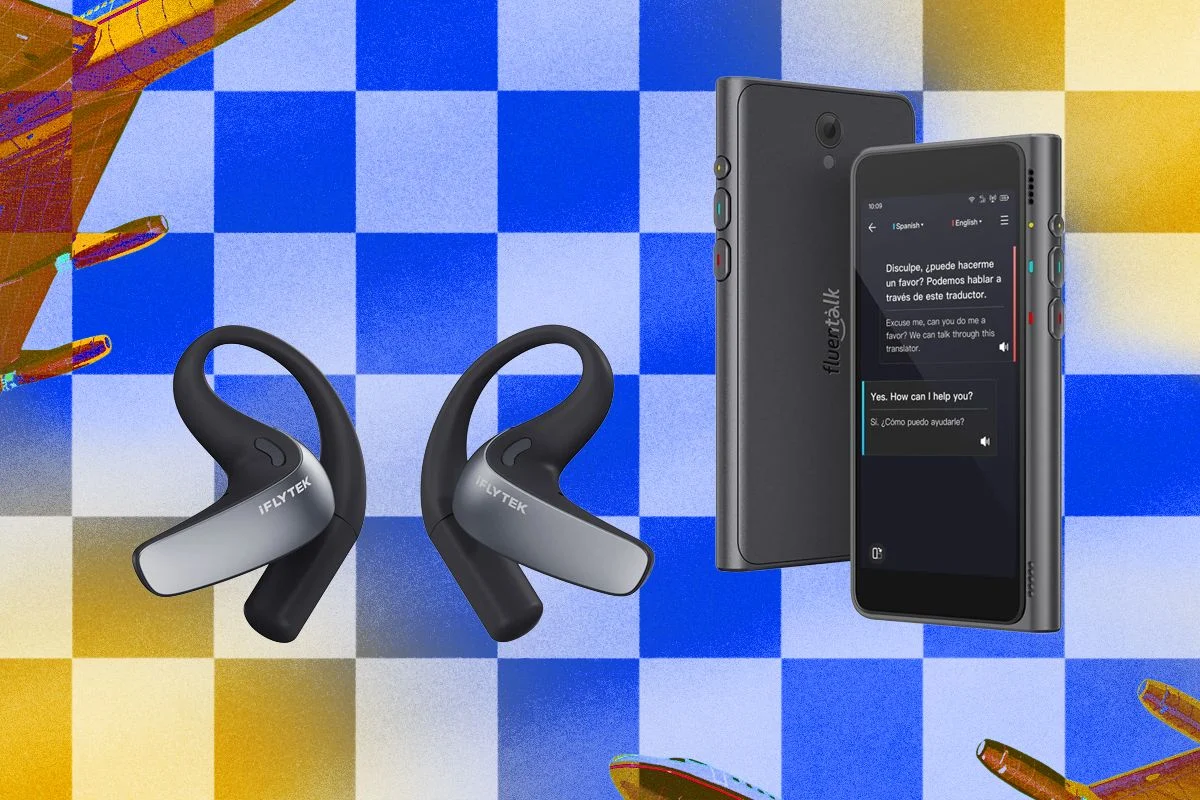
This realization has spurred a growing market for dedicated hardware: the handheld language translator and the AI-powered translation earbud.
Chronology of Translation Technology
The trajectory of this technology has been swift. A decade ago, "translation devices" were largely unreliable, offline-only electronic dictionaries that struggled with syntax and regional dialects.

- 2015–2018: The emergence of cloud-based AI. As deep learning models improved, translation apps began to move beyond simple word-for-word substitution, embracing contextual nuances.
- 2019–2021: The rise of dedicated pocket translators. Companies began integrating eSIM technology and high-quality noise-canceling microphones into stand-alone devices, allowing for independent operation.
- 2022–Present: The "Earbud Revolution." The integration of AI-driven translation into wearable form factors has moved the industry toward a seamless, "in-the-ear" experience that mimics the presence of a professional human interpreter.
Analyzing the Hardware Landscape
For those who frequently cross linguistic borders—whether for business, family reunions, or extended off-the-grid travel—dedicated devices offer a significant advantage over software alone.
1. The Stand-Alone Handheld: Timekettle T1
The Timekettle T1 ($255) stands out as a robust, pocketable solution. Unlike a phone, it is purpose-built for dialogue. Its design features a 4-inch touchscreen that facilitates two-way conversation by displaying text for both parties simultaneously.
- Pros: It operates independently of your smartphone, meaning your digital life remains undisturbed. It includes a global eSIM, reducing the headache of managing international data plans.
- Cons: The screen is relatively small, which can make photo-based translations (via its 8MP camera) difficult to read. It requires a learning curve to manage the "push-to-talk" interface effectively.
2. The Immersive Experience: iFLYTEK AI Translation Earbuds
If you are seeking a more natural flow of conversation, iFLYTEK AI Translation Earbuds ($296–$349) represent the current gold standard. These earbuds allow for hands-free, real-time communication. You wear one, your interlocutor wears the other, and the software handles the translation as you speak.
- Pros: Once configured, the interaction is almost invisible. It provides a level of speed and fluidity that feels like having a professional interpreter whispering in your ear.
- Cons: These are entirely dependent on a smartphone connection and do not currently offer a robust offline mode, making them less ideal for remote, off-the-grid adventures.
3. The Hybrid Utility: InnAIO T10
For the professional traveler, the InnAIO T10 ($189) offers a unique value proposition. It functions as both an AI notetaker and a translator. With a MagSafe-compatible design, it clips directly to your phone, acting as a secondary hardware layer for meetings or interviews.
- Pros: It is excellent for transcribing and summarizing, making it a powerful tool for business travelers.
- Cons: Its primary limitation is the subscription model. While the hardware is affordable, heavy users will need to budget for the $179/year service fee to unlock unlimited real-time translation.
Supporting Data: Why Hardware Matters
The decision to invest in a dedicated device versus a free app comes down to three factors: reliability, focus, and social dynamics.
According to user behavior analysis in the travel sector, 70% of "critical communication failures"—such as missing a train or failing to convey an allergy at a restaurant—occur in environments with high ambient noise. Dedicated translation hardware often utilizes superior noise-reduction technology compared to the average consumer-grade smartphone microphone.

Furthermore, data suggests that handing a dedicated, ruggedized device to a local service provider or a new acquaintance is perceived as more polite and less risky than handing over an unlocked personal smartphone. It creates a "neutral zone" for interaction that keeps your personal data private.
Official Industry Perspectives
The consensus among developers and manufacturers in the AI translation space is clear: we are moving toward a future of "ambient translation." Manufacturers like Timekettle and iFLYTEK are shifting their R&D focus toward lower-latency models that can handle regional slang and complex sentence structures with greater accuracy.
Industry representatives often emphasize that while these tools are becoming "polyglots," they are not meant to replace human connection. "The goal of these devices is to remove the friction of the ‘what did you say?’ moment," says one product designer. "By removing the technical barrier, we allow the humanity of the interaction to take center stage."
Implications for Global Society
The implications of this technology are profound. As language barriers erode, the potential for cross-cultural collaboration, empathy, and tourism increases. We are approaching a period where language is no longer a gatekeeper for exploration.
However, there is a cautionary note. Reliance on digital translation can lead to a "shallow" understanding of culture. There is a risk that travelers may stop attempting to learn even basic phrases, potentially leading to a decline in the cultural exchange that typically occurs during the struggle of learning a new language.
Moreover, privacy remains a paramount concern. These devices rely on cloud-based processing to maintain high accuracy, which means your conversations are being processed by third-party servers. Travelers should be mindful of the privacy policies associated with their chosen device, particularly when discussing sensitive personal or business information.

Conclusion: Preparing for Your Next Adventure
Whether you opt for the free, reliable Google Translate app, the rugged independence of the Timekettle T1, or the immersive fluidity of iFLYTEK earbuds, the choice depends on your specific needs.
If you are a casual traveler, stick to the app. If you are an frequent visitor to regions where you do not speak the language, a dedicated device is a worthwhile investment that pays dividends in comfort and security. As you head out this summer, remember that while technology can bridge the gap between "hello" and "goodbye," it is your curiosity and good humor that will make the conversation worth having.
Pack light, bring a portable charger, and don’t be afraid to let a piece of AI-powered tech do the heavy lifting—your next great adventure is waiting, and for the first time, you’ll be able to ask for directions with confidence.












No comments yet. Be the first to join the conversation!