Asep Darmawan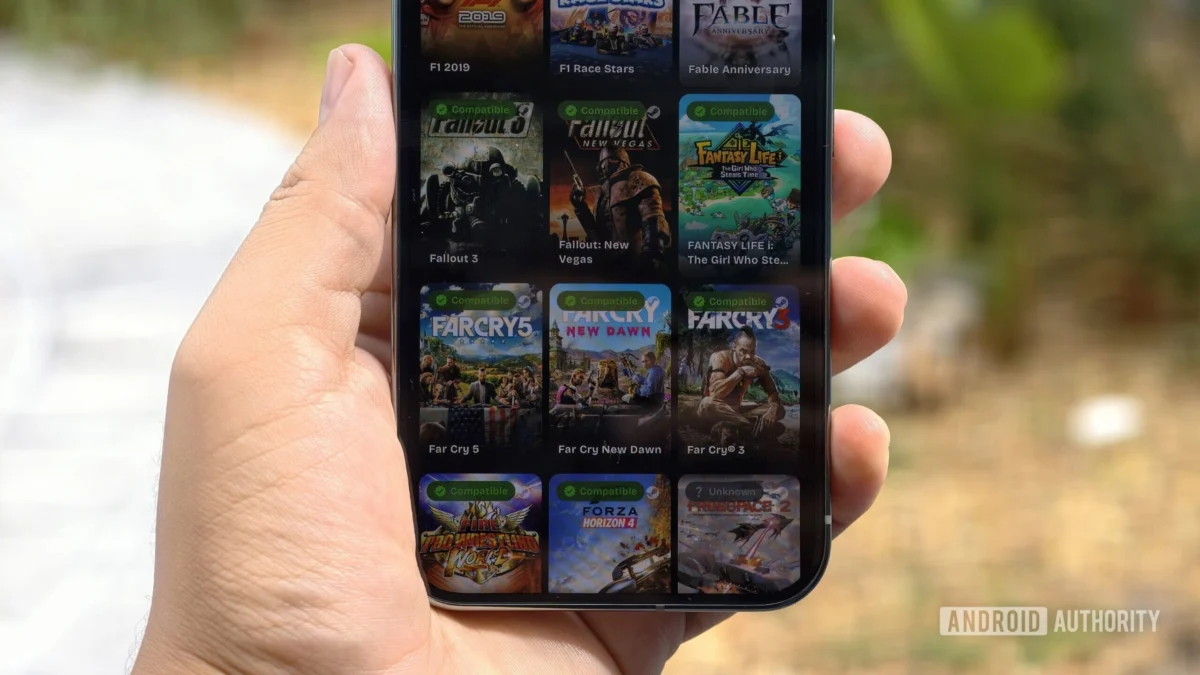
The landscape of mobile gaming is undergoing a seismic shift. For years, Android users have looked on with envy as their PC counterparts enjoyed the benefits of AI-driven frame generation—a technology that uses deep learning to synthesize intermediate frames, effectively doubling or tripling frame rates without the heavy overhead of traditional rendering. That barrier has officially fallen. With the release of version 0.9.1 of the GameNative emulator, the legendary Lossless Scaling Frame Generation (LSFG) utility has made its way to the Android ecosystem, marking a milestone in portable PC emulation.
Main Facts: Bringing PC-Grade Frame Gen to Mobile
The integration of LSFG into GameNative is not merely a software update; it is a fundamental expansion of what is possible on modern flagship chipsets. By leveraging the Vulkan graphics API, GameNative now allows users to inject AI-generated frames into titles that never natively supported the feature.
At its core, LSFG functions by analyzing the output stream of a game and calculating where new frames should exist between existing ones. While this technology has been a staple of Steam-based PC gaming for some time, its implementation on Android is a technical feat of engineering. The feature is seamlessly baked into the GameNative quick-access menu, allowing users to toggle frame generation on the fly.
However, the utility does not come free. To access this feature within the emulator, users must own a legitimate copy of the $7 Lossless Scaling app on Steam. The GameNative application verifies this entitlement, ensuring developers are compensated for their work while providing a bridge for users to port their desktop experience to their handheld devices. The feature is currently restricted to hardware utilizing Snapdragon processors equipped with an Adreno 600 series GPU or newer, effectively limiting the experience to modern, high-performance devices.
Chronology: From Desktop Utility to Mobile Reality
The journey of LSFG from a desktop tool to an Android component is a testament to the rapid evolution of the mobile emulation community.
- Pre-2026: Frame generation was exclusively a high-end PC domain, dominated by NVIDIA’s DLSS 3 and AMD’s FSR 3. Independent tools like Lossless Scaling began to gain traction on Steam, allowing gamers to force frame generation on virtually any application.
- Early 2026: The mobile emulation scene experienced a "gold rush" as developers sought to bring PC titles to devices like the Pixel 9 Pro and similar hardware.
- April 2026: Developer FrankBarretta released an Android port of the LSFG utility, focusing on Vulkan implementation.
- Late April 2026: The GameNative development team announced that they had successfully integrated the
lsfg-VKframework into their emulator. - Current Status: With version 0.9.1, the feature moved from internal testing to a public pre-release and final build, signaling that AI-driven fluidity is now a standard feature for the app’s user base.
Supporting Data: Performance Gains and Technical Trade-offs
The promise of frame generation is simple: higher visual fluidity. Evidence from community testing and official demonstrations suggests that the gains are tangible, though they come with distinct technical caveats.
Benchmarking the Experience
Official social media posts from the GameNative team have highlighted dramatic results. In a showcase featuring The Last of Us Part 1, the game jumped from a native 30 frames per second (fps) to over 80 fps when using the LSFG integration. Similar results have been echoed by the community, with reports of games transitioning from 30 to 60 fps or hitting the elusive 120 fps mark on high-refresh-rate displays.
The Latency Hurdle
Despite these impressive frame counts, users must grapple with the physics of the implementation. Unlike PC-based frame generation, which has deep hooks into the system’s graphics driver, the Android version faces architectural limitations. Because non-rooted Android devices block the loading of external code into non-debuggable processes, developers cannot hook directly into the Vulkan swapchain.
Instead, the frame generation runs on a MediaProjection screen-capture stream. This creates a bottleneck that results in an additional 50 to 80 milliseconds of input latency. While this latency is often imperceptible in slow-paced or narrative-driven games, it becomes a significant liability in fast-paced shooters or competitive titles requiring split-second reactions.
Official Responses and Developer Insights
The developer of the Android port of LSFG has been candid about the challenges of bringing this technology to a locked-down mobile OS. By forgoing the "implicit layer" mechanism found in Linux, the team had to innovate a workaround that captures the screen and overlays the AI-generated frames in real-time.
"On non-rooted Android, there is no equivalent to Linux’s Vulkan implicit layer mechanism," the developer noted in a technical breakdown. "Android 12 and above explicitly blocks loading external code into non-debuggable processes. Consequently, this app cannot hook another app’s Vulkan swapchain. We had to pivot to a system overlay method, which, while effective, does introduce a latency penalty."
The GameNative team has framed this addition as a "sneaky" but essential evolution of their product, acknowledging that while it is not a "magic bullet," it provides a smoother experience for users who are already struggling with the performance limitations of mobile PC emulation.
Implications for the Future of Mobile Gaming
The arrival of LSFG on Android represents a shift in how we perceive mobile gaming hardware. It suggests that, in the future, the "power" of a device will be defined not just by raw teraflops, but by the ability to run AI-assisted software that optimizes the user experience.
1. The Death of the "Playable" Threshold
Traditionally, mobile PC emulation was considered successful if it could maintain a stable 30 fps. With the introduction of LSFG, the bar has moved. Titles that were previously considered "unplayable" due to stuttering or frame pacing issues can now be smoothed out, effectively making a vast library of PC games accessible to a wider audience.
2. Competition and Ecosystem Growth
GameNative is not the only player in the field. GameHub, another major contender in the Windows-on-Android space, recently introduced its own AI frame generation features in version 6.0.1. Whether this is based on the same LSFG utility or a proprietary solution remains to be seen, but the competition is clearly driving rapid feature parity. We are likely to see a "feature war" where emulator developers compete based on the efficiency of their frame generation and the quality of their AI upscaling.
3. Hardware Requirements and Battery Impact
The reliance on Snapdragon processors with Adreno 600-series GPUs highlights a widening gap between flagship hardware and budget devices. As frame generation becomes more common, mid-range devices may find themselves left behind, unable to handle the overhead of both the emulation and the AI post-processing. Furthermore, the battery drain associated with running these demanding AI tasks is significant; users should expect to tether their devices to power banks for any extended gaming sessions.
Conclusion: A New Frontier
While the current iteration of LSFG on Android is imperfect—marked by input lag and a dependency on high-end hardware—it is an undeniable step forward. It transforms the Android device from a simple portable screen into a powerful, AI-enhanced gaming machine. As the emulation community continues to refine these hooks and as Android’s security architecture potentially evolves to allow more deep-level graphics access, the line between dedicated handheld consoles and flagship smartphones will continue to blur. For now, the takeaway is clear: the future of portable PC gaming is not just about raw power; it is about the intelligence to optimize every frame.

 Suro Senen
 Evan Lee Salim